
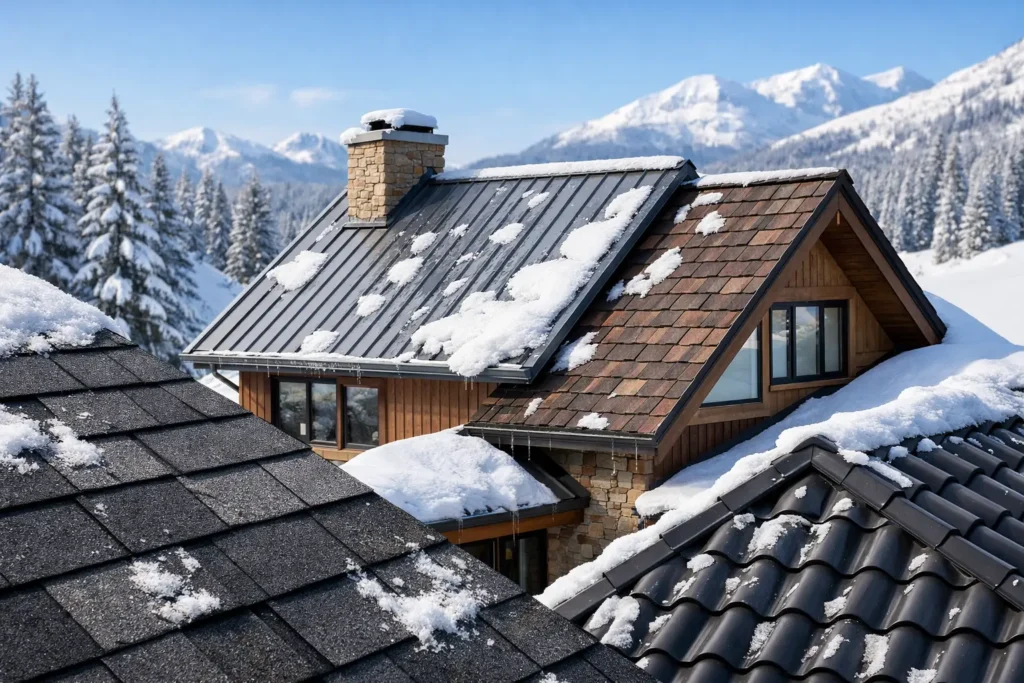
A roof in snow country does not get many easy seasons. One week it is holding heavy accumulation, the next it is dealing with ice dams, freeze-thaw cycles, and wind-driven moisture. That is why choosing the best roofing materials for snow is less about picking the most expensive option and more about choosing the right system for your home, budget, and long-term plans.
For homeowners in Central New York, winter performance matters as much as curb appeal. The wrong material can wear out faster, trap ice, or create repeat repair issues. The right one can shed snow more effectively, resist moisture damage, and give you fewer headaches when the weather turns.
What matters most in the best roofing materials for snow
Snow itself is only part of the problem. A winter roof also has to handle weight, melting and refreezing, attic heat loss, and water backing up under roofing materials. That means the best choice is usually the one that works well as part of a full roofing system, not just the top layer you see from the street.
Material weight, water resistance, impact resistance, and lifespan all matter. So does roof pitch. A steeper roof generally sheds snow faster than a low-slope roof, but even a steep roof can struggle if the material is prone to water intrusion or if ventilation is poor.
This is where many homeowners get tripped up. They compare shingles to metal or slate on appearance and price alone, when winter performance often comes down to installation quality, underlayment, flashing details, and attic ventilation just as much as the material itself.
Metal roofing is often the top performer
If you ask contractors what usually ranks among the best roofing materials for snow, metal roofing comes up quickly for good reason. Snow tends to slide off metal more easily than it does off textured materials, which reduces prolonged weight on the roof. Metal also resists moisture well and holds up better than many products during freeze-thaw cycles.
For homes that see frequent snowfall, standing seam metal is often the premium option. Its raised seams help limit exposed fasteners, which can reduce leak risks over time when installed correctly. It is also durable, low maintenance, and strong in harsh weather.
The trade-off is cost. Metal roofing usually costs more upfront than asphalt shingles, and snow shedding can happen quickly. That can be a benefit for the roof itself, but it also means snow guards may be needed over entryways, walkways, driveways, or areas where sliding snow could create a safety issue.
Metal can also be noisier during rain or hail if the roof assembly is not built properly, although modern installations with solid decking and insulation usually reduce that concern.
Asphalt shingles are common, practical, and budget-friendly
For many homeowners, architectural asphalt shingles remain the most practical choice. They are widely available, more affordable than metal or slate, and can perform well in snowy conditions when the roof is installed with quality ice and water protection and proper ventilation.
Architectural shingles are generally a better winter choice than basic 3-tab shingles because they are thicker, more durable, and often have better wind resistance. That matters when winter storms bring both snow and high winds.
Still, asphalt has limits. Snow does not slide off shingles as easily as it does off metal, so more accumulation can remain in place. That is not automatically a problem if the roof structure is sound, but it does mean the roofing system must be built to handle winter loads. Asphalt shingles can also be more vulnerable to damage over time from repeated freeze-thaw conditions, especially if the roof is aging or ventilation is poor.
For homeowners planning to stay in their house long term, it is worth comparing the lower upfront cost of asphalt against the longer lifespan of premium materials.
Slate offers excellent durability, but not every home can support it
Slate has a strong reputation for longevity and weather resistance. It can perform very well in snowy climates because it is dense, durable, and highly resistant to moisture. A properly installed slate roof can last for decades longer than most other materials.
The challenge is that slate is heavy and expensive. Not every home is structurally designed to support it without reinforcement. Installation also requires specialized skill, and repairs can be more involved than with standard shingle roofing.
For the right house, slate is a premium solution with real long-term value. For many homeowners, though, the cost and structural requirements make it less practical than metal or high-quality asphalt.
Synthetic roofing materials can be a smart middle ground
Synthetic slate and synthetic shake products have become more popular because they offer some of the visual appeal of premium roofing without the extreme weight of natural materials. Many are engineered to resist impact, moisture, and weathering, which can make them a strong option in snow-prone areas.
These products vary by manufacturer, so this is not a category where all materials perform equally. Some synthetic roofs hold up very well. Others may not deliver the lifespan homeowners expect for the price.
That is why product selection and installer experience matter. A good synthetic roof can be a smart middle ground if you want better durability and style than standard shingles but do not want the weight or cost of natural slate.
Wood shake is usually not the first choice for heavy snow regions
Wood shake has a classic look, but it is generally harder to recommend in areas with long, wet winters. Moisture is the main issue. Snow that sits, melts, and refreezes can shorten the life of wood roofing if maintenance is not consistent.
Wood can also be more vulnerable to mold, rot, and warping in climates where roofs stay damp for extended periods. Some products are treated for better performance, but even then, wood usually demands more maintenance than most homeowners want.
If winter durability is the top priority, there are usually better options.
The material matters, but the full system matters more
A high-end roof material cannot make up for poor installation. Ice dams, leaks near valleys, and winter moisture problems often trace back to weak flashing details, inadequate ventilation, or missing protection at eaves and vulnerable areas.
That is why any conversation about the best roofing materials for snow should include the rest of the assembly. In snow-heavy regions, homeowners should pay close attention to ice and water shield, attic insulation, ventilation, flashing around chimneys and roof penetrations, and the condition of the roof deck underneath.
Even the strongest roofing material can fail early if warm attic air causes snow to melt unevenly and refreeze at the edges. Likewise, a well-installed asphalt roof can outperform a poorly installed premium roof.
Which roofing material is best for your home?
For most homeowners, the answer depends on budget, how long you plan to stay in the home, and the current structure of the house.
If you want the best overall winter performance and are comfortable with a higher upfront investment, metal roofing is often the strongest choice. It handles snow well, lasts a long time, and offers strong protection when installed correctly.
If you want a dependable and more affordable option, architectural asphalt shingles are still a solid choice. They remain one of the most common roofing systems for a reason, especially when paired with proper underlayment and ventilation.
If you want top-tier longevity and your home can support it, slate can be excellent. If you want the premium look without the weight, synthetic materials may be worth considering.
The one thing that rarely pays off is choosing solely on price. A cheap roof in a harsh winter climate often becomes an expensive roof later.
When to get a professional opinion
If your roof is already showing signs of wear, winter is not the time to guess. Missing shingles, recurring leaks, sagging areas, ice dam problems, or visible storm damage all deserve a closer look. In many cases, a homeowner does not need a full replacement right away, but they do need clear answers about how much life the current roof has left.
That is especially true in places like Syracuse and the surrounding area, where roofs take a beating year after year. A local contractor who understands snow load, storm damage, and cold-weather roofing details can help you compare materials based on your actual house, not just a brochure.
At Alpha Omega Roofing LLC, that means looking at the roof as a system, explaining your options clearly, and recommending what makes sense for long-term protection rather than a short-term patch.
A good roof should not leave you wondering how it will hold up after the next storm. If you are weighing replacement options, the best next step is a professional inspection and a straightforward estimate based on how your home is built and what winter really looks like where you live.