
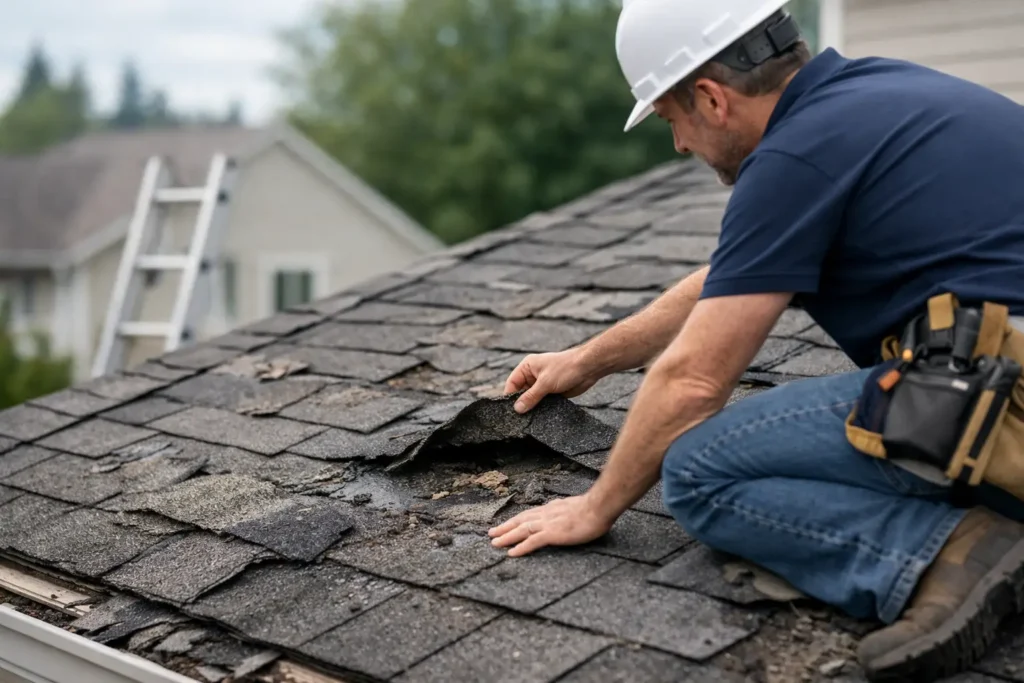
A roof rarely fails all at once. More often, it gives homeowners a series of warnings – a stain on the ceiling, shingles in the yard, a spot of granules in the gutter, or a draft you did not notice last winter. If you are wondering how to know if roof needs replacement, the answer usually comes down to age, visible damage, and whether repairs are still solving the problem or just buying time.
In Central New York, roofs take a beating. Heavy snow, ice dams, wind-driven rain, freeze-thaw cycles, and summer storms can shorten a roof’s lifespan faster than many homeowners expect. That is why it helps to know what signs matter, which ones can wait, and when it is smarter to replace the roof instead of pouring money into repeated repairs.
How to know if roof needs replacement by age and wear
The first question is simple: how old is the roof? Most asphalt shingle roofs last around 20 to 30 years, but that range depends on ventilation, installation quality, storm exposure, and shingle grade. A roof that is 15 years old and performing well may only need minor repairs. A roof pushing 25 years, especially after multiple winters in Syracuse or nearby areas, deserves a close inspection even if it is not actively leaking.
Age alone does not automatically mean replacement, but it changes the conversation. Older roofs become more brittle, more likely to lose shingles in wind, and less able to shed water the way they should. If your roof is near the end of its expected lifespan and you are seeing several smaller issues at once, replacement is often the more cost-effective choice.
Wear also shows up in less obvious ways. Shingles may start curling at the edges, cupping in the middle, or lying unevenly across the roofline. You might notice bald-looking areas where granules have worn away. These are signs the shingles are losing their ability to protect the layers underneath.
Visible signs your roof may be beyond repair
Some roofing problems are clearly isolated. A few missing shingles after a windstorm may be a straightforward repair. But when damage is spread across multiple sections, the roof may be reaching the point where patching one area will not stop the next problem.
Look closely for shingles that are cracked, broken, curling, or missing in several spots. If you see widespread granule loss, dark streaking combined with aging shingles, or exposed areas that look thin and worn, those are stronger indicators of a replacement need than one isolated issue.
Sagging is another serious warning sign. A roofline should look straight and stable. If a section dips or sags, that can point to trapped moisture, rotting decking, or structural weakness below the shingles. This is not something to watch for a few more seasons. It should be inspected quickly.
Inside the home, water stains on ceilings or upper walls often tell the same story. A single leak around flashing or a vent may be repairable. But recurring leaks, stains in multiple rooms, or moisture in the attic can suggest the roofing system is failing in more than one place.
Storm damage changes the timeline
Storm damage can turn a roof with a few years left into a roof that needs replacement now. High winds can break the seal on shingles, lift them, crease them, or tear them off. Hail can bruise shingles and shorten their life even when the roof still looks mostly intact from the ground. Ice can force water under the roofing materials and damage the deck below.
This is one reason homeowners should not rely on a quick visual check from the driveway. After a major storm, a roof may have damage that is easy to miss unless someone gets up there and inspects the shingles, flashing, vents, valleys, and ridges up close.
It also matters how much of the roof was affected. If storm damage is limited to one slope or one small area, repair may make sense. If the damage is spread broadly, or if the roof was already older and weakened, replacement is often the better long-term call. In insurance-related situations, a professional inspection can help document what happened and explain whether repair or replacement fits the actual condition of the roof.
How to know if roof needs replacement or just repair
This is where many homeowners get stuck. They do not want to replace a roof too early, but they also do not want to keep paying for repairs that do not hold up.
A repair usually makes sense when the roof is relatively young, the damage is isolated, and the underlying decking and ventilation are still in good shape. For example, replacing a few missing shingles, resealing flashing, or fixing a localized leak can be a smart investment if the rest of the system is sound.
Replacement makes more sense when problems are widespread, the roof is older, or repairs are becoming frequent. If you have already patched leaks more than once, if shingles keep coming loose after storms, or if one repair reveals another weak area nearby, that is a sign the roof may be worn out as a system.
Matching also matters. On older roofs, replacement shingles may not blend well with the existing roof, and the repaired area may still leave the rest of the roof vulnerable. In those cases, a repair may cost less today but still leave you facing a full replacement sooner than expected.
The honest answer is that it depends on the roof’s age, the extent of damage, and the cost difference between a repair and a replacement. A dependable contractor should explain both options clearly instead of pushing one answer on every homeowner.
Warning signs in the attic and gutters
You do not always need to climb onto the roof to spot trouble. The attic and gutter system often reveal what is happening above.
In the attic, check for damp insulation, dark stains on the wood, moldy smells, or visible daylight coming through the roof boards. Those signs suggest water intrusion or ventilation issues. Poor attic ventilation can trap heat and moisture, which speeds up roof aging and contributes to ice dam problems during winter.
In the gutters, pay attention to heavy amounts of shingle granules. A small amount is normal over time, especially on a newer roof. But if gutters are filling with coarse, sand-like granules from an older roof, that may mean the shingles are deteriorating quickly. Gutters that constantly clog from roof debris can also point to shingle breakdown.
Central New York weather adds extra pressure
Roofs in this region deal with conditions that can expose weak spots fast. Snow load can stress older decking. Ice dams can force water back under shingles. Wind can peel up materials that have already lost flexibility. Spring and summer storms can then hit a roof that was weakened all winter.
That is why timing matters. If your roof is already showing signs of wear in the fall, waiting until a leak appears in the middle of winter can lead to more expensive interior damage. In many cases, acting early gives you more control over scheduling, material choices, and cost.
For homeowners in Syracuse, Liverpool, Baldwinsville, and surrounding communities, the safest approach is to treat roofing problems as time-sensitive rather than cosmetic. A roof does not have to be collapsing to be at the point where replacement is the smarter move.
When to call for a professional inspection
If you see missing shingles, ceiling stains, sagging areas, repeated leaks, or storm damage, it is time to have the roof inspected. The same goes for any roof nearing the 20 to 25 year mark, even if the warning signs seem minor. A proper inspection can tell you whether you need a small repair, a more substantial fix, or a full replacement.
A good inspection should not leave you guessing. You should get a clear explanation of what is damaged, how urgent it is, whether insurance may apply after a storm, and what your options look like in real terms. That straightforward guidance is what helps homeowners make the right decision for their property and budget.
If you want a local assessment from a contractor who understands what Central New York weather does to residential roofing, Alpha Omega Roofing LLC can inspect the roof, explain what it is seeing, and provide a free estimate.
The best time to deal with a failing roof is before it turns into interior damage, mold, or emergency tarping in bad weather. If your roof has been sending warning signs, trust them and get answers while you still have options.