
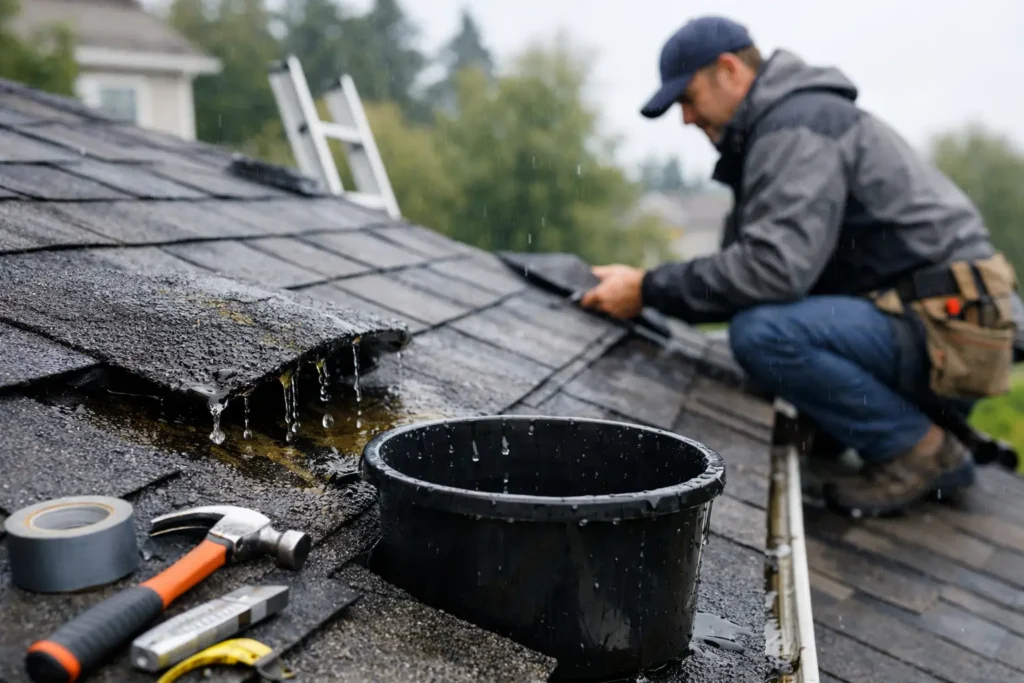
A roof leak rarely starts at a convenient time. It shows up during a heavy Central New York storm, after snow starts melting, or right when you notice a water stain spreading across the ceiling. If you’re searching for roof leak repair near me, you probably do not need a long lecture. You need to know what to do now, what can wait, and how to get the problem fixed before it turns into interior damage, mold, or structural repairs.
The first thing to know is simple: even a small leak can point to a much larger roofing problem. Water travels. The spot you see on a ceiling may be several feet away from the actual opening in the roof. That is why quick patch jobs and guesswork often fail. A proper repair starts with finding the source, checking the surrounding roof system, and fixing the issue in a way that holds up through the next storm.
When to Call for Roof Leak Repair Near Me
Some leaks are obvious. Water is dripping into a bucket, shingles are missing, or flashing has pulled away near a chimney or vent. Others are easier to miss. You may notice a musty smell in the attic, peeling paint near the top of a wall, damp insulation, or a ceiling stain that seems to grow after rain.
If any of those signs are showing up, it is time to call a local roofing contractor. Waiting usually costs more than acting early. What starts as a repair can turn into damaged decking, ruined insulation, stained drywall, or mold growth inside the home.
Urgency matters even more in Syracuse and across Central New York, where roofs deal with wind, heavy rain, snow load, freeze-thaw cycles, and ice dam conditions. A weak spot that might stay manageable in mild weather can fail quickly here.
Why Roof Leaks Happen in Central New York
Not every leak means you need a full roof replacement. Sometimes the repair is limited and straightforward. Sometimes the leak is a symptom of a roof that has reached the end of its service life. The difference comes down to age, storm exposure, installation quality, and how widespread the damage is.
One common cause is damaged or missing shingles. High winds can lift shingles and break the seal that protects the underlayment beneath. Once that barrier is exposed, water can work its way in.
Flashing failure is another major issue. Roof flashing is installed around chimneys, skylights, vents, and wall intersections to direct water away from vulnerable areas. If flashing rusts, cracks, pulls loose, or was installed poorly in the first place, leaks often follow.
Ice dams are also a major concern in this region. When heat escapes through the roof, snow melts and refreezes at the roof edge. That buildup can force water under shingles and into the home. In those cases, the repair may involve more than the roof surface. Ventilation and insulation may need attention too.
Older roofs tend to have a combination of problems rather than a single point of failure. Granule loss, brittle shingles, nail pops, exposed fasteners, and soft decking can all contribute. That is where an honest inspection matters. You want clear guidance on whether a targeted repair makes sense or whether you are putting money into a roof that is already failing in multiple areas.
What to Do While You Wait for a Roofer
If water is actively entering the home, your goal is damage control. Move furniture, rugs, electronics, and anything valuable away from the wet area. Put down towels or plastic and place a bucket where water is dripping. If the ceiling is bulging, that can mean water is pooling above it. In some cases, controlled drainage can prevent a larger collapse, but if you are unsure, do not take risks.
If it is safe to do so, check the attic for visible water entry. You may see wet decking, soaked insulation, or daylight around roof penetrations. That can help confirm the severity, but it is not a substitute for a full inspection.
What you should not do is climb onto a wet or storm-damaged roof. That is especially true in icy conditions or after wind events. Temporary tarping may be necessary, but it should be handled by a trained, insured contractor when conditions are unsafe.
How a Professional Roof Leak Repair Should Work
A reliable repair process starts with inspection, not assumptions. The roofer should look at the obvious leak area, but also the surrounding shingles, flashing, penetrations, valleys, roof edges, attic conditions, and any signs of hidden moisture.
Once the source is identified, you should get a clear explanation of what failed, how the repair will be completed, and whether there are any related issues worth addressing now. Good contractors do not use pressure tactics. They explain the options, give straightforward pricing, and tell you when a repair is likely to hold and when a replacement may be the smarter investment.
The actual repair depends on the problem. It may involve replacing missing or broken shingles, resealing or replacing flashing, repairing pipe boots, addressing valley damage, or replacing rotted decking beneath the surface. In storm situations, the scope may expand if the roof took broader wind or impact damage.
This is also where local experience matters. Roofing systems in Central New York need repairs that hold up against repeated freeze-thaw cycles, snow, and wind. A patch that looks fine for a week but fails in the next hard weather event is not a real solution.
Choosing the Right Contractor for Roof Leak Repair Near Me
When homeowners search for a roofer, speed is usually the first priority. That makes sense, but fast service should still come with professionalism and accountability.
Look for a contractor that is licensed where required, fully insured, experienced with emergency leak response, and familiar with local weather demands. Ask whether they provide a full inspection, whether they explain repair versus replacement honestly, and whether they stand behind their workmanship.
You should also pay attention to how they communicate. If a company is difficult to reach before the job starts, that usually does not improve later. You want a team that shows up when promised, explains what they found in plain language, and keeps the process clear from estimate to completion.
For homeowners in Syracuse and the surrounding area, a truly local contractor has another advantage. They understand common roofing failures tied to this climate and can respond faster when urgent weather-related damage happens. Alpha Omega Roofing LLC is built around that kind of local responsiveness, with free estimates and practical guidance for homeowners who need answers quickly.
Repair or Replacement? It Depends on the Roof
This is the question many homeowners want answered right away. Sometimes the answer is easy. If the roof is relatively new and the leak is tied to a specific issue, such as lifted flashing or a damaged vent boot, a repair often makes complete sense.
If the roof is older, leaking in multiple places, or showing widespread wear, a repair may only buy limited time. Spending money on isolated fixes can become frustrating if new leaks keep appearing every season. In that case, replacement may be more cost-effective over the long run.
There is no one-size-fits-all answer. The right move depends on the roof’s age, the condition of the decking, the extent of moisture intrusion, and whether the damage is isolated or systemic. What matters most is getting an honest assessment instead of a sales pitch.
Insurance and Storm Damage Considerations
If the leak appeared after a windstorm, hail event, or sudden weather incident, it is worth asking whether the damage may fall under your homeowners insurance coverage. Not every leak does, especially if the issue is tied to long-term wear and neglected maintenance. But storm-related damage is different.
A contractor experienced with storm restoration can document visible damage, explain what they found, and help you understand whether filing a claim makes sense. That does not mean every problem should become an insurance claim. Sometimes the deductible and scope do not justify it. Still, when storm damage is involved, it helps to work with someone who can guide you through the process clearly.
The Cost of Waiting Too Long
The biggest mistake homeowners make with roof leaks is hoping the problem stays small. Water rarely cooperates. It spreads into insulation, drywall, framing, trim, and even electrical areas. What could have been handled with a focused roof repair turns into interior repair work, mold remediation, and a much larger bill.
A leak also makes it harder to plan on your terms. Instead of scheduling a repair during a reasonable weather window, you end up making urgent decisions during the next storm.
If your ceiling is stained, your attic is damp, or water is already getting in, trust what your house is telling you. The right next step is not to wait for it to get worse. It is to get a local roofer out, find the real source, and fix it the right way before a manageable repair becomes a much bigger problem.