
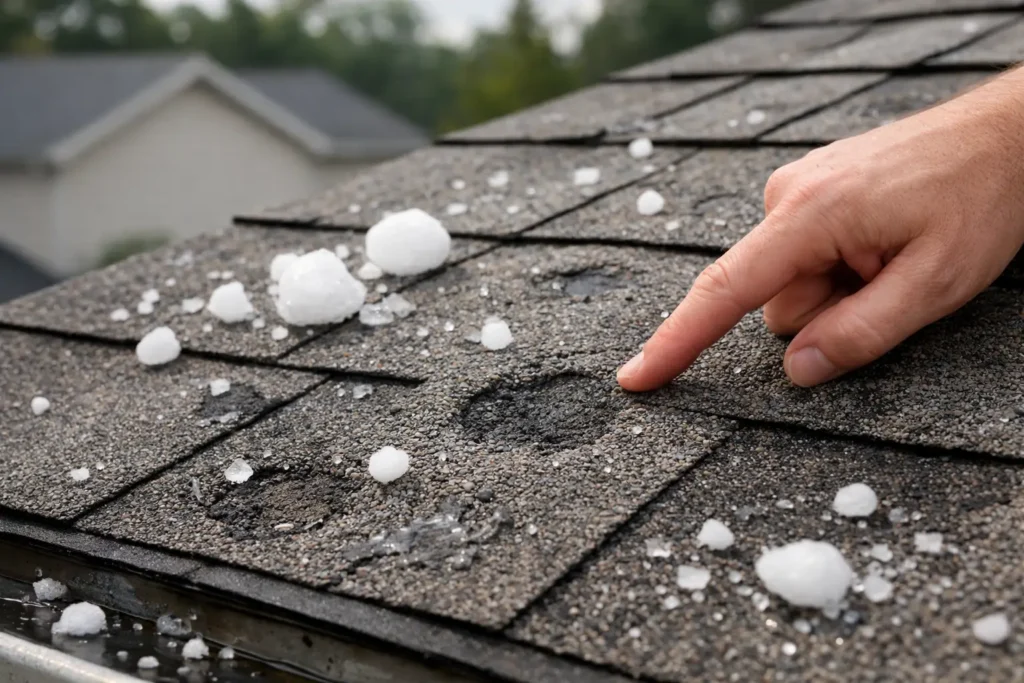
After a hard Central New York storm, a roof can look fine from the driveway and still have real damage. If you’re asking what does hail damage look like on a roof, the answer depends on your roofing material, the size of the hail, the wind direction, and the age of the roof. Some signs are obvious. Others are easy to miss until a leak shows up weeks later.
That is why homeowners should not rely on a quick glance alone. Hail damage often shows up as small impact marks, loosened granules, bruised shingles, dented metal, or damage to other exterior surfaces that points to roof trouble above. The sooner you know what to look for, the easier it is to protect your home and document the problem before it gets worse.
What does hail damage look like on a roof from the ground?
In many cases, you will not see the actual shingle damage from the ground. What you may notice instead is a pattern. Dented gutters, downspouts, flashing, window trim, metal vents, or mailbox tops can all suggest that the roof took hits too. If your siding, deck furniture, or AC unit cover shows fresh impact marks after a storm, your roof deserves a closer look.
You may also spot dark patches or uneven-looking areas on an asphalt roof. Those can be places where granules were knocked off. Granules are the rough outer layer that helps protect shingles from UV exposure and weathering. When hail strips them away, the shingle surface can start breaking down faster.
Another clue is granule buildup in your gutters or at the bottom of downspouts right after a storm. Not every granule loss issue is caused by hail, since older roofs shed granules naturally over time. Still, sudden heavy buildup after hail is worth taking seriously.
Common signs of hail damage on asphalt shingles
Asphalt shingles are the most common residential roofing material in this area, and they tend to show hail damage in a few specific ways. The first is bruising. A hail hit can leave a soft spot where the mat underneath the shingle has been damaged. From above, that spot may look like a dark, round mark or a slightly dull area where granules are missing.
The second sign is random impact marks. Hail damage usually does not create a perfectly straight line. It appears scattered, with hits in different places depending on wind and exposure. If one slope of the roof took the brunt of the storm, that side may show more visible damage than the others.
You may also see cracks or splits in the shingles, especially if the roof is older or the hail was larger. A newer, more flexible shingle might bruise without cracking. An aging shingle can fracture more easily. That is one reason storm damage is never one-size-fits-all.
Lifted shingle edges can happen too, though wind is often part of that story. Hail and wind together can weaken the seal, shorten the life of the roof, and create a path for water.
The difference between hail bruising and normal wear
This is where many homeowners get mixed signals. Normal aging causes gradual granule loss, fading, and general wear. Hail damage tends to be more concentrated and sudden. You may see circular marks, fresh granule loss in isolated spots, or impact damage on soft metals around the roofline.
A roof that is simply old often wears more evenly. A hail-damaged roof usually shows a random pattern tied to one storm event. If your roof looked fine before a storm and now has dark spots, dented metal components, or new granules in the gutters, that points in a different direction.
What hail damage looks like on metal roofing and roof components
On metal roofing, hail damage is often easier to spot because it leaves dents or dings. The severity matters. Some dents are mostly cosmetic, while others affect seams, fasteners, coatings, or panel performance. Even minor-looking dents can become bigger issues if they interfere with drainage or protective finishes.
Metal vents, flashing, ridge caps, gutters, and downspouts also tell part of the story. Fresh dents in these areas often help confirm the timing and direction of hail impact. If soft metals around the roof are marked up, the shingles likely need inspection too.
Skylights, vent caps, chimney flashing, and roof accessories can also take direct hits. Cracked vent covers or damaged flashing may allow water in even if the main field of shingles seems mostly intact.
Signs inside the home that your roof may have hail damage
Not all hail damage announces itself outside. Sometimes the first thing a homeowner notices is a water stain on the ceiling, damp insulation in the attic, or a musty smell after rain. That does not always mean hail was the cause, but if these signs appear after a storm, it should move your roof inspection up the list.
Check your attic for wet spots, staining on the underside of the roof deck, or daylight coming through where it should not. These signs can point to storm-related roof damage, especially if there were no leak issues before.
What not to do after a hailstorm
The biggest mistake is climbing onto the roof yourself, especially when shingles are wet or the damage is not visible without close inspection. Roof surfaces can be slick, unstable, and dangerous after a storm. A second mistake is waiting too long. Small impact damage can turn into leaks, decking problems, or interior repairs if it goes unchecked.
It is also a mistake to assume that if there is no leak today, there is no problem. Hail damage can shorten roof life and weaken shingles without causing immediate water intrusion. By the time a stain appears inside, the repair may be more involved.
Why photos and timing matter
If you suspect storm damage, take photos from the ground of any visible dents, fallen branches, gutter issues, and surrounding property impacts. Write down the date of the storm and what you noticed. This can help if you need to file an insurance claim later.
The timing matters because insurers often want documentation tied to a specific weather event. Waiting too long can make it harder to show what happened and when.
When to call for a professional roof inspection
If you see dented gutters, damaged siding, missing granules, cracked shingles, or any new leak signs after hail, it is time to have the roof checked. A professional inspection can identify whether the damage is cosmetic, repairable, or serious enough to justify replacement.
This is especially true for older roofs. A newer roof may handle a storm with limited impact. An older roof with years of wear may cross the line from serviceable to vulnerable after one hail event. The damage might not look dramatic, but the roof’s remaining life can change fast.
A local contractor also understands how our weather patterns affect roofs here in Central New York. Hail rarely shows up in isolation. Wind, heavy rain, and temperature swings all play a role in how damage develops afterward.
What happens if hail damage is confirmed?
That depends on the extent of the damage. In some cases, a targeted repair is enough. If the damage is isolated to a small area and the surrounding shingles are still in good shape, repair can make sense. In other cases, widespread bruising, cracking, or granule loss across multiple slopes may mean replacement is the smarter long-term move.
Insurance may come into play if the damage is tied to a covered storm event. This part can feel stressful for homeowners, especially if you are not sure what counts as real storm damage versus normal wear. A contractor who works with storm-damaged roofs regularly can help document findings, explain next steps clearly, and give you a straightforward estimate.
At Alpha Omega Roofing LLC, that is the kind of guidance homeowners expect – clear answers, honest recommendations, and no pressure.
A practical way to look at hail damage
If your roof took a storm and you are unsure what you are seeing, think in layers. Start with what is visible from the ground, like dented metal, granules in gutters, or damage to siding and trim. Then consider what has changed inside, such as stains or attic moisture. Finally, have the roof inspected before a small issue turns into a larger one.
A roof does not need to be torn open to be storm-damaged. Sometimes the warning signs are subtle, but they still matter. If something looks off after hail, trust that instinct and get it checked while the damage is still manageable.