
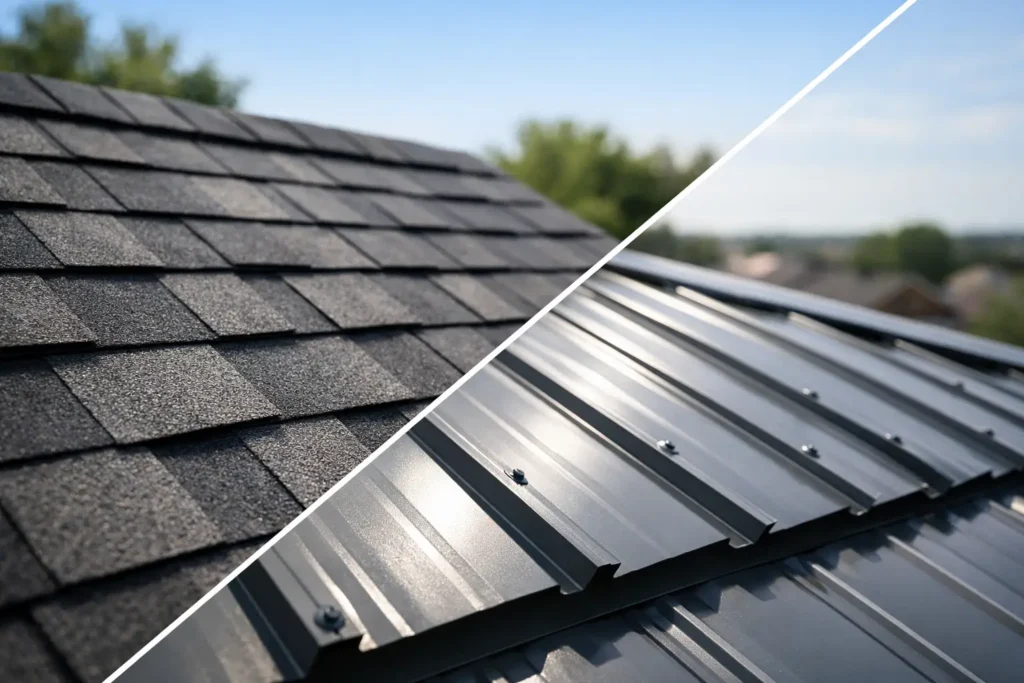
If your roof is getting old, leaking after storms, or showing missing shingles, the asphalt shingles vs metal question gets real fast. This is not just about appearance. In Central New York, your roofing choice has to stand up to snow loads, ice, wind, heavy rain, and long winters without turning into a repeat expense.
For most homeowners, the right answer comes down to budget, how long you plan to stay in the house, and how much weather resistance you want from the next roof. Both materials can be excellent when installed correctly. Both also come with trade-offs that matter more here than they might in a milder climate.
Asphalt shingles vs metal: the biggest differences
Asphalt shingles are still the most common residential roofing material for a reason. They are affordable, widely available, and can look good on almost any home style. Repairs are usually straightforward, and a full replacement typically costs less upfront than metal.
Metal roofing costs more at the start, but it generally lasts much longer and offers stronger resistance to fire, wind, and moisture issues when the system is installed properly. It also sheds snow more easily, which can be a real advantage during Syracuse winters.
That does not automatically make metal the better roof for every house. Some homeowners need a practical roof replacement now, not the highest-end option. Others are planning to stay put for decades and want to avoid another major roofing project later.
Cost matters, but so does timing
Upfront price is usually where homeowners start, and that makes sense. Asphalt shingles almost always win on initial cost. If your roof replacement is urgent because of leaks or storm damage, shingles may be the fastest way to protect the home without stretching the budget too far.
Metal roofing asks for a bigger investment. Depending on the product, profile, and roof design, the difference can be substantial. Complex roof lines, penetrations, steep slopes, and trim details can all add to the total.
But initial price is only part of the picture. If you expect to stay in your home for a long time, metal can make financial sense over the life of the roof. A lower-cost roof that needs replacement much sooner is not always the cheaper option in the long run.
This is where honest guidance matters. A homeowner with a 20-year plan should not necessarily make the same choice as someone preparing to sell within five years.
Lifespan and long-term value
Asphalt shingles generally offer a shorter service life than metal. The exact number depends on product quality, attic ventilation, installation, weather exposure, and maintenance, but shingles do wear down faster over time. Granule loss, curling, cracking, and storm damage are common issues as the roof ages.
Metal roofs typically last much longer. They are less vulnerable to the kind of gradual breakdown that affects asphalt in harsh weather cycles. That longer lifespan is one of the strongest reasons homeowners choose metal, especially if they want a roof that can outlast the next several decades.
Still, lifespan claims should be treated carefully. No roof material performs to its full potential if it is installed poorly. Flashing details, ventilation, underlayment, fastening methods, and transition areas often determine whether a roof truly lasts.
Which roof handles Central New York weather better?
For our region, this is the question that matters most. Snow, ice dams, freeze-thaw cycles, and high winds can test any roof system.
Metal has a clear edge in snow shedding. Snow tends to slide off more easily, which can reduce long-term weight stress and help limit standing moisture. It also resists moisture absorption, which is useful during repeated freeze-thaw conditions.
Asphalt shingles can absolutely perform well here too, but they depend heavily on correct installation and the overall roofing system. Ice and water protection, proper attic ventilation, and well-executed flashing are critical. A shingle roof can fail early if those details are ignored, especially around eaves, valleys, chimneys, and roof penetrations.
Wind resistance depends on the specific product and install quality, but many metal systems are built to handle severe weather very well. Shingles can also be rated for strong winds, though they are generally more vulnerable to blow-offs and lifted tabs during major storms.
If your home is exposed, older, or prone to winter roof problems, metal may offer more peace of mind. If your roof system is designed correctly and installed by an experienced local contractor, asphalt can still be a solid and reliable choice.
Appearance and curb appeal
A lot of homeowners assume this is just personal taste, but it also affects resale and how well the roof fits the house.
Asphalt shingles have broad appeal because they work with almost any architectural style. They come in many colors and profiles, and they give a familiar look that buyers expect in many neighborhoods. If you want a clean, classic appearance without drawing too much attention to the roof, shingles are an easy fit.
Metal roofs create a more distinct look. On the right home, they can look sharp, high-end, and modern. They are also available in styles that mimic more traditional roofing materials, so the appearance is not limited to one aesthetic.
The key is choosing a roof that fits the home, not just the trend. A roof should add value visually, not look out of place with the siding, trim, masonry, and neighborhood character.
Noise, comfort, and everyday concerns
One concern homeowners often bring up is noise. People worry a metal roof will sound too loud in rain or hail. In most residential applications, that concern is overstated. With proper roof decking, insulation, and attic space, metal is usually not dramatically louder than other roofing materials.
Energy performance is another common question. Metal can reflect more solar heat, which may help in warm weather, but in Central New York, winter performance and ventilation design matter just as much. No roofing material fixes insulation problems on its own.
Maintenance is worth considering too. Asphalt roofs may need more frequent repairs over time, especially after storm events. Metal roofs are generally lower maintenance, but when repairs are needed, they should be handled by contractors familiar with that specific system.
Repairs and insurance considerations
If your roof has storm damage, the decision between asphalt and metal may be shaped by insurance as much as preference. Some claims may support replacement with similar materials, while upgrades can involve additional out-of-pocket cost.
Asphalt shingles are often easier and less expensive to repair in smaller sections. That can be helpful if damage is isolated. Metal repairs can also be done, but matching panels, coatings, and profiles may be more involved depending on the age and type of roof.
This is one reason inspections matter. Before choosing a material, it helps to know whether you are dealing with isolated damage, widespread wear, ventilation issues, or structural concerns. The best roofing recommendation starts with the actual condition of the home.
When asphalt shingles make the most sense
Asphalt is often the right choice when you need dependable protection at a more manageable upfront cost. It is a strong option for homeowners who want an attractive roof, solid weather performance, and easier short-term budgeting.
It also makes sense when the home style suits shingles better, when neighboring homes are mostly shingle roofs, or when resale timing makes a practical investment more reasonable than a premium one.
For many families, asphalt is not a compromise. It is the smart fit for the house, the timeline, and the budget.
When metal is worth the extra cost
Metal stands out when long-term durability is the priority. If you plan to stay in your home for many years, want better resistance to severe weather, and prefer a roofing system with longer service life, the added cost can be justified.
It can also be a strong choice for homes that routinely deal with heavy snow buildup, recurring weather exposure, or repeated roofing issues. Homeowners who are tired of patching an aging roof often see metal as a way to stop thinking about roofing for a long time.
The right answer depends on your house
The asphalt shingles vs metal decision is not really about picking a winner on paper. It is about choosing the roof that fits your home, your goals, and the weather it has to survive.
A straightforward ranch in a quiet neighborhood may call for a very different recommendation than a larger custom home with steep slopes, multiple valleys, and years of winter wear. That is why local inspection and clear pricing matter so much. A dependable contractor should explain the pros and cons honestly, not push one material just because it carries a bigger price tag.
If you are weighing roof replacement options, the best next step is simple. Get the roof inspected, understand the condition of the decking and ventilation, and compare the real numbers. Once you know what your home actually needs, the right choice usually becomes much clearer.