
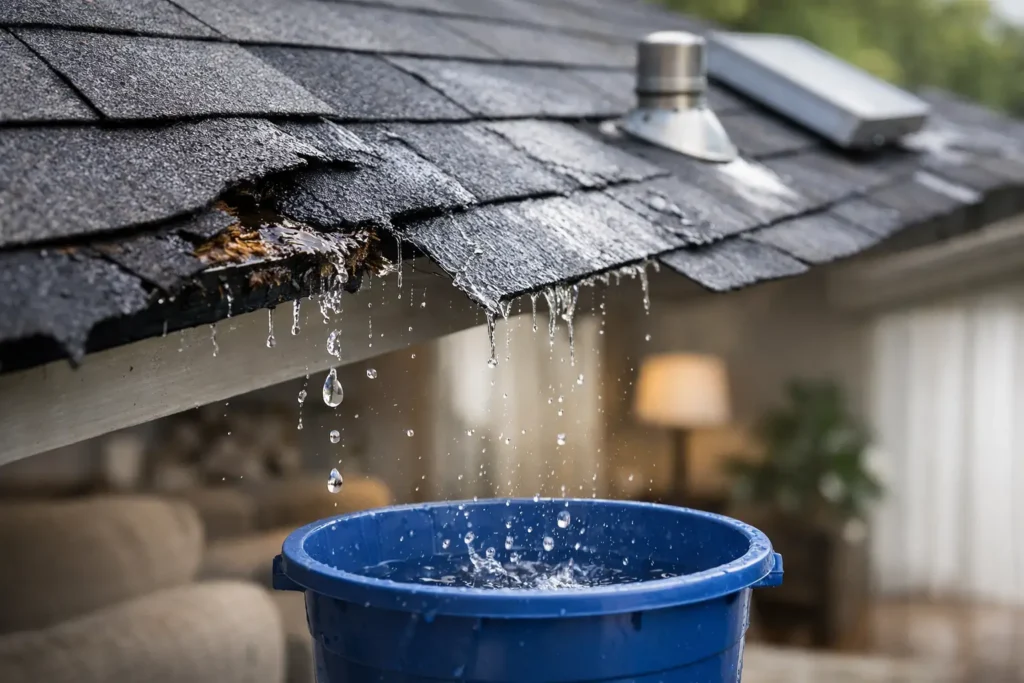
A roof leak rarely starts as a dramatic ceiling collapse. More often, it shows up as a brown stain in a bedroom corner, a drip near a vent, or damp insulation in the attic after a storm. If you’re asking, why is my roof leaking, the real issue is usually not just the water you can see. It’s the point where your roofing system has been weakened, shifted, worn out, or damaged by weather.
In Central New York, leaks tend to show up after heavy rain, wind-driven storms, freeze-thaw cycles, or winter ice buildup. The source may be obvious, but just as often, water travels before it appears indoors. That is why a leak near one wall can actually start several feet away on the roof itself.
Why is my roof leaking in the first place?
Most residential roof leaks come down to one of a few common problems. The challenge is that different failures can create the same symptom inside the home. A ceiling stain does not automatically mean the shingles above it are the only issue.
Aging shingles are one of the most common causes. Over time, shingles can crack, curl, lose granules, or pull loose in high wind. Once the outer layer is compromised, water can work underneath and reach the roof deck. This is especially common on older roofs that have been through years of snow, ice, and summer heat.
Flashing failure is another major cause. Flashing is the metal material installed around roof penetrations and vulnerable transitions, such as chimneys, skylights, roof valleys, and vent pipes. If the flashing rusts, lifts, separates, or was installed poorly to begin with, water can get into areas that should stay sealed.
Roof valleys also deserve attention. These are the areas where two roof slopes meet, and they handle a high volume of water runoff. If shingles in a valley are damaged or if debris builds up there, water can back up and push under the roofing materials.
Then there is simple storm damage. Strong winds can lift shingles without tearing them off completely, which makes the damage easy to miss from the ground. Hail can bruise shingles and shorten their life. A fallen branch can puncture roofing materials or damage flashing around a vulnerable section.
Leaks do not always start where you see them
One reason homeowners get frustrated is that the visible leak often does not line up with the actual entry point. Water can move along roof decking, rafters, insulation, and even interior framing before it finally drips into a room.
That means a water spot on your ceiling could be caused by a problem near a chimney, plumbing vent, ridge cap, or valley farther uphill on the roof. It also means patching the area directly above the stain does not always solve the problem.
This is where a professional inspection matters. A roofing contractor is not just looking for wet spots. They are tracing how water is getting in, how long it may have been happening, and whether the issue is isolated or part of a larger roof failure.
Common roof leak causes homeowners overlook
Some leaks come from places people do not think to check. Pipe boots are a good example. These rubber seals sit around plumbing vent pipes and can crack with age. When they fail, water can enter around the pipe and leak into the attic or walls.
Nail pops are another issue. As roofing materials expand and contract with temperature changes, nails can loosen and push upward. That small opening can become a pathway for water, especially during wind-driven rain.
Clogged gutters can also contribute to leaks. When gutters fill with leaves, granules, and debris, water cannot drain away properly. It can back up at the roof edge, work under shingles, and damage fascia, soffits, and interior areas near exterior walls.
Poor attic ventilation is less obvious but still important. If warm, moist air gets trapped in the attic, it can contribute to condensation, mold, and deterioration that looks similar to a roof leak. Sometimes the issue is roofing. Sometimes it is a ventilation problem. Sometimes it is both.
Why is my roof leaking after heavy rain but not every time?
If the leak only appears during certain storms, that usually points to a condition-specific problem rather than a fully open hole. Wind-driven rain can push water into small gaps around flashing or siding transitions that stay dry during lighter rainfall.
The amount of rain matters too. A roof might handle normal runoff but fail during a downpour if a valley is clogged, underlayment is compromised, or water is pooling in a low-slope section. In winter, melting snow and ice dams can create a similar pattern, where the roof leaks during thaw periods rather than during active snowfall.
This is one of those situations where it depends on timing and weather conditions. A roof that seems fine most days can still have a serious weakness. Waiting for the next storm to see if it happens again usually gives water more time to damage wood, insulation, drywall, and paint.
Signs the leak is more serious than it looks
A small ceiling stain can hide a much larger issue. If you notice sagging drywall, bubbling paint, musty odors, warped trim, or wet attic insulation, the leak may have been active longer than you think. Mold growth can begin quickly once moisture gets trapped in enclosed spaces.
There is also the structural side of the problem. Persistent leaks can weaken roof decking and framing over time. What starts as a repair may turn into partial deck replacement if the damage is left alone too long.
Electrical risk is another concern. If water is traveling near light fixtures, ceiling fans, or wiring, the problem is no longer just cosmetic. At that point, fast action matters.
When a repair makes sense and when it may not
Not every leaking roof needs to be replaced. If the damage is limited to a small area, the roof is otherwise in good condition, and the materials still have useful life left, a targeted repair can be the right move.
But repairs have limits. If the roof is older, if leaks are showing up in multiple areas, or if storm damage has affected broad sections of shingles and flashing, replacement may be the more cost-effective option. Homeowners sometimes spend money on repeated patch jobs when the roof system as a whole is already failing.
A good contractor should explain that honestly. The right answer is not always the bigger project. It is the option that protects your home and makes financial sense based on the roof’s age, condition, and expected lifespan.
What to do right now if your roof is leaking
If water is actively coming into the house, start by protecting the interior. Move furniture, place a bucket under drips, and if water is bulging in the ceiling, that area needs careful attention before it collapses. If the leak is near electrical fixtures, shut off power to that area if it is safe to do so.
If you can access the attic safely, look for wet insulation, darkened wood, or visible dripping. This can help confirm that the problem is roof-related, but it usually will not tell you the full source. Avoid climbing onto the roof yourself, especially in wet, icy, or windy conditions.
Take photos of the damage. That is helpful for repair planning and may also matter if the leak is tied to storm damage and an insurance claim becomes part of the process.
Then schedule a professional inspection as soon as possible. Fast response is not just about stopping the drip. It is about limiting the spread of damage before a manageable repair turns into a bigger restoration job.
Why local weather makes roof leaks more common
Homes in the Syracuse area deal with weather that is hard on roofing systems. Snow loads, ice dams, freeze-thaw cycles, wind, and sudden summer storms all put stress on shingles, flashing, sealants, and roof penetrations.
That is why leak prevention is not just about choosing any roofing material. Installation quality matters. Ventilation matters. Proper flashing details matter. So does using materials built to perform through repeated seasonal extremes.
For homeowners in this region, routine inspections can catch problems before they become interior damage. A missing shingle, loose flashing section, or worn pipe boot is much easier to address early than after water has already made it into the attic and ceilings.
If you’re still wondering why is my roof leaking, the safest answer is that something in the roofing system has already been compromised, even if the damage looks minor from inside the house. Getting a clear diagnosis now gives you more control over cost, scope, and timing. And when your home has been hit by rough weather, a straightforward inspection from a trusted local contractor like Alpha Omega Roofing LLC can save you a lot more than a bucket on the floor ever will.