
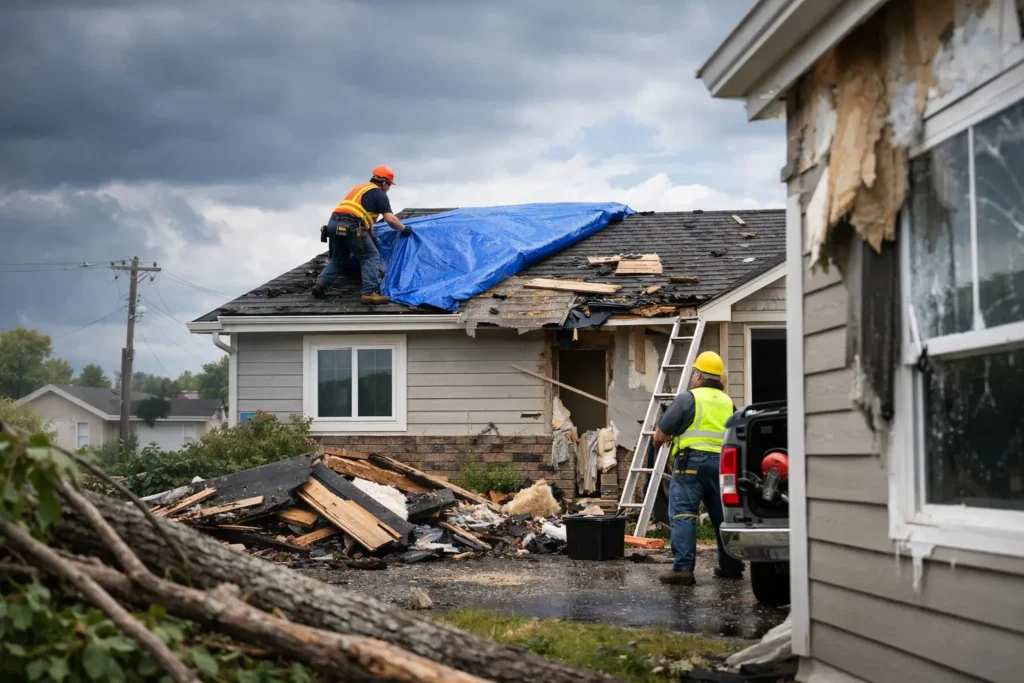
A storm can leave your home looking mostly fine from the driveway and still cause serious damage overhead. That is why a clear guide to storm damage restoration matters. The first few hours after high winds, hail, or heavy rain often determine whether you are dealing with a straightforward repair or a much bigger and more expensive problem.
For many homeowners, the hard part is not knowing where to start. You may see a few shingles in the yard, a water stain on the ceiling, or siding that looks slightly out of place. It is easy to assume the damage is minor. Sometimes it is. Sometimes that small visible issue is only the part you can see, while water is already working its way into the roof deck, insulation, or walls.
What storm damage restoration actually includes
Storm damage restoration is not just patching a leak. It is the process of assessing all affected exterior components, stopping active water intrusion, documenting the damage, and repairing or replacing materials so your home is protected long term.
That can include roofing, flashing, gutters, siding, soffits, fascia, chimney components, and sometimes the interior areas affected by moisture. The right scope depends on the type of storm and the age and condition of the home before the storm hit. A newer roof may need limited repairs after a wind event. An older roof with brittle shingles may need broader restoration because the storm exposed weaknesses that were already there.
In Central New York, that distinction matters. Wind-driven rain, hail, freeze-thaw cycles, and heavy seasonal weather can turn minor storm damage into a larger issue quickly. Fast action helps, but so does getting the diagnosis right.
Your guide to storm damage restoration after a storm
The first step is safety. If there is a downed power line, structural instability, active ceiling sagging, or major water intrusion near electrical fixtures, stay clear of the area and address immediate hazards first. No inspection is worth risking injury.
Once it is safe, do a basic ground-level check. Walk the perimeter of your home and look for missing shingles, bent or detached gutters, dented metal, fallen branches, displaced siding, and debris impact. If water is entering the home, place buckets or towels where needed to reduce interior damage. If you can safely move furniture or valuables away from wet areas, do that early.
Take photos of everything you can see before cleanup starts. That includes wide shots of each side of the house, close-ups of visible damage, interior water stains, and any debris that may have caused impact. Good documentation helps whether you end up filing an insurance claim or paying out of pocket.
After that, schedule a professional inspection as soon as possible. This is where many homeowners lose time. Waiting a week or two can make it harder to connect the damage to the storm event, and it gives moisture more time to spread. A prompt inspection gives you a clearer picture of what happened and what needs to be done now versus later.
What a professional inspection should look for
A proper storm inspection goes beyond the obvious missing shingle. A contractor should check for lifted shingles, broken seal strips, exposed nail heads, flashing separation, soft spots, punctures, granule loss, hail bruising, gutter damage, and signs of water entry around roof penetrations.
They should also look at related exterior systems. Storm damage is often interconnected. A section of loose siding may indicate wind pressure issues. Damaged chimney flashing can be the real source of a leak that appears to come from the main roof. Overflowing gutters may point to storm debris or hidden sagging that is now sending water back toward the house.
This is also where experience matters. Not every dark mark on a shingle is hail damage, and not every ceiling stain means you need a full roof replacement. A trustworthy contractor explains what is storm-related, what is aging, and where those issues overlap.
Repair or replacement – how the decision gets made
Homeowners usually want a simple answer here, but the right choice depends on the extent of damage, the age of the materials, and whether repairs will truly hold up.
If damage is isolated to a small section and the surrounding roof is in solid condition, a repair may be the most practical option. That can make sense after a limited wind event or a small branch impact. On the other hand, if shingles are creased across multiple slopes, the roof is already near the end of its life, or matching materials are no longer available, replacement may be the better investment.
Insurance can influence that decision, but it should not make it for you. The goal is not just to get a claim approved. The goal is to restore your home properly. A cheap short-term fix can become expensive if it allows recurring leaks or repeated repairs over the next few seasons.
The insurance side of storm damage restoration
Insurance claims are one of the biggest stress points for homeowners after a storm. The process feels unfamiliar, and most people only deal with it a few times, if that. A good contractor can help by documenting visible damage clearly and explaining the repair scope in plain terms.
What they should not do is make unrealistic promises. No one can guarantee claim approval. Coverage depends on your policy, the cause of loss, the age of the roof, and the insurer’s findings. What matters most is having thorough documentation, a timely inspection, and a contractor who knows how storm-related exterior damage is typically evaluated.
If you plan to file a claim, avoid making permanent repairs before the damage is documented, unless emergency work is needed to prevent further loss. Temporary protective measures are often necessary and appropriate. Just make sure those steps are photographed and clearly recorded.
Why temporary protection matters
Storm restoration usually starts with mitigation, not final repair. If your roof is actively leaking or sections are exposed, temporary protection can limit the damage while materials, approvals, or scheduling are being handled.
That may include tarping damaged roof sections, sealing vulnerable openings, or securing loose materials that could worsen in the next weather event. This step is easy to underestimate, but it can save drywall, insulation, trim, and personal belongings from additional water damage.
Not every storm-damaged home needs emergency service, but when active exposure is involved, speed matters. Waiting for a convenient repair date without protecting the opening first is where small exterior damage often turns into interior restoration work.
Common mistakes homeowners make
The first is assuming no leak means no damage. Wind damage can break shingle seals without causing immediate interior signs. The roof may hold for now and fail during the next heavy rain.
The second is focusing only on the most visible problem. A missing gutter section gets attention because it is obvious, but the real concern may be lifted flashing or impact damage higher up. Storms rarely damage just one component.
The third is choosing based only on the lowest price. After a storm, quick bids and quick promises are everywhere. What matters more is whether the contractor is insured, responsive, experienced with storm work, and willing to explain the scope clearly. Homeowners deserve straight answers, not pressure.
Choosing the right contractor for storm damage restoration
A solid contractor should be able to inspect the home thoroughly, explain findings in a way that makes sense, provide a clear written estimate, and outline what needs immediate attention. They should also be realistic. Some homes need a focused repair. Others need a more complete restoration plan.
For homeowners in places like Syracuse and the surrounding area, local experience adds real value. Storm patterns, winter weather exposure, ventilation concerns, and older housing stock all affect how damage shows up and how repairs should be handled. A contractor who works in these conditions regularly is more likely to spot issues that a less experienced crew might miss.
If you speak with Alpha Omega Roofing LLC or another qualified local professional, look for straightforward communication. You want someone who will tell you what can wait, what cannot, and what the finished repair is meant to accomplish.
A better way to think about this guide to storm damage restoration
The goal is not to panic every time a storm rolls through. It is to respond quickly, document carefully, and make decisions based on a real inspection instead of guesswork. Some damage will be minor. Some will justify a larger repair or replacement. The difference is easier to manage when you catch it early.
Your home does not need dramatic visible damage to need attention. If your area has had strong wind, hail, or heavy rain and you have even small warning signs, trust that instinct and get it checked. A prompt, honest inspection can save you money, protect your home, and give you one less thing to worry about when the weather turns again.