
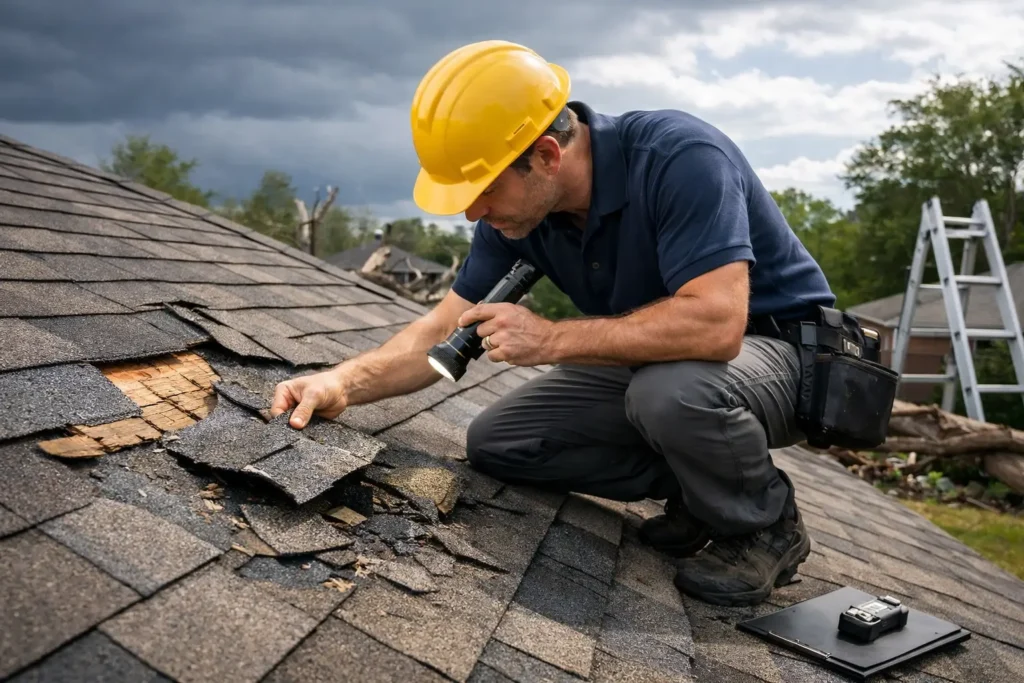
The wind has stopped, the rain has moved out, and the yard is scattered with branches. That is usually the moment homeowners start looking up and wondering what happened overhead. A roof inspection after storm damage is one of the smartest next steps you can take, especially in Central New York where high winds, hail, heavy rain, and snow can turn a small issue into a costly leak fast.
Storm damage is not always obvious from the ground. A few missing shingles get attention right away, but lifted flashing, bruised shingles, damaged vents, and water entry points often go unnoticed until stains show up on a ceiling. By then, the repair is usually more involved. Acting early gives you a better chance to limit interior damage, document the problem clearly, and make informed decisions about repair or replacement.
Why a roof inspection after storm matters
After a strong storm, the roof can take more punishment than the rest of the house combined. Wind attacks edges, ridges, and flashing. Hail can weaken shingles without tearing them off. Heavy rain finds any opening that already existed and makes it worse. If ice, pooling water, or clogged gutters are part of the picture, the roof system can start failing in more than one area at once.
That is why timing matters. A prompt inspection helps catch damage before the next storm pushes water deeper into the home. It also helps create a clean record of what happened while the event is still recent. If you end up filing an insurance claim, clear documentation and a professional assessment can make the process far less stressful.
There is also the issue of safety. Many homeowners are tempted to grab a ladder and take a closer look. That is understandable, but roofs are especially dangerous after storms. Shingles can be slick, decking can be weakened, and limbs or power lines may still be involved. A careful ground-level check is reasonable. Walking the roof yourself usually is not.
What to look for from the ground
You do not need to be a roofer to spot signs that something may be wrong. Start with a slow walk around the property and pay attention to anything that looks new, uneven, or out of place.
Missing shingles are the easiest sign to recognize, but they are not the only one. Look for shingles that appear lifted, curled, cracked, or shifted out of alignment. Check the yard and gutters for granules, pieces of shingles, flashing, or metal. If you see dented gutters, bent drip edge, or debris piled in roof valleys, those details matter too.
Inside the home, look at the attic if you have access. Damp insulation, water marks, musty odors, or visible daylight coming through the roof deck can all point to storm-related damage. On upper ceilings and walls, fresh stains or bubbling paint should never be ignored.
Some storm damage is subtle. Hail, for example, may leave impact marks that shorten the life of the roof without causing an immediate leak. Wind can break the seal on shingles even when they still appear to be in place. That is where a professional inspection adds real value.
What a professional roof inspection after storm damage should include
A proper inspection is more than a quick glance from the driveway. It should focus on the full roofing system, not just the most obvious problem area.
A contractor should examine shingles, flashing, roof penetrations, ridge caps, valleys, vents, chimney areas, and the general condition of the roof deck as far as visible signs allow. Gutters, soffit, fascia, and siding may also need attention because storm damage often affects multiple exterior components at once.
Just as important, the findings should be explained in plain language. Homeowners should understand what is damaged, what is cosmetic, what needs immediate repair, and what can be monitored. Good contractors do not try to turn every inspection into a full replacement. Sometimes a localized repair is enough. Sometimes the storm exposed bigger age-related weaknesses that make replacement the more practical long-term choice. It depends on the roof’s condition before the storm, the extent of damage, and how close it already was to the end of its service life.
Documentation is another key part of the process. Photos, notes, and a written scope can help you make decisions and support any insurance conversation if needed. That kind of clarity matters when you are trying to move quickly without making a rushed decision.
Repair or replacement depends on more than one issue
Homeowners often want a simple answer right away. Can this be patched, or does the whole roof need to go? The honest answer is that it depends.
If the storm caused limited damage to a newer roof, a targeted repair may be the best path. Replacing a few shingles, resealing flashing, or addressing a damaged vent can restore protection without major work. If the roof is older, has multiple problem areas, or has already had several repairs, another patch may only buy a little time.
Material matching can also be a factor. On older roofs, replacement shingles may not blend well, and underlying wear may mean the visible damage is only part of the story. In those cases, homeowners sometimes choose replacement because it gives them a full reset rather than a temporary fix.
For homes in the Syracuse area, weather exposure should be part of the conversation. Roofs here deal with wind, freeze-thaw cycles, snow loads, and driving rain. A repair that might hold up fine in a milder climate may not perform the same way through another Central New York winter.
If insurance may be involved, do not wait too long
Storm damage claims are easier to handle when the timeline is clear. If you suspect damage, document what you can safely see, note the date of the storm, and schedule an inspection soon. Waiting too long can create questions about whether the damage was storm-related or the result of deferred maintenance.
That does not mean every issue should turn into a claim. Minor damage may fall below your deductible or be more practical to repair directly. What matters is getting a truthful assessment before deciding. A reliable contractor should help you understand the condition of the roof and what steps make sense, not pressure you one way or the other.
If temporary protection is needed, such as tarping an exposed area, that should happen quickly to prevent further damage. Emergency response matters most when water is actively entering the home or the roof has suffered structural impact.
Choosing the right contractor after a storm
Storms tend to bring out aggressive sales tactics. That is when homeowners need a steady, local contractor the most. The right company should be licensed and insured, responsive, clear about pricing, and willing to explain the work without a hard sell.
Local experience matters because storm repair is not just about replacing what blew off. It is about building the roof back to handle what this region actually sees year after year. Materials, ventilation, flashing details, and workmanship all affect how well a repair or replacement performs over time.
It also helps to work with a contractor who understands urgency without cutting corners. You want fast action when your home is exposed, but you also want the job done right. Those two things should go together.
For homeowners who want a straightforward inspection and honest guidance, Alpha Omega Roofing LLC serves Central New York with roof inspections, repairs, storm damage restoration, and free estimates at https://www.alphaomegaroofingllc.com.
When to call right away
Some situations should not wait for a convenient opening on the calendar. Call promptly if you see active leaking, interior water stains that appeared after the storm, shingles or flashing on the ground, sagging roof sections, or debris impact from a tree limb. Even if the damage seems limited, quick action can prevent insulation damage, mold growth, wood rot, and electrical hazards.
If there are no visible leaks, it is still wise to schedule an inspection after a major storm event. Hidden damage is common, and catching it early is almost always cheaper than dealing with the aftermath later.
Your roof does not have to be falling apart to deserve attention. After a hard storm, peace of mind comes from knowing exactly what condition your roof is in and what needs to happen next.