
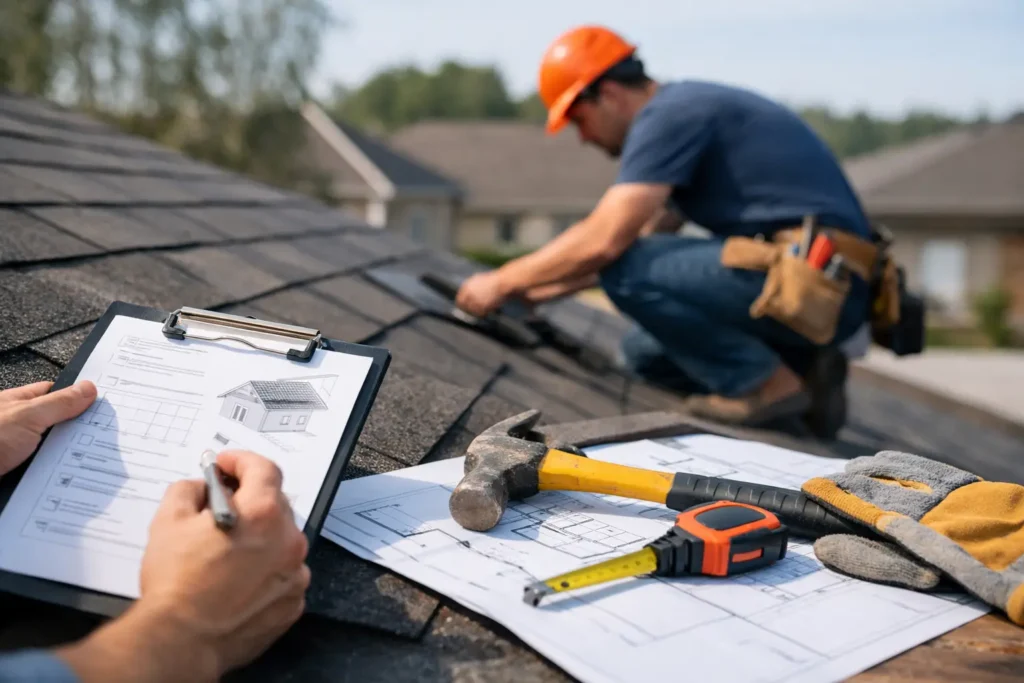
A leak rarely shows up at a convenient time. It starts as a stain on the ceiling, a few shingles in the yard, or water working its way in after a heavy Central New York storm. When that happens, the next step is usually asking for a roof repair estimate – and that estimate tells you a lot more than just the price.
A good estimate should give you a clear picture of the problem, the scope of the repair, and what you are paying for. It should also help you decide whether a repair makes sense or whether the roof is showing signs of a larger issue. For homeowners, that clarity matters. You should not have to guess what is included, what could change, or whether the contractor is accounting for the conditions your roof actually faces.
What a roof repair estimate should tell you
The best estimates are specific. They identify the damaged area, explain what caused the issue if it can be confirmed, and outline the repair method in plain language. If a contractor simply gives you a number over the phone without inspecting the roof, that is not much of an estimate. It is closer to a rough guess.
A reliable roof repair estimate usually includes the materials being used, the amount of labor involved, and whether related components need attention. That might include flashing, underlayment, pipe boots, ridge caps, roof decking, or ventilation details near the damaged section. Even a smaller repair can involve more than replacing a few shingles, especially if water has been getting underneath the surface.
It should also state whether debris removal, site protection, and cleanup are included. Homeowners often focus on the repair itself, but the surrounding work matters too. If crews need to remove damaged materials, protect landscaping, or address wet decking, those items should be accounted for upfront.
Why repair pricing can vary so much
Homeowners are often surprised when two estimates for the same roof problem are not close in price. That does not always mean one contractor is overcharging. It usually means the scope is being viewed differently.
One company may be pricing a surface-level fix. Another may be including the underlying components that failed along with the visible damage. That difference matters. A less expensive repair is not a better value if it leaves the source of the leak in place.
Roof design also affects the estimate. A simple, walkable section of asphalt shingles is easier and faster to repair than a steep area around a chimney, skylight, or roof valley. Access can raise labor time. So can weather exposure, the height of the home, and the extent of hidden damage once materials are removed.
In Central New York, weather is part of the equation too. Snow load, ice damming, freeze-thaw cycles, and wind-driven rain can all cause damage that spreads beyond one visible spot. A contractor familiar with local conditions is more likely to account for those patterns in the estimate instead of treating the problem like a one-off patch job.
What should be included in writing
A written estimate protects everyone. It gives the homeowner something concrete to review, and it gives the contractor a documented scope of work. If you are comparing bids, this is where the real comparison happens.
Scope of repair
The estimate should describe exactly what area will be repaired and what work will be performed. “Fix leak” is too vague. “Remove damaged shingles on rear slope around vent pipe, inspect underlayment, replace flashing and install matching shingles” is much more useful.
Material details
Not every shingle, flashing type, or sealant performs the same way. The estimate should identify what materials are being installed and whether they are intended to match the existing roof as closely as possible. Perfect color matching is not always possible on older roofs, and a good contractor will be honest about that.
Labor and cleanup
Labor should be part of the estimate, along with disposal of damaged materials and general cleanup. If there is a chance that decking repair or additional work may be needed after tear-off, that should be explained ahead of time rather than introduced as a surprise.
Timeline and availability
A roof issue does not always wait. The estimate should give you a sense of when work can begin and whether temporary protection is available if the repair cannot happen immediately. For active leaks, responsiveness matters almost as much as price.
Warranty information
Not every repair comes with the same warranty terms. Some repairs are limited by the age or condition of the roof. Others may carry workmanship coverage for the repaired area. The estimate should explain that clearly so expectations are realistic.
Red flags to watch for in a roof repair estimate
Some estimates create more confusion than confidence. If the paperwork is vague, rushed, or missing basic details, that should get your attention.
One common red flag is a price with no scope attached to it. Another is a contractor pushing for immediate approval without explaining what they found. If a roof has storm damage, you also want to be cautious of anyone who promises insurance outcomes before a proper inspection and documentation process.
Low pricing can be a warning sign too. In roofing, very low bids often mean shortcuts, lower-grade materials, or repairs that address symptoms without fixing the actual failure point. On the other hand, the highest estimate is not automatically the best one. What matters is whether the scope is thorough, reasonable, and explained in a way that makes sense.
When a repair estimate may turn into a replacement conversation
This is where honesty matters. Sometimes a homeowner asks for a repair estimate, but the inspection shows that the roof is near the end of its life or has damage in multiple areas. In that case, a responsible contractor should explain the trade-off.
A repair may still be possible, but it may not be the smartest long-term investment. If the roof is aging, brittle, poorly ventilated, or experiencing repeated leaks, putting more money into isolated repairs can become expensive fast. That does not mean every repair leads to replacement. It means the estimate should reflect the real condition of the roof, not just the immediate symptom.
This is especially important after storm damage. Wind may remove shingles in one area, but the broader issue could involve creased tabs, loosened seals, or water intrusion elsewhere. A detailed inspection helps determine whether targeted repair is enough or whether a larger insurance-supported restoration process needs to be considered.
How to compare estimates without getting overwhelmed
If you receive more than one roof repair estimate, compare them line by line. Look at what is being repaired, what materials are included, whether flashing or underlayment work is part of the scope, and what assumptions each contractor is making.
Ask questions if something is unclear. A dependable contractor should be able to explain the estimate in homeowner-friendly terms without dodging details or hiding behind technical language. You do not need a roofing education to make a smart decision. You need straight answers.
It also helps to weigh communication. If a company is hard to reach before the job starts, that usually does not improve after you sign. Clear communication, realistic scheduling, and documented scope are part of the value you are paying for.
Why local experience matters in a roof repair estimate
Roofing is not the same in every market. Materials, ventilation needs, flashing details, and repair priorities all change based on climate and housing stock. In older neighborhoods around Syracuse and surrounding communities, roof systems often have layers of wear, previous repairs, and weather exposure that require more than a quick patch.
That is why local experience matters. A contractor who understands ice backup, storm-driven damage, and the challenges of seasonal emergency calls is more likely to produce an estimate that reflects the real work required. That leads to fewer surprises and more confidence in the repair.
For homeowners who want direct answers, a detailed estimate is the starting point. It tells you whether the contractor has actually diagnosed the issue, whether the pricing is grounded in the scope, and whether the repair is built to last. If you need help reviewing a roof problem and want straightforward guidance, Alpha Omega Roofing LLC offers free estimates at https://www.alphaomegaroofingllc.com. The right estimate should leave you feeling informed, not pressured.