
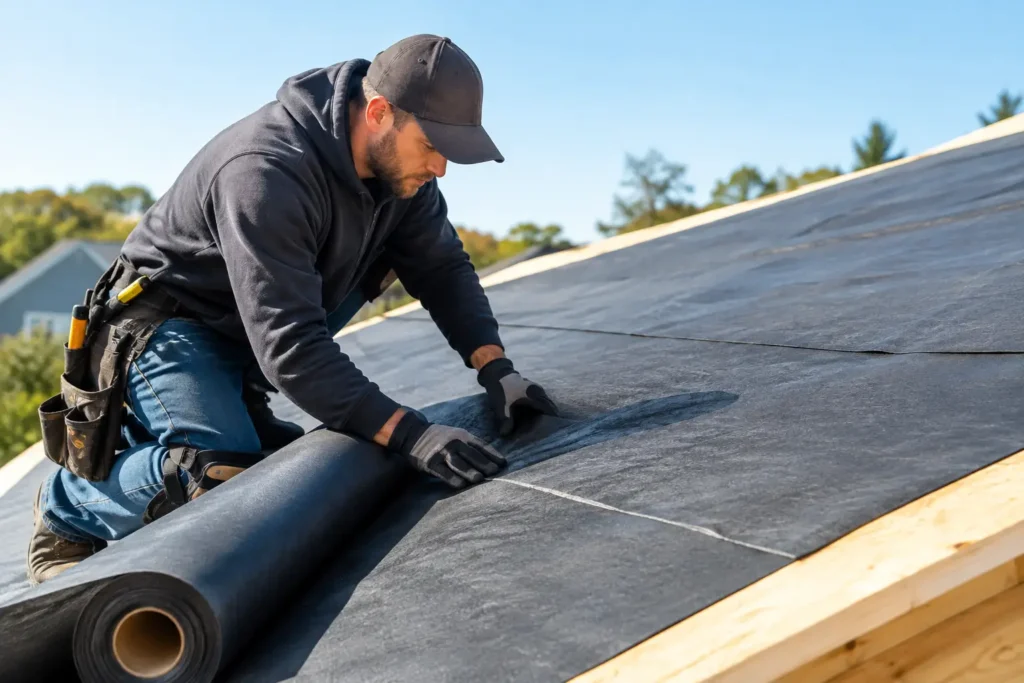
A roof can look perfectly fine from the street while water is working its way beneath a lifted shingle or through a small gap around a roof penetration. So, what does roof underlayment do? It provides the protective layer between your roofing material and the wood deck below, helping stop that moisture from becoming a stained ceiling, rotted decking, or a much larger repair.
For homeowners in Central New York, underlayment is not a minor detail hidden under the shingles. It is part of the roof system that helps your home handle wind-driven rain, snow, freeze-thaw cycles, and ice dams. When it is installed correctly and paired with quality shingles, flashing, and ventilation, it gives your roof an added line of defense when the weather does its worst.
What Roof Underlayment Does Beneath Your Shingles
Roof underlayment is a water-resistant or waterproof sheet material installed directly over the roof deck before shingles, metal panels, or other finished roofing materials go on. It covers the decking and creates a secondary barrier against water intrusion.
Shingles are the first layer that sheds rain and snow. But shingles are not designed to be completely watertight on their own. Wind can push rain beneath them. Ice dams can force melted snow back under the lower edges. Over time, cracked sealant, damaged flashing, or a missing shingle can expose vulnerable areas. Underlayment helps limit how much of that moisture reaches the wood deck.
This layer also protects the roof deck during installation. If a sudden shower moves in before the new shingles are installed, underlayment offers temporary coverage. That does not mean a partially completed roof should be left exposed for long, but it can prevent a short weather delay from becoming an interior water problem.
Why Underlayment Matters in Central New York
Syracuse-area roofs deal with conditions that put every component to the test. Heavy snow sits on roofs for long periods. Temperatures move above and below freezing. Strong winds can carry rain sideways, and spring storms can quickly reveal a weak point that went unnoticed through winter.
Underlayment does not replace proper repairs or make a failing roof safe. If shingles are missing or flashing is loose, the cause still needs professional attention. Its value is that it provides backup protection when water gets past the outer roof covering.
It can also improve the look and performance of a replacement roof. A smooth, properly installed underlayment helps create a more even surface beneath shingles. It reduces direct contact between shingles and the roof deck, which can be beneficial as materials expand and contract through changing temperatures.
It Helps Guard Against Wind-Driven Rain
Rain does not always fall straight down. During a hard storm, wind can push water beneath shingle edges, particularly near ridges, valleys, sidewalls, and roof transitions. Those are areas where skilled installation matters most.
A quality underlayment helps route that water away from the deck and toward the roof edge. The degree of protection depends on the product, the roof slope, and how well seams and penetrations are handled. It is one layer of a complete system, not a substitute for correct flashing.
It Supports Ice Dam Protection
Ice dams form when heat escaping from the home melts snow higher up on the roof. The water runs downward and refreezes at the colder eaves, creating a ridge of ice. As more snow melts, water can pool behind that ridge and back up beneath shingles.
Standard underlayment provides a measure of water resistance, but many cold-climate roof systems also use a self-adhering ice and water barrier along eaves and in other high-risk areas. This membrane bonds to the roof deck and seals around fasteners more effectively than typical underlayment.
The right coverage depends on the roof design, local code requirements, and the home itself. A low-slope section, a valley that collects snow, or a roof with a history of ice dams may need more attention than a simple, steep roofline. Good attic insulation and ventilation are also part of preventing ice dams. No membrane alone can solve a heat-loss problem inside the house.
It Protects the Roof Deck From Moisture Damage
Roof decking is usually plywood or oriented strand board. Once it repeatedly gets wet, it can soften, swell, delaminate, or rot. Damaged decking may no longer hold roofing nails securely, and it can add unexpected cost to a roof replacement.
Underlayment helps keep occasional water intrusion from soaking that wood. During an inspection or replacement project, a contractor should check for soft spots, staining, sagging, or deteriorated decking. Covering damaged wood with new underlayment and shingles only hides a problem temporarily.
Common Types of Roof Underlayment
The best underlayment is not always the same for every home. Roof pitch, the roofing material, local weather exposure, and the condition of the deck all affect the recommendation.
Asphalt-Saturated Felt
Traditional felt underlayment has been used under asphalt shingles for decades. It is familiar, cost-effective, and can perform well when installed properly. However, it is heavier than many newer products, can wrinkle when wet, and may tear more easily during installation.
Felt can still be a reasonable choice in certain applications, but homeowners should understand that the lowest material cost is not always the best long-term value. The quality of installation remains critical.
Synthetic Underlayment
Synthetic underlayment is lightweight, durable, and generally more resistant to tearing and moisture exposure than felt. It is widely used in modern roofing projects because crews can install it efficiently and it often provides better walkability and coverage during construction.
Not every synthetic product performs the same way. Thickness, slip resistance, UV exposure rating, and manufacturer requirements can vary. A reputable roofing contractor will select an underlayment compatible with the shingle system and install it according to the manufacturer’s specifications.
Self-Adhering Ice and Water Barrier
Ice and water barrier is typically used at roof edges, valleys, around chimneys, skylights, dormers, and other areas where leaks are more likely. It adheres directly to the deck, creating a stronger seal in vulnerable locations.
This material costs more than standard underlayment, so using it across an entire roof is not necessary in every case. Still, it is a smart investment where snow and ice backup are recurring concerns. The goal is not to oversell materials. It is to place the right protection where the roof needs it most.
What Underlayment Cannot Do
Homeowners sometimes hear that underlayment is a backup barrier and assume it can make up for poor shingles or rushed installation. It cannot. If the roof covering is badly worn, if flashing is incorrectly installed, or if a branch damages the roof during a storm, water can still find its way inside.
Underlayment also cannot correct ventilation problems, attic condensation, or structural defects. Condensation can mimic a roof leak, especially during cold weather. A proper inspection should distinguish between moisture entering from outside and moisture forming inside the attic.
That is why a roof should be viewed as a system. Shingles, underlayment, ice and water protection, flashing, ventilation, decking, and gutters all have jobs to do. A weak component can undermine the rest.
When to Ask About Your Roof Underlayment
You usually cannot inspect underlayment without lifting shingles, so the best time to discuss it is before a roof replacement or when a repair exposes part of the roof deck. Ask what type of underlayment will be used, where ice and water barrier will be installed, and whether the contractor has found any damaged decking.
If your roof has leaked after snow buildup, lost shingles in a storm, or has visible sagging or water stains indoors, do not wait for the next major weather event. A targeted inspection can identify whether the issue involves the roof covering, flashing, ventilation, or a hidden problem below the shingles.
At Alpha Omega Roofing LLC, the focus is on explaining what your roof needs clearly, not adding materials that do not serve a purpose. The right underlayment plan should match your roof design, your home’s exposure, and the realities of Central New York weather.
A new roof is only as dependable as the layers beneath the shingles. If you are planning a replacement or concerned about a leak, ask for an inspection and get straightforward answers before minor moisture damage turns into a larger repair.