
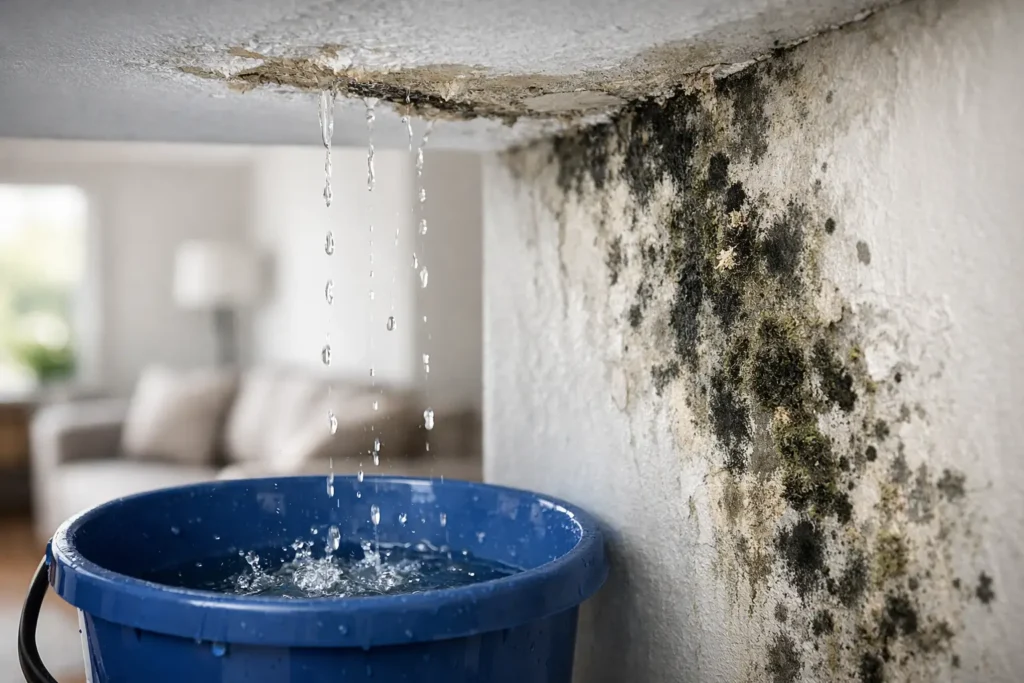
That small ceiling stain is rarely just a stain. If you are asking, can roof leaks cause mold, the short answer is yes – and it often happens faster than homeowners expect. Once water gets past shingles, flashing, or underlayment, it can soak insulation, drywall, wood framing, and attic surfaces. In a Central New York home, where snow, ice, and wind-driven rain can put extra stress on a roof, even a minor leak can turn into a much bigger problem.
The real issue is not just the drip you can see. It is the moisture that stays trapped behind ceilings and walls after the active leak slows down. Mold does not need a major flood to start growing. It needs moisture, time, and a surface it can feed on. A leaking roof can provide all three.
Can roof leaks cause mold even if the leak seems minor?
Yes. A slow leak is often the one that creates the most hidden damage because it goes unnoticed longer. Homeowners tend to react quickly to a steady drip into a bucket. They are less likely to spot a small amount of water entering around a vent boot, chimney flashing, or damaged shingle line. Meanwhile, the roof system and materials below it stay damp.
Mold can begin developing in as little as 24 to 48 hours when conditions are right. That does not mean every leak leads to a serious mold infestation right away, but it does mean waiting a week or two to “see if it dries out” is a risky move. If moisture remains in insulation, roof decking, or drywall, mold growth becomes much more likely.
This is one reason roof leaks should never be treated as cosmetic issues. By the time you see discoloration on a ceiling, the affected area above it may already be larger than it looks.
Why roof leaks create the right conditions for mold
Mold thrives in damp, dark, poorly ventilated spaces. Attics, wall cavities, and the backside of ceilings check every one of those boxes. When a roof leaks, water can travel along rafters, framing, and insulation before it ever shows up inside your living space. That movement spreads moisture beyond the original entry point.
In many homes, attic ventilation also plays a role. If the attic already holds excess humidity, a roof leak adds even more moisture to the space. During colder months, that can be especially problematic. Central New York winters bring freeze-thaw cycles, ice dams, and snow buildup that can force water under roofing materials. Once that water enters the attic and surrounding materials, it may linger longer than homeowners realize.
The type of material affected matters too. Drywall paper, wood sheathing, insulation backing, and dust buildup on attic surfaces can all support mold growth. Metal surfaces do not feed mold directly, but condensation and moisture around them can still contribute to a mold problem nearby.
Common signs that a roof leak may already be causing mold
Sometimes mold is obvious. Often, it is not. A musty odor in the attic, upper floor, or a closet near an exterior wall can be one of the first clues. You may also notice dark spotting on rafters, roof decking, ceiling corners, or insulation.
Other signs are easier to mistake for normal wear. Peeling paint, bubbling drywall, warped trim, and yellow-brown ceiling stains all suggest ongoing moisture. If anyone in the home notices worsening allergy-like symptoms in one part of the house, that can also point to hidden mold, although it is not proof on its own.
The tricky part is that mold does not always grow directly under the visible leak. Water can run along framing members and collect in another area. That is why a simple patch on the stain itself is never enough. The source of the leak has to be found and corrected, and the affected materials need to be evaluated.
Where mold usually forms after a roof leak
The attic is the most common place, especially on the underside of the roof deck and around insulation. But the problem does not stop there. Water from a roof leak can move into ceilings, exterior walls, around chimneys, and near skylights or vent penetrations.
Bathrooms and hallways under roof valleys are also common trouble spots. If flashing has failed around a chimney or dormer, moisture can get into the framing and wall system long before it becomes visible indoors. In homes with older roofing materials, repeated small leaks may lead to mold in multiple areas rather than one single patch.
That is also why homeowners sometimes fix interior damage but continue noticing stains or odor later. If the roofing issue was not fully repaired, the moisture source is still active.
How serious is mold from a roof leak?
It depends on how long the leak has been active, how far the moisture spread, and what materials were affected. In some cases, a leak is caught early, the roof is repaired quickly, and only a limited area needs drying and cleanup. In other cases, the damage reaches insulation, framing, drywall, and air quality inside the home.
Mold is not just a surface problem. It can weaken building materials over time and increase repair costs if left alone. Wet roof decking may deteriorate. Insulation loses effectiveness when saturated. Drywall can soften and crumble. Even if the mold itself is limited, the moisture damage behind it may be extensive.
For homeowners thinking about resale value, unresolved water intrusion is a major red flag. Buyers and inspectors pay close attention to signs of active or past roof leaks because they know mold and structural damage often follow.
What to do if you suspect a leaking roof and mold
Start with the roof, not the stain. The first priority is stopping the water intrusion. If a storm just passed through or the leak is active, a professional roof inspection should happen as soon as possible. A fast response matters because every rainfall adds to the damage.
Next, the affected interior areas need to be assessed. That may include the attic, insulation, drywall, and framing near the leak path. Some materials can be dried and saved. Others may need to be removed and replaced. It depends on how wet they are and how long they stayed that way.
This is not a good situation for guesswork. Painting over a stain, running a fan in the room, or patching one suspicious shingle without checking the full area can leave the actual problem in place. Roof leaks often involve flashing failures, storm damage, worn pipe boots, compromised valleys, or ice dam-related water entry. The visible symptom and the real source are not always the same.
If mold is already present, cleanup should match the size and severity of the issue. A small, isolated area is different from widespread growth in the attic or behind ceilings. The key is making sure the leak is fixed first. Otherwise, mold is likely to return.
Can roof repairs alone solve the problem?
Sometimes yes, but not always. If the leak is caught early and the materials dry quickly, a roof repair may prevent mold from taking hold. But if water has been present for days or weeks, repairs to the roof are only one part of the solution.
You may also need damaged insulation replaced, sections of drywall removed, or attic surfaces treated and cleaned. This is where a thorough inspection matters. The goal is not just to stop the drip. It is to make sure your home is dry, sound, and safe moving forward.
For homeowners in Syracuse and nearby communities, weather-related roof problems can escalate quickly. Snow load, ice dams, wind damage, and aging shingles all increase the odds of hidden moisture. A local roofing contractor who understands those conditions is better positioned to identify where water is getting in and how to correct it for the long term.
When to call a roofing professional
If you see a ceiling stain, smell mustiness in the attic, notice missing shingles after a storm, or find damp insulation, do not wait for a bigger leak. The earlier a roof issue is addressed, the better the chance of limiting mold, interior damage, and repair costs.
A professional inspection is especially important if your home has had repeated leaks, past storm damage, or winter ice buildup along the eaves. Those patterns often point to underlying roofing issues that will not improve on their own.
At Alpha Omega Roofing LLC, we see this firsthand – what starts as a “small leak” often turns out to be a larger moisture problem once the roof and attic are properly checked. Homeowners do not need more uncertainty in that moment. They need a clear answer, a straightforward repair plan, and work that holds up.
If you are wondering whether a roof leak is already causing mold, trust that concern. Water rarely improves with time, and neither does mold. The right move is to catch the source early, fix it correctly, and protect the rest of the home before a manageable repair turns into a major project.