
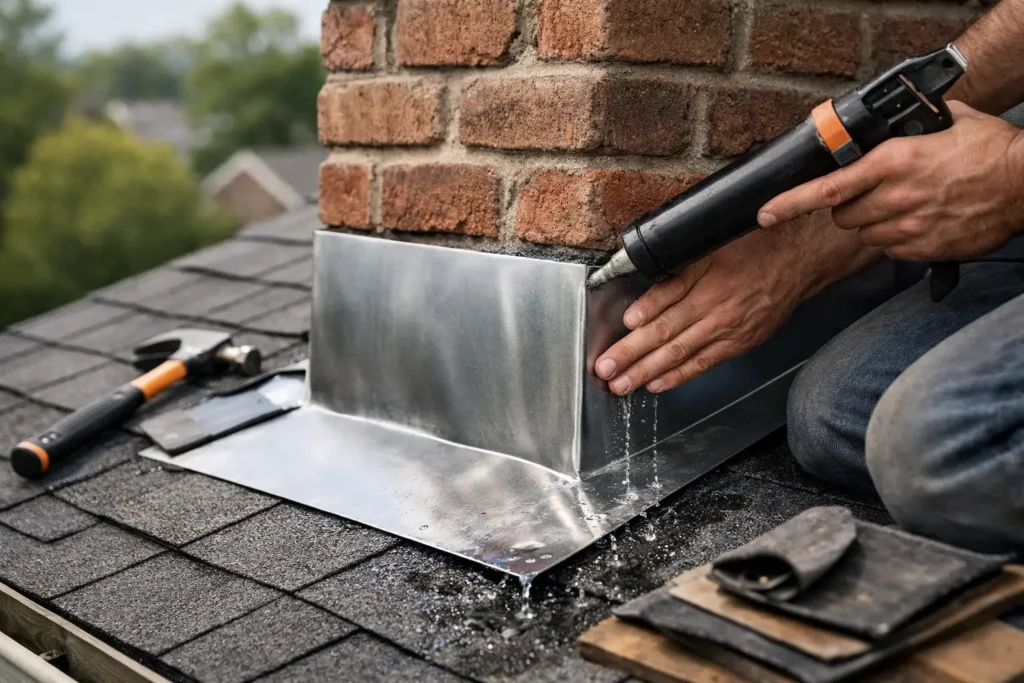
A roof leak around the chimney rarely stays small for long. What starts as a water stain on the ceiling can turn into rotten decking, damaged insulation, mold, and interior repairs you did not plan for. In many cases, the real problem is failed flashing, and chimney flashing repair is the fastest way to stop water from getting where it does not belong.
For homeowners, the tricky part is that chimney leaks are easy to misread. You may see cracked mortar and assume the chimney needs masonry work. You may notice missing shingles and think the roof field is the issue. Sometimes those problems are related, but the metal flashing where the chimney meets the roof is often the weak point. When it loosens, rusts, separates, or was installed poorly in the first place, water finds an opening.
What chimney flashing actually does
Flashing is the metal system that seals the joint between your chimney and your roof. That area is naturally vulnerable because two different surfaces meet there, and rain, snow, and ice all collect and move differently around a chimney than they do on open roof slopes.
A proper system usually includes step flashing along the sides, apron flashing at the front, and saddle or back pan flashing on the uphill side. In many cases, there is also counter flashing embedded into the chimney mortar joints to cover and protect the base flashing below. When these pieces are fitted correctly, water gets directed down and away from the opening instead of under shingles or behind the masonry.
That is why a leak near the chimney should never be treated as just a caulk problem. Sealant may buy a little time, but if the flashing assembly has failed, the real fix is correcting the metal and surrounding roof materials.
Signs you may need chimney flashing repair
Some warning signs show up inside the house first. A yellow or brown stain on the ceiling near the fireplace is common. Peeling paint, damp drywall, or a musty smell in the attic can also point to a leak around the chimney.
Outside, you may notice rusted metal, bent flashing, cracked sealant, loose shingles around the chimney base, or visible gaps where the flashing should sit tight to the masonry. In Central New York, freeze-thaw cycles can make these problems worse. Water gets into tiny openings, freezes, expands, and forces materials farther apart.
Not every leak means a full replacement is needed. In some cases, localized chimney flashing repair is the right move. In others, the flashing failed because the surrounding shingles, underlayment, or decking are already compromised. That is why an inspection matters. The source is not always obvious from the ground.
Why chimney flashing fails
Age is one of the biggest reasons. Metal flashing does not last forever, especially on older roofs. Over time, expansion and contraction loosen fasteners, break seal lines, and create small separation points that let water in.
Poor installation is another common cause. Flashing should be integrated with the roofing system, not just placed on top of it. If step flashing was skipped, if counter flashing was not cut into the mortar joint correctly, or if someone relied too heavily on roof cement, the repair may fail much sooner than it should.
Storm exposure also plays a role. Strong wind can lift shingles near the chimney and expose flashing edges. Heavy snow and ice damming can push meltwater backward under roofing materials. If your roof has already taken weather-related damage, the chimney area deserves a close look.
Then there is the chimney itself. If bricks are shifting, mortar joints are failing, or the crown is cracked, water can enter around the same area and make diagnosis harder. Sometimes the right fix involves both roofing and masonry work. A good contractor will tell you that clearly instead of forcing every problem into one category.
When repair is enough and when it is not
Homeowners often ask the same practical question: can this be repaired, or does everything around the chimney need to be rebuilt?
If the flashing is damaged but the surrounding shingles and roof deck are still sound, a targeted repair may be all you need. That could involve removing shingles around the chimney, replacing failed flashing sections, installing new counter flashing, and reworking the roofing materials so the area sheds water properly again.
If the roof is older or the leak has been going on for a while, the scope can grow. Wet decking may need replacement. Underlayment may be torn or deteriorated. If shingles around the chimney are brittle or no longer seal correctly, they may not be reusable. In that situation, a repair is still possible, but it needs to be done as a system, not as a patch.
There are also times when flashing repair alone is not the best investment. If your roof is near the end of its life and multiple areas are failing, putting money into one section may only delay a larger project. The honest answer depends on the age of the roof, the extent of the leak, and how much damage has already occurred underneath.
What a proper chimney flashing repair should include
A real repair starts with exposing the area. That means lifting or removing roofing materials around the chimney so the contractor can inspect the flashing, underlayment, and roof deck. If someone offers a permanent fix without opening the area, be cautious.
The damaged flashing should be removed and replaced with properly sized metal components that are integrated with the roofing system. Step flashing should be woven correctly with the shingles. Counter flashing should be secured into the mortar joint or installed in a way that protects the base flashing from direct water entry. If decking is soft or rotted, that should be replaced before the roof is closed back up.
This is also the time to check whether the chimney has separate masonry issues. New flashing will not solve deteriorated brick or major mortar failure. It may stop one source of leakage, but if water is entering through the chimney structure itself, that needs attention too.
Why quick fixes often fail
A lot of chimney leaks get “repaired” with caulk, tar, or roof cement. Those materials have a place in roofing, but they are not a substitute for properly installed flashing. They break down under UV exposure, crack during winter temperature swings, and often trap water instead of redirecting it.
That is why homeowners sometimes think the problem was fixed, only to see the same stain return after the next heavy rain or thaw. The leak did not really go away. It just found the next opening.
If you are seeing repeated issues in the same area, it is worth having the chimney and surrounding roof inspected by a contractor who understands both leak tracing and long-term repair methods. A cheaper patch can become the expensive option if it allows hidden damage to continue.
Chimney flashing repair in Central New York weather
This region is hard on roofs. Snow load, ice buildup, wind-driven rain, and rapid freeze-thaw changes all put extra stress on flashing details. A chimney that gets by in milder climates may struggle here if the installation was marginal from the start.
That is why local experience matters. Repairing chimney flashing in Syracuse, Baldwinsville, Liverpool, or surrounding communities is not just about replacing metal. It is about building the area to handle real winter weather and the water movement that comes with it.
If your leak showed up after a storm, there may also be insurance questions involved. Not every claim is covered, and not every leak is storm-related, but documented damage, prompt inspection, and clear repair recommendations can make the process easier if storm damage is part of the picture.
What to do if you suspect a chimney leak
Do not wait for the stain to get bigger. Water rarely improves on its own, and the longer it sits, the more likely it is to affect insulation, framing, drywall, and interior finishes.
A professional roof inspection can tell you whether the issue is isolated flashing failure, a broader roofing problem, masonry deterioration, or a combination of those factors. From there, you can make a decision based on the actual condition of the roof instead of guessing from symptoms inside the house.
If you need a straightforward assessment, Alpha Omega Roofing LLC provides inspections and repair recommendations designed for homeowners who want clear answers, not pressure. You can learn more at https://www.alphaomegaroofingllc.com.
The best time to fix chimney flashing is before the next storm tests it. If you have seen water around your chimney once, treat that as your warning and get the area checked before a manageable repair turns into a larger restoration job.