
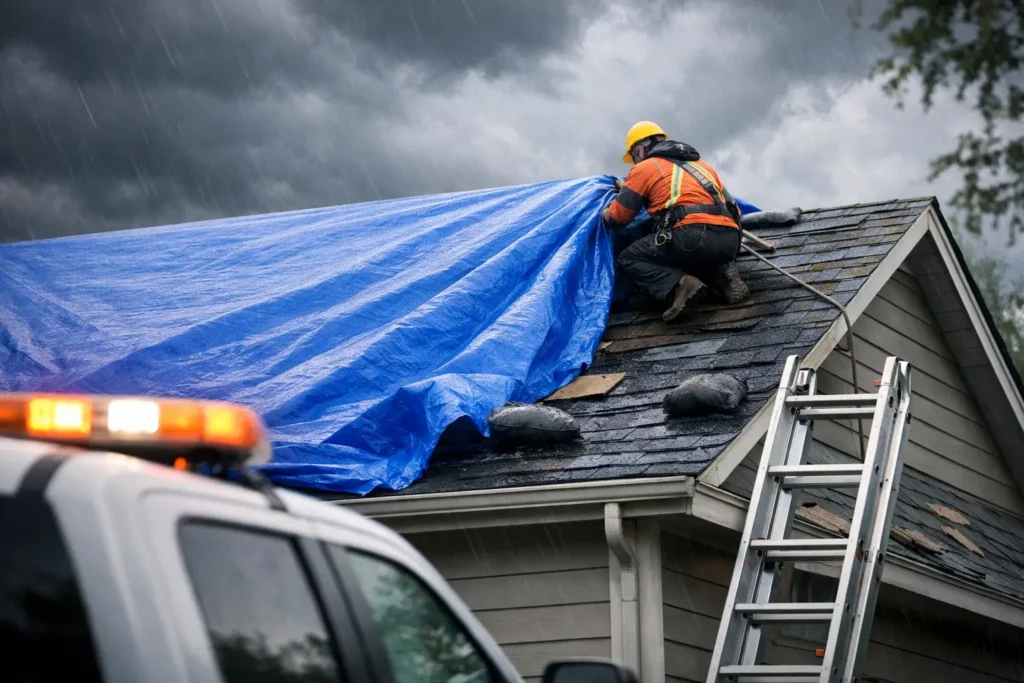
A roof leak rarely shows up at a convenient time. It starts during a hard rain, after wind tears off shingles, or when a tree limb comes down and leaves part of your home exposed. In those moments, emergency roof tarp service is not a temporary extra – it is often the fastest way to protect your home from much more expensive damage.
For homeowners in Central New York, that matters. Heavy snow, ice, wind, and sudden storms can turn a small roofing problem into soaked insulation, stained ceilings, damaged framing, and mold risk in a matter of hours. A properly installed tarp buys you time. It helps stop water from getting in while a contractor assesses the full damage and plans the right repair.
What emergency roof tarp service actually does
An emergency roof tarp service is a fast-response measure used to cover damaged sections of a roof after a storm, fallen debris, or another sudden failure. The goal is simple – keep water out until permanent repairs can be completed safely and correctly.
That sounds straightforward, but the quality of the work matters. A tarp thrown over a damaged area without proper anchoring or placement may shift, pool water, or fail in the next round of bad weather. A professional installation takes the roof slope, wind exposure, damaged decking, and surrounding materials into account. It is not a cosmetic fix. It is a protective step that can limit structural damage inside the home.
In many cases, tarping is used after missing shingles, lifted flashing, punctures from branches, or visible storm impact. It can also help when the leak source is clear but conditions are too dangerous for immediate full repairs, especially during active weather or winter conditions.
Signs you need emergency roof tarp service right away
Some roof problems can wait a day or two for a standard inspection. Others should move to the top of your list immediately.
If water is actively entering your home, that is the clearest sign to call. The same goes for a section of roof that is visibly open to the elements, whether from storm damage, a fallen tree limb, or missing materials after high wind. Ceiling stains that suddenly spread during rain, insulation getting wet in the attic, or visible daylight through the roof deck all point to urgent exposure.
There are also less obvious cases. Sometimes homeowners notice shingles in the yard after a storm but do not see a leak yet. That does not always mean you need emergency service, but it can. If the missing area is large, the underlayment is exposed, or more severe weather is on the way, a tarp may be the smart move before water gets in.
The trade-off is timing. Not every roof issue needs a tarp, and not every damaged roof can be safely tarped under current conditions. Ice, steep slopes, and unstable decking can change the approach. That is why a professional assessment matters instead of guessing from the ground.
Why speed matters after storm damage
Roof damage tends to get more expensive the longer it sits. The first problem is the opening in the roof itself, but the second wave of damage is often worse. Water can spread into insulation, drywall, electrical areas, trim, and even masonry around chimneys or adjoining structures.
A quick tarp installation helps control that second wave. It can reduce interior damage, protect belongings, and make the repair process more manageable. It may also help when documenting the event for an insurance claim because it shows you took reasonable steps to prevent further loss.
That last point is worth paying attention to. Homeowners insurance may cover storm-related roof damage, but policies usually expect you to act promptly to protect the property after the damage occurs. A tarp is often part of that response. It is not a guarantee of coverage, and every policy is different, but waiting too long can create complications you do not need.
What to expect from a professional emergency roof tarp service
When you call for emergency help, the first priority is usually safety and damage control. A reputable contractor will ask what happened, whether the home is actively leaking, and what conditions exist on site. If there is storm damage, they may also ask about fallen limbs, visible holes, or whether power lines or structural hazards are involved.
Once on site, the crew should inspect the affected area and determine whether tarping is the right short-term solution. If it is, they will secure the covering over the damaged section in a way designed to resist wind and water intrusion until permanent repairs can begin. They should also explain what they found, what the tarp can and cannot do, and what the next steps look like.
That clarity matters. A tarp is temporary by design. It protects the home, but it does not replace missing roofing components or solve hidden damage beneath the surface. A good contractor will be direct about that and help you plan for repair or replacement instead of leaving you with false confidence.
Emergency roof tarp service in Central New York comes with weather-specific challenges
Roof emergencies in this region are not all the same. Wind damage in one season looks different from ice damage in another. A tarp installed in Syracuse or nearby communities may need to stand up to freezing temperatures, blowing snow, repeated rain, or another storm system within days.
That is why local experience matters. Contractors who work in Central New York understand how fast weather can change and how vulnerable a damaged roof becomes during the winter months. They also know that some emergencies happen when full repairs are not realistic that same day. In those cases, the tarp is what keeps the house protected until conditions allow proper work to move forward.
This is also where workmanship counts. A weak temporary cover can fail at the worst time. A properly secured tarp gives homeowners breathing room and helps prevent the kind of interior damage that turns a roofing issue into a much bigger restoration project.
Should you tarp a roof yourself?
In most cases, no. It is understandable to want to act fast, especially if water is coming in, but climbing onto a damaged roof during or after a storm is dangerous. Wet surfaces, hidden soft spots, loose shingles, and unstable edges create serious fall risk. Add wind, ice, or darkness, and the risk goes up fast.
There is also the issue of doing more harm than good. An improperly placed tarp can trap water, tear loose, or damage roofing materials further. If you can safely protect the inside of the home by moving belongings, placing buckets, and limiting interior exposure, that is a better first step while waiting for professional help.
If there is a major opening, sagging, or structural concern, stay clear of the area below as well. Water-damaged ceilings and decking can become unstable.
Choosing the right contractor for emergency roof tarp service
When your roof is exposed, you do not need a sales pitch. You need a contractor who answers the phone, shows up, and gives you a clear path forward.
Look for a company that is licensed and insured, has real experience with storm-related roof damage, and can explain both the temporary protection and the permanent repair options. Clear communication matters just as much as speed. You should know what the crew is doing, what damage they found, and what comes next.
It also helps to work with a local contractor who understands the demands of this climate and can return for the actual repair. A tarp installed today is only part of the job. The real value comes from having a team that can carry the work through from emergency response to final restoration. That is the kind of support homeowners expect from a company like Alpha Omega Roofing LLC.
What to do while you wait for help
If your roof has been damaged, focus first on staying safe. Keep away from any area where the ceiling is bulging or actively dripping near electrical fixtures. Move valuables out of the affected space if you can do so safely, and place containers under active leaks. Taking a few photos from inside and from the ground outside can also help document the damage.
Then make the call. The sooner the roof is covered, the better your chances of limiting the damage and getting repairs back under control.
A roof emergency is stressful, but it does not have to spiral. The right response at the right time can protect your home, your budget, and your peace of mind when the weather has already done enough.