
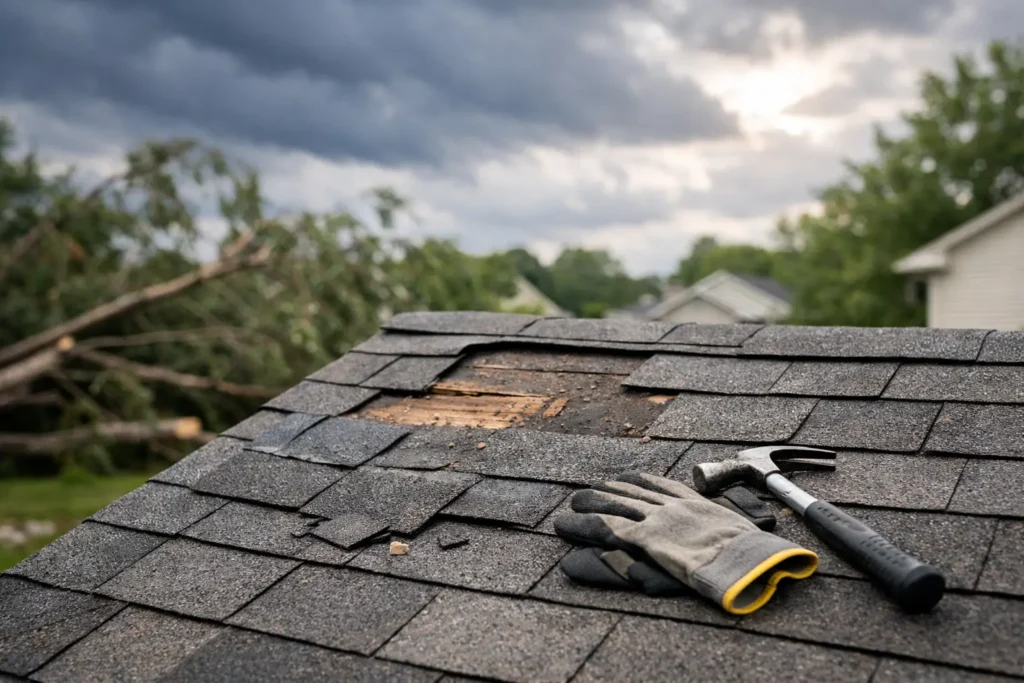
A storm moves through overnight, and by morning you spot pieces of roofing in the yard or see dark patches on the slope where shingles used to be. Missing shingles after storm damage may look like a small problem from the ground, but it can turn into leaks, decking damage, insulation issues, and costly interior repairs faster than most homeowners expect.
If your roof lost shingles in high wind, heavy rain, or hail, the first priority is protecting the home and confirming how much damage actually occurred. Some roofs lose one or two tabs and can be repaired quickly. Others have wider wind damage that is harder to spot without a close inspection. The difference matters because a temporary fix on a failing section can leave you dealing with repeat leaks the next time Central New York gets hit with rough weather.
Why missing shingles after storm damage needs quick attention
A shingle roof works as a system. When one shingle comes loose, the surrounding shingles become more vulnerable to wind lift, water intrusion, and granule loss. What looks minor from the driveway can mean the seal strip has broken across a larger section of the roof.
Water does not need a huge opening to get in. Once shingles are missing, the underlayment and roof deck can be exposed to direct weather. If rain follows the storm, moisture can work under nearby shingles, seep into decking, and eventually show up as staining on ceilings or walls. In colder months, freeze-thaw cycles can make the damage worse.
This is one reason homeowners should avoid the wait-and-see approach. Even if there is no visible leak inside yet, the roof may already be compromised.
What to do first when shingles are missing
Start with safety. Do not climb onto a wet or wind-damaged roof to inspect it yourself. Storm damage often leaves shingles loose, flashing bent, or decking weakened in spots you cannot see from the ladder. A fall risk is not worth it.
Walk the property from the ground and look for obvious signs. You may see shingles in the yard, exposed black underlayment on the roof, bent metal flashing, damaged gutters, or debris impact from branches. Take clear photos from several angles if you can do so safely. Those photos can help with both repair planning and any insurance documentation.
Then check the attic or upper ceilings for signs of active water intrusion. Fresh stains, damp insulation, dripping, or musty odors can indicate the storm created an opening. If water is actively entering, place buckets where needed and move valuables away from the affected area.
After that, call a qualified local roofing contractor for an inspection. Fast response matters here. A professional can tell whether the problem is limited to a repair area or part of broader storm damage that affects the roof’s remaining life.
A few signs the damage may be worse than it looks
Not all storm damage is obvious from the street. In many cases, homeowners only notice missing tabs but not the other failures around them. Creased shingles, lifted edges, cracked seal strips, loosened ridge caps, and punctures around flashing can all happen in the same storm event.
Age plays a role too. If the roof is older, brittle, or already near the end of its service life, replacing a few shingles may not solve the problem for long. Matching older shingles can also be difficult. Even when a color match is possible, the surrounding shingles may not hold new repairs well if they have already become dry or fragile.
This is where an honest inspection matters. A dependable contractor should explain whether a targeted repair makes sense or whether the damage points to a larger issue. Homeowners do not need a sales pitch in this moment. They need a clear assessment.
Should you file an insurance claim?
It depends on the extent of the damage, your deductible, and whether the storm caused enough loss to justify a claim. If only a couple of shingles are missing and the repair is straightforward, paying out of pocket may be simpler. If wind or hail affected multiple roof sections, flashing, gutters, siding, or interior finishes, it may be worth opening a claim.
The key is documentation. A roofing contractor experienced with storm damage can provide photos, inspection findings, and a practical explanation of what the storm did to the roof. That gives you a better starting point when speaking with your insurance carrier.
Homeowners should also be careful not to assume every missing shingle will be covered automatically. Insurance companies usually look at cause, age, and condition. Storm-created sudden damage is treated differently from long-term wear and neglected maintenance. That is another reason a timely inspection matters. The sooner the roof is evaluated, the easier it is to connect the damage to a specific event.
Repair or replacement? The answer depends on the roof
This is the question most homeowners want answered right away, and the honest answer is that it depends on the age of the roof, the size of the damaged area, and how the surrounding shingles are holding up.
If the roof is in otherwise good condition and the storm damage is isolated, a repair may be the right move. Replacing the missing shingles, checking the fasteners, resealing vulnerable areas, and confirming the underlayment is intact can restore protection without overcomplicating the job.
If the roof has widespread wind damage, repeated repairs, or aging shingles that are losing flexibility, replacement may be the more cost-effective decision. Paying for one repair after another often costs more over time and leaves homeowners worrying every time the forecast turns bad.
In places like Syracuse and the surrounding area, where roofs have to stand up to snow, wind, ice, and heavy rain, durability matters. A short-term patch on an already failing system is rarely the best value.
What a roofing inspection should include
A proper storm damage inspection should go beyond the obvious missing pieces. The contractor should assess the affected slopes, ridge caps, flashing, vents, pipe boots, chimney areas, and gutter lines. They should also look for creasing, lifted shingles, exposed nail heads, water pathways, and signs the underlayment or deck may be compromised.
Interior signs matter too. If there are water marks in the attic or upper floors, that should be part of the conversation. Good roofing service is not just about replacing what blew off. It is about finding where water can get in now and what is likely to fail next.
This is also the point where communication separates a reliable contractor from one that creates more stress. You should get a straightforward explanation, clear pricing, and a realistic timeline. If emergency tarping or temporary protection is needed, that should be addressed quickly.
What not to do after a storm
Do not delay calling because the leak has not shown up yet. Roof damage can stay hidden for days or weeks before it appears inside.
Do not let anyone pressure you into a major contract without a real inspection. Storm season brings out aggressive sales tactics, and homeowners are right to be cautious. Local accountability matters.
Do not assume a tarp is the final fix. Temporary protection can help prevent further water intrusion, but it does not replace a proper repair plan.
And do not try to replace shingles yourself unless you have roofing experience and safe access equipment. Improper repairs can void warranties, create new leak points, and make insurance documentation harder later.
When to call for help right away
If you see exposed roof decking, interior leaking, sagging, flashing damage around a chimney or vent, or multiple missing shingles across more than one section, it is time to get professional help fast. The same goes for roofs that are older or have had previous storm issues.
For homeowners who want a clear answer without guesswork, a local contractor like Alpha Omega Roofing LLC can inspect the roof, explain whether repair or replacement makes sense, and help document storm-related damage if insurance is part of the process. That kind of direct guidance can save time, protect the house, and keep a manageable problem from turning into a much bigger one.
A roof does not have to be collapsing to need urgent attention. Missing shingles are your warning sign. Taking action early is usually the difference between a focused repair and a far more expensive mess a few storms later.