
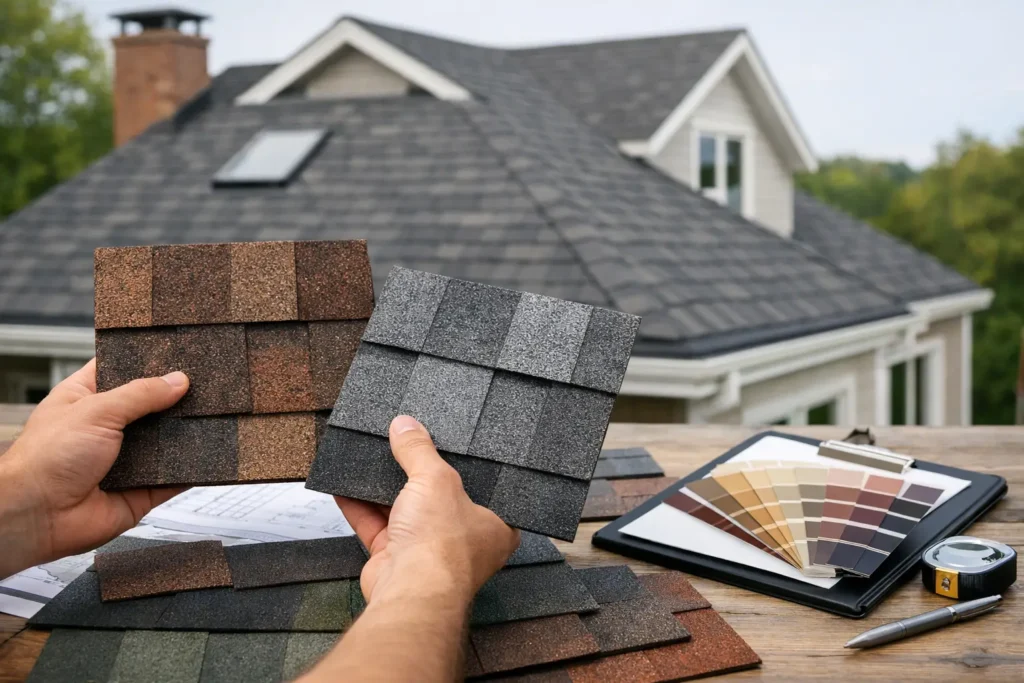
A roof can look fine from the street and still be one hard winter away from trouble. That is why homeowners often ask how to choose roof shingles before a small issue turns into a full replacement. The right shingle is not just about color or price. It is about how well your roof will stand up to wind, ice, heavy snow, sun exposure, and the age of the home beneath it.
In Central New York, that decision carries more weight than it does in milder climates. A shingle that performs well in a warm, dry region may not hold up the same way after repeated freeze-thaw cycles, ice dam risk, and lake-effect weather. If you want a roof that protects your home for the long term, you need to look at performance first and appearance second.
How to choose roof shingles without guessing
The easiest mistake is shopping by color sample alone. A brochure can make every roof look great, but shingles need to do more than match siding and trim. Start with the basics: your budget, your roof’s slope and design, your home’s age, and how long you plan to stay in the property.
If this is your forever home, paying more for a better-performing product may make sense. If you plan to sell within a few years, you may want a shingle that improves curb appeal and offers reliable protection without pushing the budget too far. Neither choice is automatically right or wrong. It depends on your goals.
You also want to think about who is installing the roof. Even the best shingle on the market can fail early if the underlayment, flashing, ventilation, or nailing pattern is wrong. Product choice matters, but workmanship matters just as much.
Start with the shingle type
For most residential homes, asphalt shingles are the standard choice. They are cost-effective, widely available, and available in styles that fit everything from older neighborhoods to newer builds. Within asphalt, there are two common categories homeowners should understand: 3-tab shingles and architectural shingles.
3-tab shingles are the simpler, flatter option. They usually cost less upfront, but they also tend to have a shorter lifespan and lower wind resistance. For a budget-driven project, they can still be a practical choice, but they are less common on full replacements today.
Architectural shingles, sometimes called dimensional shingles, are thicker and more durable. They create more visual depth, usually hold up better in rough weather, and often come with stronger warranty coverage. In a region where snow load, wind, and storm exposure are real concerns, many homeowners find that the added cost is worth it.
There are also premium designer shingles that mimic slate or wood shake. These can look excellent, but they are not always necessary for every house. If the home style supports it and the budget allows, they can be a strong option. If your main goal is dependable weather protection at a reasonable price, architectural shingles are often the most balanced choice.
Match the shingles to local weather
This is where many roofing decisions get clearer. If you are trying to figure out how to choose roof shingles for a home in Syracuse or the surrounding area, weather resistance should be near the top of the list.
Look closely at wind ratings. Strong gusts can loosen or tear off lower-grade shingles, especially on older roofs or homes with more exposed elevations. Impact resistance may also matter if your area sees hail or frequent storm debris. Not every home needs the highest rating available, but it is worth understanding what level of protection you are paying for.
Algae resistance is another feature homeowners sometimes overlook. Even in colder climates, dark streaking can become a problem over time, especially on shaded roof sections. A shingle with built-in algae resistance can help the roof stay cleaner and maintain curb appeal longer.
Snow and ice matter too, but not in the way most homeowners think. Shingles alone do not prevent ice dams. A roofing system handles winter better when the shingles, underlayment, attic ventilation, and insulation all work together. If a contractor only talks about the shingle color and not the full roof system, that is a red flag.
Consider lifespan, not just purchase price
A lower quote can be tempting, especially when roof replacement is not a planned expense. But the cheapest roof is not always the least expensive over time. If one shingle lasts 15 to 20 years under local conditions and another gives you 25 to 30 years with better storm performance, the long-term value may be very different.
That does not mean every homeowner should buy the most expensive product available. It means you should compare expected service life, warranty coverage, and the likelihood of repair issues after major weather. A roof that holds up better can reduce future headaches, especially if your current roof has already had leak problems or repeated patch repairs.
Ask what the quote includes beyond shingles. Ice and water shield, ventilation upgrades, flashing replacement, and deck repairs can all affect performance. A quote that seems higher may actually provide better protection where it counts.
Color matters, but function comes first
Once the performance details are covered, color becomes an easier choice. Most homeowners want a shingle that complements the siding, trim, brick, or stone without making the home look too busy. Neutral tones tend to age well and appeal to future buyers, while high-contrast colors can create a more dramatic look.
Darker shingles can help hide staining and often look sharp on traditional homes, but they also absorb more heat. In Central New York, that is usually less of a concern than it would be in a hot southern climate. Even so, attic ventilation still plays a role in year-round roof performance.
Try to view full-size samples outside instead of relying only on small display boards. Light changes the appearance of shingles more than many people expect. A color that looks charcoal in one setting may read brown or gray-blue in another.
Pay attention to warranty language
Warranty terms can sound better than they are if you do not look closely. Many homeowners hear “lifetime warranty” and assume they are covered no matter what. In reality, warranties often have limitations, prorated periods, and installation requirements.
A strong manufacturer warranty is helpful, but it is only part of the picture. You also want confidence in the contractor’s workmanship warranty and their willingness to stand behind the installation. If a company is hard to reach before the job starts, that usually does not improve after the roof is complete.
This is one reason local accountability matters. When a contractor knows the weather, understands regional building needs, and has a track record in the community, it is easier to trust the recommendation.
How to choose roof shingles with the right contractor
The best roofing decision usually comes from a combination of the right product and the right guidance. A good contractor will not push one option for every home. They should inspect the roof, explain what they found, and give you clear reasons for the shingle recommendation.
Ask practical questions. Why is this shingle a good fit for my roof? How does it perform in winter weather? What underlayment and ventilation changes are included? Are there decking issues that need to be addressed before installation? Straight answers matter more than a sales pitch.
It also helps to ask what trade-offs come with each option. One product may offer a lower price but a shorter lifespan. Another may cost more but improve wind resistance and curb appeal. You want someone who explains those differences clearly, not someone who rushes you into signing.
At Alpha Omega Roofing LLC, that homeowner-first approach matters because roofing decisions are rarely just about materials. They are about protecting the home, avoiding repeat problems, and making sure the investment holds up when the weather turns.
When replacement makes more sense than repair
Sometimes homeowners start by asking about shingle options and end up learning the bigger issue is the roof system itself. If shingles are curling, granules are washing out, leaks are recurring, or storm damage has spread across multiple sections, patching may only buy limited time.
That is where a professional inspection becomes valuable. You may not need a full replacement yet, but you do need honest guidance. A dependable contractor should tell you when a repair is enough and when it is smarter to stop putting money into an aging roof.
The right shingle is the one that fits your house, your budget, and your weather reality. If you are weighing options, slow the process down just enough to ask the right questions. A few extra minutes spent choosing carefully can save you years of frustration after the next storm.