
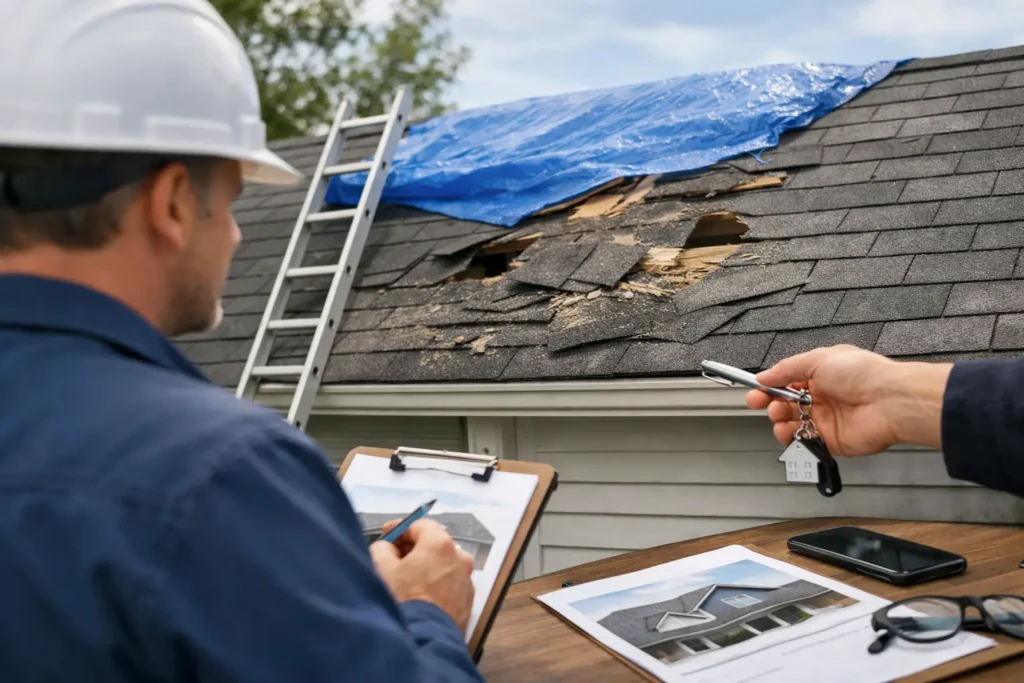
A windstorm moves through Central New York overnight, and the next morning you spot several shingles in the yard. A few days later, a brown stain appears on the ceiling near the attic access. At that point, a roof insurance claim example can make the process feel less mysterious – and help you avoid costly mistakes while your home is exposed.
Every insurance policy, storm, and roof is different. Still, most legitimate storm-damage claims follow a similar path: document the damage, arrange a professional inspection, report the loss to your insurer, meet the adjuster, review the estimate, and complete approved repairs or replacement. The key is acting promptly and keeping the process based on clear evidence, not assumptions.
A Realistic Roof Insurance Claim Example
Consider a homeowner in the Syracuse area with a 12-year-old architectural shingle roof. After a strong wind event, they notice lifted and missing shingles on the rear slope of the home. They also see a small amount of water staining on a second-floor ceiling.
The homeowner takes date-stamped photos from the ground, including the missing shingles, debris around the house, and interior stain. Because walking on a storm-damaged roof can be unsafe and can cause additional damage, they call a qualified roofing contractor for an inspection instead of climbing up themselves.
During the inspection, the contractor finds wind creasing across several roof slopes, missing shingles, exposed fasteners, and damaged ridge cap shingles. The contractor also checks flashing, pipe boots, valleys, gutters, attic ventilation, and the interior area below the leak. The findings are documented with photos and a written assessment.
The homeowner then contacts their insurance carrier to report a wind damage claim. The insurer assigns a claim number and schedules an adjuster inspection. The roofing contractor can be present for that meeting to identify the damage found during the initial inspection and answer roofing-specific questions. The contractor does not decide coverage – that decision belongs to the insurance company – but clear documentation can help the adjuster evaluate the property accurately.
A week later, the insurer sends an estimate for roof replacement, including tear-off, shingles, underlayment, flashing items, ventilation, and related repairs. The policy has a $2,500 wind deductible. If the approved replacement cost is $16,000, the homeowner is generally responsible for the deductible, while the insurer pays the covered amount according to the policy terms and payment schedule.
That is the basic shape of a successful roof claim. But the details matter, especially when an estimate is incomplete or a policy pays actual cash value rather than full replacement cost.
What the Insurance Company Looks For
Homeowners sometimes assume that any leak or damaged shingle will be covered. In reality, insurance is usually designed for sudden, accidental damage from a covered event, such as wind, hail, falling trees, or fire. It generally does not cover wear from age, poor maintenance, or long-term deterioration.
For example, wind may tear shingles loose during a documented storm, which may support a claim. A roof near the end of its useful life with brittle, curling shingles and slow leaks from worn-out flashing is a different situation. The first may be storm damage. The second is more likely a maintenance or replacement expense.
Adjusters typically look for signs that match the reported cause of loss. For wind, that can include missing shingles, broken seal strips, creased tabs, displaced ridge caps, or damage in patterns consistent with strong gusts. For hail, they may look for impact marks on shingles, soft metals, vents, gutters, or other exterior components.
They also consider the roof’s age, prior condition, local weather history, and whether the damage affects the roof’s ability to shed water. This is why a thorough inspection is more useful than a quick glance from the driveway.
The Claim Timeline, Step by Step
Once you believe storm damage may have occurred, take reasonable steps to prevent further damage. If water is entering the house, temporary protection may be necessary. Keep receipts for emergency mitigation or temporary repairs, since those costs may be relevant to your claim.
Next, schedule a roof inspection. A trustworthy contractor should explain what they found in plain language, provide photos where possible, and tell you honestly whether the condition appears consistent with a claim-worthy storm event. No contractor can promise that an insurer will approve a claim, and you should be cautious of anyone who does.
After reporting the claim, save the claim number and all communications. The insurance company will normally arrange for an adjuster to inspect the property. If your contractor is available to attend, it can help ensure the adjuster sees all documented areas of concern, including difficult-to-spot damage at ridges, valleys, flashing transitions, and roof penetrations.
When the insurance estimate arrives, compare its listed scope with the contractor’s inspection findings. The numbers may not match at first. An insurer’s initial estimate can miss materials, code-related items, or damage that was not visible during the first inspection. If there is a legitimate difference, your contractor can provide supporting documentation and request that the insurer review the additional work. This is often called a supplement.
A supplement is not an attempt to inflate the job. It is a documented request for necessary work that was omitted or became apparent during the repair process. The work still must be reasonable, related to the covered loss, and reviewed by the carrier.
Understanding Deductibles and Depreciation
The deductible is the portion of a covered loss that you pay out of pocket. It may be a flat dollar amount or, in some policies, a percentage of the home’s insured value. Before work begins, confirm the deductible listed in your policy and ask questions if the claim paperwork is unclear.
A reputable contractor should never offer to waive, absorb, or hide your deductible. In many cases, that can create legal and insurance problems. Honest pricing means the scope of work and payment arrangement are transparent from the start.
Depreciation is another common source of confusion. A replacement cost value policy may initially pay an actual cash value amount, which accounts for the roof’s age and condition. After the approved work is completed and required documents are submitted, the insurer may release recoverable depreciation.
With an actual cash value policy, depreciation may not be recoverable. That means the payment can be lower even when storm damage is covered. Read your declaration page and speak with your insurer or agent if you are not sure which type of coverage you have.
Common Problems That Slow Down a Roof Claim
The biggest delays often begin before the claim is filed. Waiting weeks to inspect visible damage can allow a small opening to become a larger leak. It can also make it harder to separate storm-related damage from later deterioration.
Poor documentation is another issue. Take photos before temporary repairs are made whenever it is safe to do so. Keep records of the storm date, contractor inspection, emergency repairs, receipts, emails, and claim correspondence. You do not need to become an insurance expert, but organized records make the process easier.
Homeowners should also avoid signing a broad contract before they understand the scope, price, and insurance process. Ask whether the agreement explains the work, materials, payment schedule, warranty, and what happens if the claim is partially approved or denied. A clear contractor will answer directly and give you time to review the details.
Finally, do not assume every part of an exterior project is automatically covered. Gutters, siding, chimney flashing, interior paint, and decking may be covered when damage is tied to the same event, but that depends on the policy and the documented condition of each component.
When a Claim May Not Be the Best Choice
Filing a claim is not always the right move. If repair costs are close to or below your deductible, paying for a targeted repair may be more practical. The same can be true when damage is clearly related to age and wear rather than a specific covered event.
A professional inspection gives you a better starting point. You may learn that a small repair can protect the roof for several more years, or you may find evidence that supports a full claim. Either way, the goal is to make a decision based on the roof’s actual condition.
For homeowners facing possible wind or storm damage, Alpha Omega Roofing LLC can inspect the roof, explain the findings clearly, and provide the documentation needed to move forward with confidence. The best next step is simple: protect the home, document what you can, and get an honest inspection before a small problem has time to grow.