
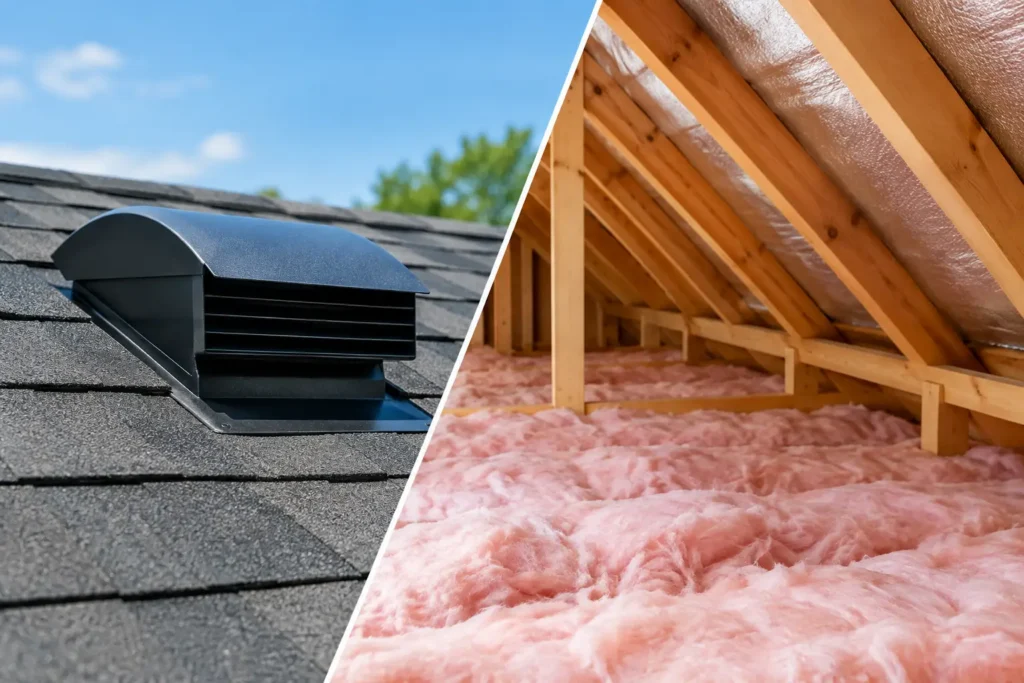
A warm second-floor bedroom, frost in the attic, peeling bathroom paint, and thick ice along the eaves can all lead homeowners to the same question: roof ventilation versus insulation, which one does my house need? The honest answer is usually both. They do different jobs, and a problem with either one can shorten the life of your roof, raise utility costs, and create moisture issues where you cannot see them.
For Central New York homes, this matters especially during long winters. Snow on the roof, freezing nights, wind-driven rain, and large swings in temperature put every part of the roofing system to work. A proper diagnosis looks beyond the shingles to the attic space below them.
Roof Ventilation Versus Insulation: The Core Difference
Insulation slows the movement of heat between your living space and the attic. In winter, it helps keep the heat you pay for inside the house. In summer, it helps reduce heat gain from a hot roof deck. It belongs on the attic floor or within the roof assembly, depending on how the home is built and whether the attic is conditioned.
Ventilation manages airflow in an unconditioned attic. Outside air enters through intake vents, commonly located at the soffits, and exits through higher exhaust vents, such as ridge vents. That movement helps remove excess heat and moisture from the attic.
Put simply, insulation separates your home from the attic. Ventilation helps the attic breathe. One cannot fully replace the other.
A homeowner may assume a hot attic means more ventilation is always the solution. But if indoor air is leaking into that attic through gaps around light fixtures, attic hatches, plumbing penetrations, or ductwork, ventilation alone will not fix the source of the heat and moisture. Likewise, adding insulation without correcting blocked soffits or poor exhaust can trap moisture where it does not belong.
Why the Balance Matters in Central New York
A well-built roof system is more than shingles, underlayment, and flashing. The attic conditions underneath affect how those materials perform over time.
During winter, warm air from the house can escape into the attic. If that heat warms the underside of the roof deck, snow on the roof may melt. The water runs toward the colder eaves and refreezes, gradually building an ice dam. Once water backs up behind that ice, it can find its way beneath shingles and into the home.
Insulation helps by reducing heat loss into the attic. Air sealing helps by closing the hidden pathways that allow warm, moist indoor air to rise. Ventilation helps keep the attic closer to outdoor temperatures and carries moisture away. Each part supports the others.
In summer, attic heat can become intense. Proper ventilation can reduce heat buildup and help protect the roofing system from excessive temperatures. Insulation also keeps some of that heat from transferring down into bedrooms and living areas. The exact benefit varies by roof design, sun exposure, insulation levels, and the condition of the existing vent system.
Signs You May Have an Insulation Problem
Insulation problems are not always obvious from the driveway. They often show up as comfort complaints or uneven snow melt.
Rooms that feel cold despite a working heating system, large temperature differences between floors, and high heating bills can point to inadequate, uneven, or compressed insulation. You may also see snow melting much faster over one section of the roof than another. That pattern can indicate heat escaping from below, though it should be evaluated in context rather than treated as proof on its own.
Another common issue is an attic hatch that has little insulation or no weatherstripping. Because warm air rises, an unsealed attic access can allow a surprising amount of heat and moisture into the attic. Recessed lights, bathroom fan housings, and gaps around pipes can create similar trouble spots.
Insulation should not block attic ventilation. In particular, insulation pushed into soffit areas can prevent intake air from entering the attic. Proper baffles maintain a clear path from soffit vents into the attic while keeping insulation where it belongs.
Signs Your Roof Ventilation Needs Attention
Ventilation issues can lead to visible damage, but they are often missed until a roof inspection or attic check reveals them. In colder months, frost on the underside of the roof deck or on nails is a warning sign. When that frost melts, it can wet framing, stain ceilings, and create conditions that support mold growth.
Other signs include musty attic odors, damp or darkened roof sheathing, warped decking, rusted nail tips, and peeling paint near upper-level ceilings. In summer, unusually hot upstairs rooms can be part of the picture, although poor insulation, sun exposure, and undersized air conditioning can contribute as well.
Ventilation is not just about installing more roof vents. A system needs balanced intake and exhaust. Adding several box vents without enough soffit intake, for example, may not produce the intended airflow. Mixing vent types incorrectly can also interfere with performance. A roof professional should evaluate the entire assembly before recommending changes.
Bathroom Fans Are Not Attic Ventilation
Bathroom and kitchen exhaust fans should vent outside, not into the attic. Sending humid air into an attic is a direct route to condensation, mold, and damaged sheathing. This issue is especially common in older homes where a flexible duct may have come loose or was never routed through the roof or exterior wall properly.
If you notice bathroom moisture lingering, attic frost, or staining near a bathroom ceiling, have the fan duct and attic conditions checked together. Correcting one while ignoring the other may leave the underlying problem in place.
When Insulation Is the Better First Move
Improving insulation and air sealing should take priority when the attic is receiving too much heat and moisture from the living space below. This is often the case when insulation is thin, uneven, wet, or disturbed by past electrical or plumbing work.
Air sealing is particularly valuable before new insulation is installed. If gaps remain open, warm air can still move through the insulation and into the attic. Think of insulation as a winter coat: it performs better when cold air is not blowing through openings underneath it.
That said, insulation work must account for roof details. Blocking soffit vents, burying non-rated recessed lights, or covering electrical junction boxes can create new problems. The work should be planned around safety, access, and continuous airflow at the eaves.
When Ventilation Is the Better First Move
Ventilation corrections may come first when the attic has clear moisture symptoms, blocked soffits, inadequate exhaust, or improperly vented bath fans. A roof with curling shingles, deteriorated sheathing, or persistent attic condensation deserves a prompt inspection before minor symptoms become structural repairs.
Roof replacement is also an ideal time to review ventilation. The roof deck is exposed, ridge vent installation is easier to assess, and damaged decking can be identified before new materials cover it. For homeowners already planning a replacement, addressing ventilation at the same time is often more efficient than reopening finished work later.
Not every attic should be vented in the same way. A cathedral ceiling, finished attic, low-slope roof, or sealed conditioned attic may require a different approach. The right answer depends on the home’s design, existing insulation, mechanical systems, and moisture conditions.
What a Proper Attic and Roof Assessment Should Cover
Before spending money on more insulation or additional vents, ask for a full look at the system. A useful assessment considers the condition of the shingles and flashing, roof decking, soffit intake, ridge or other exhaust vents, attic insulation depth, air leaks, bathroom fan discharge, and visible signs of moisture.
It should also distinguish between a roof leak and condensation. Both can stain a ceiling, but they require different repairs. A leak may be tied to damaged shingles, failed flashing, or storm damage. Condensation is often related to indoor humidity, air leakage, insulation gaps, and ventilation. Treating condensation as a shingle problem can waste time and money.
Alpha Omega Roofing LLC helps Central New York homeowners understand what is happening above the ceiling line, explain practical options, and prioritize repairs that protect the home instead of masking the symptoms.
Protect the Roof You Already Have
The goal is not the most vents or the thickest insulation in isolation. It is a roof and attic system that controls heat, airflow, and moisture the way it should. If you see ice dams, attic frost, uneven snow melt, ceiling stains, or persistent upstairs comfort problems, do not wait for the next heavy storm to make the issue worse. A professional inspection can give you a clear starting point and help protect your home through the next Central New York winter.