
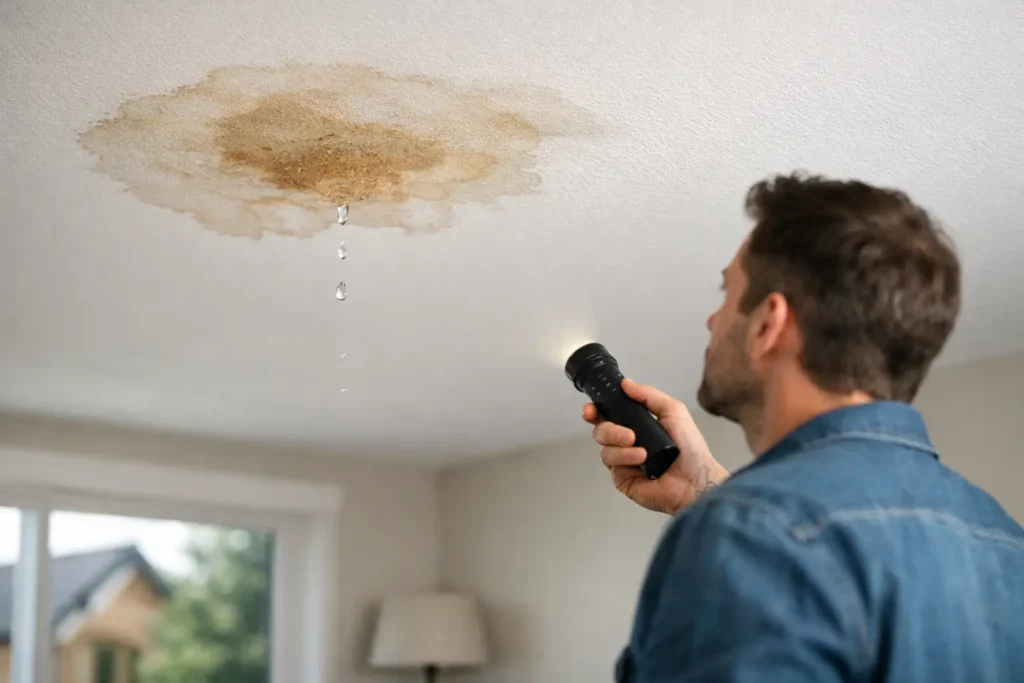
That brown spot overhead is rarely just a cosmetic problem. Water stains on ceiling from roof leaks usually mean moisture has already made its way through shingles, underlayment, decking, or flashing and into your home. By the time you notice the stain, the leak may have been active for days or even weeks.
In Central New York, that matters. Snow load, ice dams, wind-driven rain, and freeze-thaw cycles can turn a small roof weakness into interior damage fast. If the stain is growing, sagging, bubbling, or dripping, the goal is not to monitor it. The goal is to stop more water from getting in and have the roof inspected before the repair gets bigger.
What water stains on ceiling from roof damage usually mean
A ceiling stain is a symptom, not the root issue. Water can enter at one point on the roof, travel along framing or insulation, and show up several feet away from the actual opening. That is why the stain in your living room does not always line up with the damaged section of roof above it.
The most common causes are damaged or missing shingles, failed flashing around chimneys or roof penetrations, worn pipe boots, compromised valleys, and aging underlayment. In winter, ice dams are another major culprit. When melting snow backs up at the roof edge and refreezes, water can get pushed under the shingles and into the house.
Sometimes homeowners assume the problem is minor because the stain dries out between storms. That can be misleading. Intermittent leaks are still leaks. They often depend on wind direction, snow melt patterns, or how much rain falls in a short period.
How serious is a ceiling stain?
It depends on the size of the stain, how long the leak has been active, and what parts of the roof system are involved. A small yellow-brown mark may point to an isolated flashing issue that can be repaired quickly. A dark stain with soft drywall, peeling paint, or active dripping can mean the moisture has already affected insulation, framing, or even electrical components.
If the ceiling is bulging, treat it as urgent. Water can pool above drywall until the material gives way. If light fixtures are nearby, or if the leak is close to wiring, turn off power to that area and avoid trying to open the ceiling yourself unless you know it is safe.
The hidden damage is often what costs homeowners the most. Wet insulation loses performance. Wood decking can rot. Mold can begin growing in enclosed spaces where moisture lingers. What starts as a roof repair can become a drywall, insulation, and ventilation issue if it sits too long.
What to do first when you see a stain
Start inside. Move furniture, electronics, or valuables away from the area. If water is actively dripping, place a bucket or container underneath it and use towels to protect the floor. If the ceiling is swollen with trapped water, do not ignore it. A controlled release may be safer than a sudden collapse, but that is best handled carefully and only if conditions are safe.
Next, document what you see. Take clear photos of the stain, any drips, and any visible ceiling damage. If the leak followed a storm, note the date. That can help if storm damage or insurance questions come up later.
Then call for a roof inspection. The most effective fix comes from finding the actual entry point on the roof, not just repainting the ceiling. Interior patchwork without exterior repair only hides the problem for a short time.
What not to do
Do not assume caulk is the answer. Roof leaks are rarely fixed well by smearing sealant around visible areas and hoping for the best. Temporary patch products have their place in an emergency, but they are not a substitute for proper repair.
Do not climb onto a wet, icy, or snow-covered roof. In places like Syracuse, winter roof conditions can be dangerous even for experienced crews with the right equipment. If you can safely look from the ground and spot obvious missing shingles or flashing damage, that is useful. But getting on the roof yourself is not worth the risk.
Do not repaint over the stain before the leak is addressed and the area is fully dry. The discoloration will usually bleed back through, and any trapped moisture can keep causing damage out of sight.
Common roof problems behind ceiling stains
Damaged shingles
Shingles that are cracked, lifted, missing, or blown off can expose the layers underneath. Wind damage often starts small, especially near roof edges and ridges, but once water gets underneath, staining can follow.
Flashing failure
Flashing protects vulnerable transitions around chimneys, walls, skylights, and vents. When flashing loosens, rusts, or separates, water can enter in places that are hard to spot from inside the home.
Ice dams
This is one of the biggest cold-weather causes of water stains on ceiling from roof issues in our region. Warm air escaping from the attic can melt snow unevenly. The water runs down to the colder eaves, refreezes, and creates a barrier. That backed-up water then works under the shingles.
Roof vent and pipe boot issues
Plumbing vent boots and roof vent seals wear out over time. The rubber can crack, metal can loosen, and water can get in around the penetration.
Aging roof materials
Older roofs do not fail in one clean step. They weaken in sections. Granule loss, exposed fasteners, brittle shingles, and worn underlayment can all increase the chance of interior leaks.
Why leak location can be misleading
One of the most frustrating parts of roof leaks is that water travels. It can run along rafters, soak insulation, and finally show up at the lowest point along a ceiling seam or light fixture opening. That is why a stain near a chimney may actually be tied to a higher section of roof, or why a second-floor ceiling stain could originate well upslope.
A proper inspection looks at the roofing system as a whole. That includes shingles, flashing, penetrations, attic conditions, ventilation, decking signs, and moisture patterns. Quick guesses often miss the real cause.
Repair or replacement?
Not every ceiling stain means you need a full roof replacement. If the roof is generally in good shape and the problem is isolated, a targeted repair may be the right move. That is often the case with storm damage in one section, a failed pipe boot, or flashing deterioration around a chimney.
If the roof is older, has repeated leaks, or shows broad wear across multiple areas, replacement can be the more cost-effective option over time. The key is honesty during inspection. Homeowners should be shown what failed, why it happened, and whether a repair will realistically hold up through another Central New York winter.
When to call right away
Some situations should not wait. Active dripping during rain or thaw, bubbling drywall, visible mold, sagging ceilings, and leaks near electrical fixtures all deserve immediate attention. The same goes for stains that appeared right after high winds, hail, or a heavy snow event.
A fast response matters because roof leaks rarely stay the same size. Small openings grow. Saturated materials spread the problem. The sooner the source is identified and secured, the better chance you have of limiting interior repair costs.
If you are dealing with water stains on ceiling from roof damage and you are not sure how extensive it is, that is exactly when a professional inspection helps most. A dependable roofing contractor should be able to explain the issue clearly, outline repair options, and move quickly when the leak is urgent.
For homeowners who want straightforward answers without the runaround, companies like Alpha Omega Roofing LLC focus on that kind of practical response – inspect the problem, stop the water, and recommend the right fix for the roof you actually have.
After the roof repair
Once the roof issue is corrected, the interior still needs attention. Wet insulation may need to be replaced. Drywall should be fully dried and evaluated for softness or structural weakening. Stains usually need a stain-blocking primer before repainting. If moisture sat for too long, mold remediation may also be part of the process.
This is where timing matters again. Repairing the roof first prevents repeated interior damage. Repairing the ceiling too early can leave you paying twice.
A ceiling stain is your house telling you water got past the first line of defense. The right next step is not guesswork. It is getting the roof checked, getting the source fixed, and protecting the rest of the home before that stain turns into a much larger repair.