
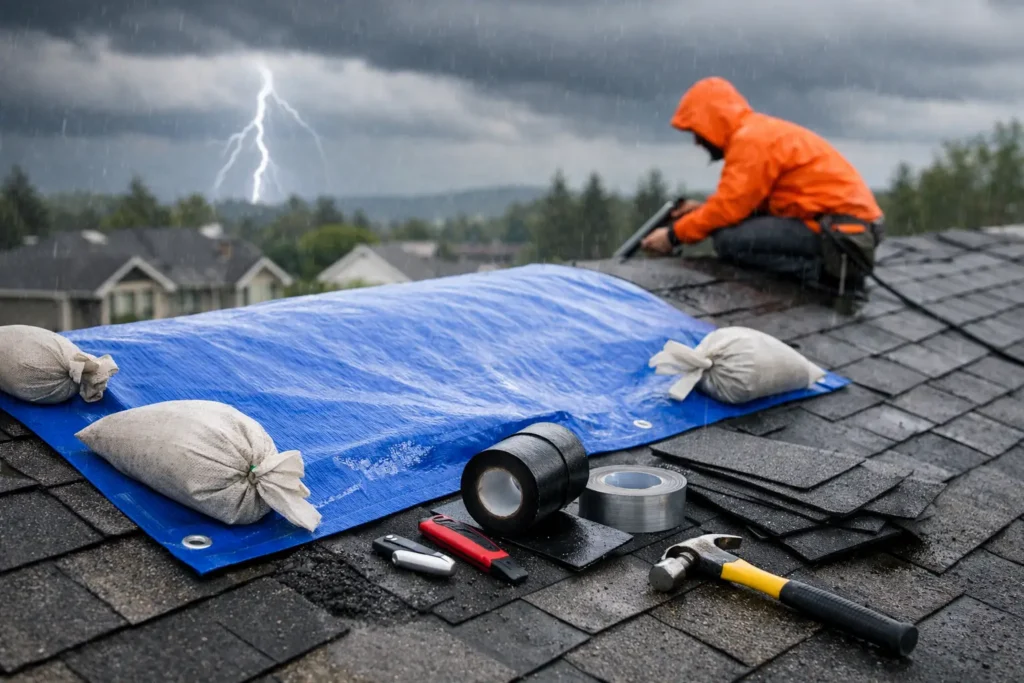
A roof leak rarely starts at a convenient time. Water may appear in an upstairs ceiling after heavy rain, shingles may blow off during a windstorm, or a tree limb may leave a visible opening in the roof. The best emergency roof fix options are the ones that stop further water intrusion safely, protect the inside of your home, and lead to a proper long-term repair instead of creating a bigger problem later.
For homeowners in Syracuse and throughout Central New York, speed matters. Snow, ice, wind, and repeated freeze-thaw cycles can turn a minor opening into soaked insulation, damaged drywall, mold growth, or structural wood rot. The right response depends on what caused the damage, where the water is entering, and whether it is safe to access the roof.
Start With Safety and Interior Protection
Do not climb onto a wet, icy, steep, or wind-damaged roof. During an active storm, the safest emergency repair is usually one performed from inside the home or from the ground. Even a repairable leak is not worth a fall.
First, move furniture, electronics, rugs, and valuables away from the affected area. Place buckets beneath drips and use towels to control splashing. If a ceiling is bulging with water, do not ignore it. A water-filled ceiling can collapse without much warning. Keep people out of the room and contact a roofing professional promptly.
If water is near light fixtures, outlets, or electrical panels, turn off power to that area only if you can do so safely. Then call an electrician or emergency service provider as needed. Roofing damage and electrical hazards should never be handled casually.
Once the immediate indoor area is protected, take clear photos and short videos of the leak, ceiling damage, fallen shingles, or visible exterior damage. Documentation can be helpful if you need to make an insurance claim after wind, hail, or tree-related damage.
Best Emergency Roof Fix Options by Problem
A temporary fix should be chosen based on the type of damage. Some materials can limit water entry for a short period, but they are not substitutes for a professional inspection and lasting repair.
Emergency roof tarping for widespread damage
A properly installed roof tarp is often the most effective short-term option after a tree strike, major shingle loss, or storm-created opening. The tarp should extend well beyond the damaged section so water cannot run beneath its edges. It must also be secured without driving unnecessary fasteners through vulnerable parts of the roof.
Roof tarping is especially useful when rain or snow is expected before permanent repairs can be completed. However, an incorrectly installed tarp can trap water, tear loose in the wind, or create additional punctures. For substantial damage, professional tarping is the safer choice.
Temporary patching for a small, visible opening
If conditions are dry and safe and the damage is limited to a small puncture or exposed area, a temporary roofing patch may reduce water intrusion. Roofing cement, compatible patching material, and a properly placed piece of metal flashing can sometimes provide short-term protection.
This option only works when the source of the leak is clear and accessible. Water often travels beneath shingles or along roof decking before it appears on a ceiling, so the visible drip location indoors may be several feet away from the actual roof failure. Applying sealant to the wrong spot can give a false sense of security while water continues to damage the roof system.
Replacing a few missing or damaged shingles
High winds can lift shingles, break tabs, or pull shingles completely away from the roof. If only a few shingles are missing and the surrounding materials are intact, replacing them may be an appropriate emergency repair.
The replacement shingles need to match the roof type and be installed with proper overlap and fastening. More importantly, the exposed area beneath the shingles must be checked for torn underlayment, damaged decking, or lifted flashing. A shingle replacement that covers hidden damage may not stop the leak for long.
Flashing repair around chimneys, vents, and walls
Many urgent roof leaks are not caused by shingles at all. They come from failed flashing around chimneys, skylights, plumbing vents, dormers, or roof-to-wall transitions. These areas direct water away from seams, which means even a small gap can allow substantial moisture into the home.
Temporary sealing may help during dry weather, but loose, rusted, cracked, or improperly installed flashing usually needs more than caulk. A lasting repair may involve removing nearby shingles, replacing the flashing system, and restoring the surrounding materials so water sheds correctly.
Clearing a drainage blockage
Water backing up at a gutter, valley, or low-slope roof area can look like a roof leak. Leaves, ice, branches, and debris can prevent water from draining, forcing it beneath shingles or into weak seams.
From the ground, check for obvious gutter clogs, overflowing downspouts, or limbs resting on the roof. Do not attempt to chip ice from shingles or pry at frozen gutters. That can crack roofing materials and cause more damage. Once conditions allow, a professional can determine whether the issue is simply drainage or a sign of ice dam damage, deteriorated flashing, or a roof slope problem.
When an Emergency Fix Is Not Enough
Temporary repairs are meant to buy time, not solve every roofing problem. Call for a professional inspection as soon as possible if you see daylight in the attic, multiple missing shingles, sagging roof areas, widespread granules in gutters, a damaged chimney connection, or water stains that keep expanding after the weather clears.
You should also arrange an inspection after a tree limb hits the roof, even if there is no immediate leak. The impact may crack decking, loosen shingles, or damage flashing in ways that are not visible from the ground.
An experienced roofer can trace the true entry point, inspect the roof deck and underlayment, determine whether a targeted repair is realistic, and explain when replacement makes better financial sense. Honest guidance matters here. A small flashing repair should not automatically become a full roof replacement, but repeatedly patching an aging roof with widespread wear can cost more in the long run.
What to Avoid During a Roof Emergency
Homeowners often make a stressful situation worse by relying on quick fixes that are not suited to roofing. Avoid applying large amounts of caulk over shingles, using duct tape as an exterior repair, nailing a tarp directly across broad sections of the roof, or pressure washing damaged shingles. These measures can interfere with proper repairs and sometimes void material warranties.
Do not place a ladder against a damaged gutter or work under hanging tree limbs. If the roof has been hit by a tree, the structure may be unstable. Keep clear of the area until it can be assessed safely.
Finally, do not wait for the next storm to see whether the leak returns. Water can continue moving through insulation and framing long after the visible drip stops. A dry ceiling does not always mean the problem is gone.
Protect Your Insurance Claim and Your Home
When storm damage may be covered by insurance, take photos before temporary work begins when possible. Save receipts for emergency tarping, water mitigation, and any temporary materials. Write down the date and time of the storm, and note when you first noticed the damage.
Your responsibility as a homeowner is generally to take reasonable steps to prevent additional loss. That does not mean you need to risk your safety or attempt a major repair yourself. It means acting promptly, documenting the damage, and getting qualified help to stabilize the roof.
Alpha Omega Roofing LLC helps Central New York homeowners assess urgent roof damage, explain repair options clearly, and address storm-related issues before they spread. A professional inspection can also provide the documentation and repair scope you need to make informed decisions.
A small leak can stay small only when it is addressed quickly and correctly. Protect the interior of your home, avoid unsafe roof access, and schedule an inspection before the next round of rain, wind, or snow finds the same weak spot.