
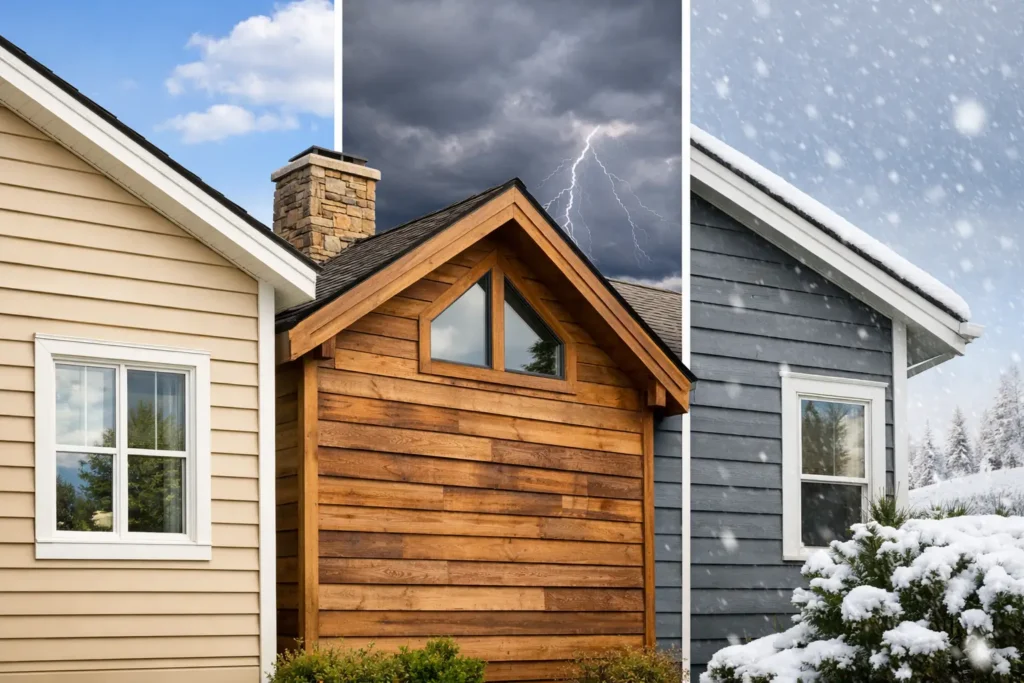
A Central New York winter can expose weak siding fast. One season may bring heavy snow, ice dams, freeze-thaw swings, wind-driven rain, and humid summer heat. When homeowners ask about the best siding options for weather, the right answer is not simply the material with the highest price tag. It is the siding system that fits the home, is installed correctly, and can stand up to the conditions around Syracuse year after year.
Siding does more than improve curb appeal. It helps manage moisture, protects wall assemblies from the elements, and can affect how much maintenance a home needs over time. Choosing well starts with an honest look at local weather, the condition of the existing exterior, and the level of upkeep you are comfortable handling.
What Weather Does to Siding in Central New York
Central New York homes need exterior materials that can handle more than cold temperatures. Repeated changes from below freezing to above freezing cause materials to expand, contract, and hold moisture differently. That cycle can expose gaps, cracked caulk, loose panels, and failing trim.
Wind-driven rain is another concern. Rain does not always fall straight down, especially during a strong storm. Water can be pushed behind damaged or poorly installed siding, where it may affect sheathing, insulation, framing, and interior walls before a homeowner sees a stain.
The most reliable siding choices should address four local challenges:
- Freeze-thaw cycles that stress seams, joints, and fasteners
- Heavy rain and snowmelt that test moisture management
- Strong winds that can loosen or lift improperly secured panels
- Summer humidity and sun exposure that can fade, warp, or encourage mildew
No material is completely maintenance-free or immune to damage. The goal is to choose one with sensible trade-offs and pair it with proper flashing, housewrap, trim, and installation practices.
Best Siding Options for Weather: A Practical Comparison
Fiber Cement Siding
Fiber cement is one of the strongest all-around options for homeowners who want a durable, traditional-looking exterior. It is made from cement, sand, and cellulose fibers, and it is available in lap siding, panels, shingles, and trim styles. Many homeowners choose it for its wood-like appearance without the same level of vulnerability to rot and insect damage.
For Central New York weather, fiber cement performs well against moisture, wind, and temperature changes when it is installed according to manufacturer specifications. It does not burn easily, and it holds paint well, making it a strong option for homeowners who want long-term curb appeal.
The trade-off is installation. Fiber cement is heavy, requires specialized cutting and handling, and is not a material to treat as a quick weekend project. It also needs periodic painting or finish maintenance, particularly at cut edges and areas exposed to repeated moisture. A skilled installation matters because incorrect clearances, flashing, or fasteners can shorten its lifespan.
Premium Vinyl Siding
Vinyl remains a popular choice because it is cost-effective, low-maintenance, and available in many colors and profiles. For many homes in Syracuse and surrounding communities, quality insulated vinyl siding offers a practical balance of weather resistance, appearance, and budget control.
Modern vinyl siding will not rot, and it does not require repainting. It also handles normal rain and snow exposure well. Insulated products may improve the finished appearance by reducing waviness over uneven walls, though siding insulation should not be confused with a replacement for properly insulated wall cavities.
Vinyl has limits in severe cold and high heat. Lower-grade panels can become brittle in freezing conditions, crack when struck, or warp if installed too tightly. That is why product quality and proper fastening are critical. Vinyl is designed to move with temperature changes, so nails must allow movement rather than pin panels in place.
For homeowners looking for dependable protection without the cost of premium painted materials, high-quality vinyl is often one of the best siding options for weather. It is especially effective when installed with careful attention to moisture barriers, starter strips, trim, and transitions around windows and doors.
Engineered Wood Siding
Engineered wood siding offers the warmth and character of wood with improved consistency and weather resistance. It is manufactured from treated wood strands and resins, then finished with a protective overlay. It can be a good fit for homeowners who prefer the look of painted wood siding but want less upkeep than natural wood often requires.
A quality engineered wood product can resist impact, hold paint well, and perform reliably through normal seasonal changes. It is also generally lighter and easier to install than fiber cement. That can make it attractive for detailed exterior designs, gables, and homes where a traditional wood look is important.
Its biggest consideration is moisture control. Engineered wood is not a material to install over existing water damage or failing flashing. Cut edges, penetrations, and ground clearances must be handled correctly. If water repeatedly reaches unprotected edges, the siding can deteriorate sooner than expected. Homeowners should plan for repainting or refinishing at intervals recommended for the product and exposure level.
Natural Wood Siding
Wood siding can be beautiful, distinctive, and appropriate for historic or character-rich homes. Cedar, pine, and redwood profiles can provide a look that manufactured products do not fully duplicate. For the right homeowner, natural wood can be worth the care it requires.
In a wet, snowy climate, however, wood is a higher-maintenance choice. It needs regular painting or staining, prompt attention to peeling finishes, and close monitoring for rot, insect activity, and moisture damage. Shaded walls and areas near rooflines, chimneys, decks, or landscaping deserve particular attention.
Wood is not a poor siding choice, but it is best for homeowners willing to maintain it. If you want a lower-maintenance exterior that still has a classic profile, fiber cement or engineered wood may be a more practical fit.
Metal Siding
Metal siding, including steel and aluminum options, is known for durability and resistance to insects, rot, and fire. It can be an excellent choice for modern home designs, barns, garages, and certain residential exteriors. Steel siding in particular can handle wind and moisture well when installed with the right underlayment and trim system.
The concerns are appearance preferences, potential denting from impacts, and the need to prevent scratches or damaged coatings from becoming corrosion points. Aluminum does not rust but may dent more easily. Steel is stronger but relies on a sound protective finish. Metal can be a smart long-term option, but it is not the default choice for every neighborhood or architectural style.
Installation Matters as Much as the Material
The best siding product can still fail if the wall behind it is not prepared correctly. Before new siding goes on, a contractor should inspect for damaged sheathing, rotten trim, soft areas around windows, missing flashing, and evidence of water entry. Covering those issues instead of repairing them can create a more expensive problem later.
A dependable siding installation includes a weather-resistive barrier, properly integrated flashing around openings, correct clearances from roofs and grade, and details that direct water out rather than trapping it behind the exterior. These items are easy to overlook after the job is complete, but they are what help the siding system perform during the next hard rain or snowmelt.
Ventilation and roof drainage also matter. Overflowing gutters, short downspouts, ice-related roof issues, and leaking chimney flashing can send repeated water exposure down a wall. If a siding problem keeps returning in one location, the source may be above the siding rather than the siding itself.
How to Choose the Right Material for Your Home
Start with your priorities. Homeowners focused on low maintenance and budget often do well with premium vinyl. Those who want a more substantial painted finish and strong weather performance may prefer fiber cement. Engineered wood can offer a middle ground for a wood-style appearance, while natural wood suits homeowners who value its look and accept regular maintenance.
Also consider the home’s existing exterior details. A house with aging windows, damaged fascia, worn roof flashing, or signs of water intrusion may need repairs before new siding is installed. Replacing siding without addressing those areas can limit the value of the project.
At Alpha Omega Roofing LLC, we help homeowners look beyond surface appearance. A straightforward inspection can identify whether you are dealing with faded siding, isolated storm damage, hidden moisture concerns, or an exterior that is ready for full replacement.
A new siding project should leave you with more than a fresh color. It should give you confidence when the forecast calls for freezing rain, heavy snow, or the next fast-moving summer storm. Choose materials that fit your home, insist on sound installation details, and address small exterior problems before Central New York weather turns them into major repairs.