
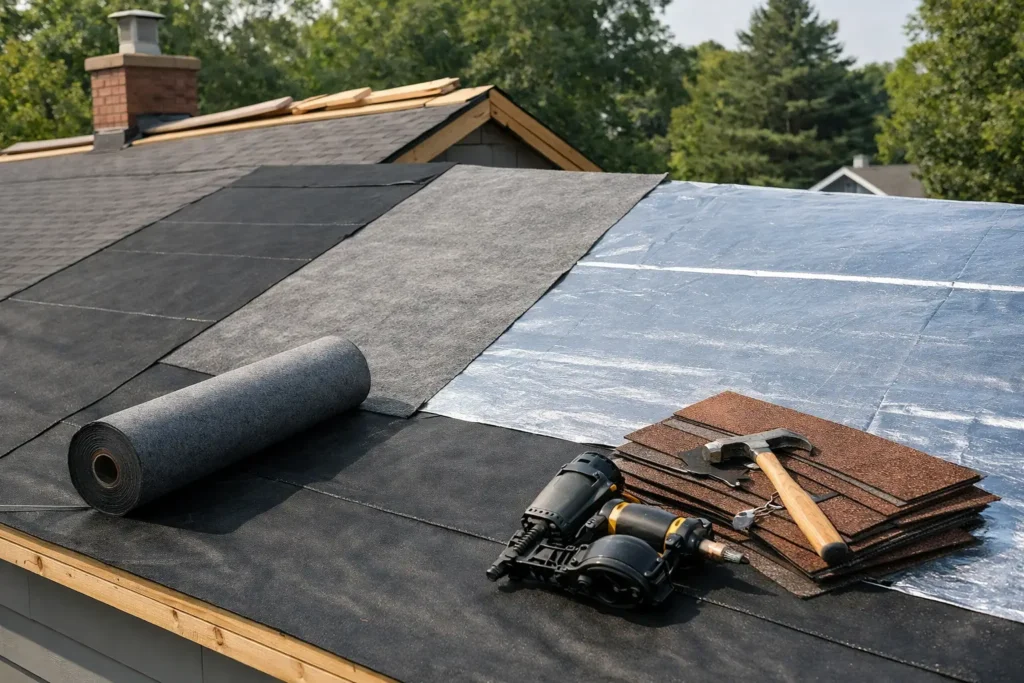
A roof can look perfectly sound from the street and still fail where homeowners cannot see it: beneath the shingles. Choosing among the best roofing underlayment types matters because this layer is the backup defense against wind-driven rain, ice dams, and moisture that gets past the outer roof covering. In Central New York, where snow, freeze-thaw cycles, and strong storms are part of the job, underlayment is not a place to cut corners.
The right choice depends on your roof’s slope, shingle type, ventilation, budget, and the vulnerable areas around eaves, valleys, walls, chimneys, and skylights. A dependable roofing contractor should explain the full system, not simply quote a shingle color and leave the details vague.
What Roofing Underlayment Does
Roofing underlayment sits directly over the roof deck and under shingles or other roofing material. It is not meant to replace shingles, but it provides a critical secondary layer of water resistance when weather finds a weak point.
During a roof replacement, underlayment also protects the exposed deck if weather arrives before the new shingles are installed. Over the life of the roof, it can limit damage from a lifted shingle, wind-driven rain, or water that backs up beneath shingles during an ice dam event.
It is easy to focus only on the visible shingle, but a roof is a system. Deck condition, flashing, ventilation, fasteners, ice protection, and underlayment all affect whether that system holds up through a Syracuse winter.
The Best Roofing Underlayment Types Explained
Asphalt-saturated felt
Asphalt-saturated felt, often called tar paper, is the traditional underlayment used on many asphalt shingle roofs. It is commonly available in No. 15 and heavier No. 30 options. The heavier product is generally more tear-resistant and better suited to demanding roof conditions.
Felt remains a workable, budget-conscious choice when installed correctly. It has a long track record and is familiar to most roofing crews. However, it can wrinkle when wet, tear more easily than synthetic products, and add weight to the roof. Those wrinkles may affect how flat the finished shingles lay if the material is not installed and dried properly.
For a simple roof replacement with a sound deck and a tight budget, felt may make sense. On a complicated roof or a home exposed to frequent wind and snow, many homeowners prefer the added durability of synthetic underlayment.
Synthetic underlayment
Synthetic underlayment is made from engineered polymers rather than asphalt-saturated paper. It is lightweight, highly tear-resistant, and usually provides better traction for installers than traditional felt. It often stays flatter during installation, which helps crews create a cleaner base beneath the shingles.
For many Central New York asphalt shingle roofs, synthetic underlayment is the best overall balance of durability, weather resistance, and value. It handles temporary weather exposure well during a replacement and is less likely to absorb moisture or buckle than felt.
Not every synthetic product performs the same way. Quality varies by manufacturer, thickness, fastening requirements, and allowed exposure time. A lower-cost synthetic sheet is not automatically equal to a premium product. Your roofing estimate should identify the underlayment being used instead of describing it only as “standard underlayment.”
Synthetic underlayment is still not a substitute for ice and water protection where it is needed. It sheds water, but it is not self-sealing around nails in the same way as a peel-and-stick membrane.
Self-adhered ice and water barrier
Self-adhered ice and water barrier is a rubberized asphalt membrane with an adhesive backing. It bonds directly to the roof deck and seals around roofing nails, giving it a major advantage in areas where water can pool, back up, or be pushed beneath shingles.
This is the most important underlayment material at roof eaves in snow country. When an ice dam forms, melting snow can run down the roof and refreeze near the cold overhang. Water may then back up under the shingles. A properly installed ice barrier provides a much stronger line of defense than felt or standard synthetic underlayment alone.
It is also commonly used in valleys, around chimneys, beside skylights, at roof-to-wall transitions, and in other high-risk details. Building-code requirements for ice barriers vary by location and roof design, but local weather conditions make this protection a smart conversation for nearly every Central New York roof replacement.
The trade-off is cost. Self-adhered membrane costs more than standard underlayment and requires a clean, properly prepared deck for reliable adhesion. It should be installed strategically as part of the roof system, not treated as an optional upgrade with no explanation.
High-temperature self-adhered membrane
High-temperature ice and water barrier is designed for roof systems that reach higher surface temperatures, especially metal roofing. Standard self-adhered membranes can soften or deteriorate when exposed to the heat generated beneath some metal panels.
If you are installing a standing-seam metal roof or another specialty roofing material, ask whether a high-temperature membrane is specified. The visible roofing material and underlayment must be compatible. Using the wrong membrane can create problems that may not show up until years later.
Which Underlayment Is Right for Your Roof?
For most asphalt shingle homes, a common high-performing approach is synthetic underlayment across the main roof deck, paired with self-adhered ice and water barrier at the eaves and other vulnerable areas. That combination provides durable coverage without applying the most expensive membrane across every square foot of the roof.
A full self-adhered underlayment system may be worth considering on low-slope sections, complex roofs, or homes with a history of ice dams and recurring leaks. It can also make sense where valleys, dormers, skylights, or intersecting rooflines create many water-management challenges.
Traditional felt can still be appropriate for some projects, but it should be selected because it fits the roof and budget, not because it is the only option presented. The best material on paper is not always the best choice for every home. Installation quality and proper detailing are just as important as the product itself.
Underlayment Cannot Fix These Roof Problems
A premium underlayment will not correct rotten roof decking, poor attic ventilation, damaged flashing, or inadequate insulation. These conditions need to be addressed during the replacement process.
For example, ice dams are often tied to heat escaping from the living space into the attic. Ice barrier can reduce the chance of water entering the house, but better attic air sealing, insulation, and ventilation may be needed to address the underlying cause. Likewise, a leaking chimney area may require masonry or flashing repair rather than more underlayment alone.
This is why a thorough inspection matters. A contractor should look beyond the shingles for soft decking, exposed fasteners, rusted flashing, improper bathroom vent termination, and signs of trapped moisture. A quick surface-only assessment can miss the reason a roof failed in the first place.
Questions to Ask Before Approving a Roofing Estimate
Before moving ahead, ask what underlayment will be used on the main roof deck, where ice and water barrier will be installed, and whether the materials are compatible with your roofing system. You should also ask how damaged decking will be handled if it is discovered after tear-off.
Get clarity on valleys, chimneys, skylights, pipe boots, wall flashing, and ventilation. These are the places where workmanship often matters most. A trustworthy estimate does not need to bury every detail in technical language, but it should make clear what protection your home is receiving.
At Alpha Omega Roofing LLC, the goal is to help homeowners understand those decisions before work begins, especially when storm damage, leaks, or an aging roof has made the situation urgent.
A roof replacement is the best time to strengthen the parts of your roof you will not see again for decades. If you are comparing options, start with a professional inspection and a clear conversation about the underlayment, flashing, and ice protection your home needs – not just the shingles you want to see from the curb.