
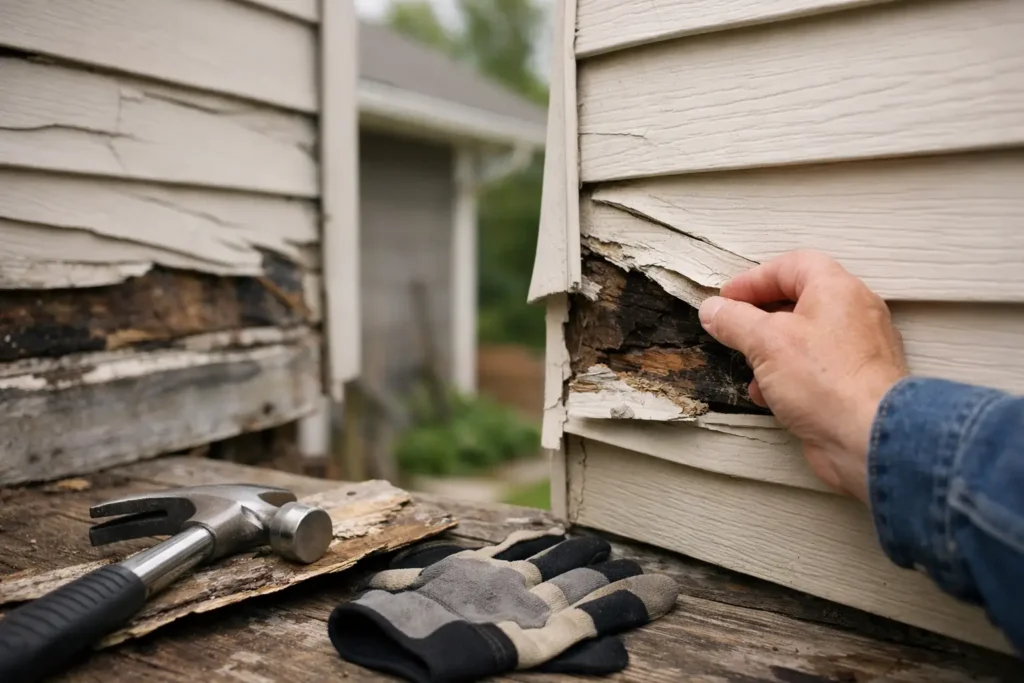
A loose siding panel can look like a small cosmetic issue on a calm afternoon. After a Syracuse winter, heavy rain, or a hard windstorm, that same opening can let moisture reach the wall behind it. Catching the top signs siding is failing early gives you more control over repair costs, protects your insulation and framing, and helps keep a manageable issue from becoming a larger exterior project.
Siding is your home’s weather barrier, not just its finish. It has to handle freeze-thaw cycles, wind-driven rain, snow, sun exposure, and normal settling year after year. Some wear is expected. The concern begins when siding can no longer shed water, stay securely attached, or protect the structure underneath.
10 Top Signs Siding Is Failing
1. Cracks, chips, or holes in the panels
Visible cracks and holes are among the clearest warning signs. A small crack in vinyl siding may seem harmless, but it can widen as temperatures rise and fall. Holes created by impact, lawn equipment, or pests create direct paths for water and insects.
Inspect lower wall sections, corners, areas near walkways, and the sides of the home that receive the strongest weather. One isolated damaged panel may be repairable. Widespread cracking, especially on older siding, often points to material that has become brittle and may be nearing the end of its service life.
2. Warped, buckled, or loose siding
Siding should lie relatively flat against the exterior walls. If panels look wavy, bowed, buckled, or pulled away from the home, do not assume it is only an appearance problem. Warping can result from age, poor installation, excessive heat exposure, or moisture behind the siding.
Loose panels are especially vulnerable during high winds. They can rattle, lift, or detach completely, exposing the wall sheathing beneath. A contractor should determine whether the issue is limited to fasteners and a few panels or whether the wall system needs more extensive repair.
3. Faded color that does not match sheltered areas
Sun fading is normal over time, particularly on the south and west sides of a home. But severe, uneven fading can be a sign that the material is wearing down. Compare exposed walls with areas behind shutters, under porch roofs, or near eaves. A sharp difference in color can show how much the siding has deteriorated.
Fading alone does not always mean replacement is urgent. It does matter when it appears alongside brittleness, chalking, cracks, or other signs of failure. It can also make a small repair difficult because replacement panels may not match the rest of the home.
4. Peeling paint, stained trim, or bubbling finishes
For painted wood or fiber-cement siding, peeling paint is more than a curb appeal concern. Paint serves as a protective layer. When it peels, blisters, or bubbles, moisture may be getting into the material or becoming trapped beneath the finish.
Look closely at window trim, corner boards, soffit areas, and siding joints. Dark water stains, swollen wood, and paint that flakes soon after repainting all deserve a closer inspection. Painting over an active moisture problem may hide it briefly, but it will not correct the source.
5. Soft spots, rot, or crumbling wood
Wood siding should feel solid when gently pressed. If you find soft areas, crumbling edges, or sections that give under light pressure, the material may be rotting. Do not push hard or use sharp tools that could cause further damage. The goal is to identify suspicious areas, not create new openings.
Rot often begins near the bottom edge of siding, around window and door openings, behind downspouts, and where landscaping holds moisture against the home. The visible damage may be smaller than the affected area behind it. Once rot has reached the sheathing or framing, repairs become more involved.
6. Mold, mildew, or recurring green growth
A little surface mildew on a shaded side of the house can sometimes be cleaned safely. Recurring dark streaks, green growth, or mold around seams may indicate that water is not draining or drying as it should. This is common where trees limit sunlight, gutters overflow, or grade slopes toward the home.
Pay attention to patterns. If growth returns quickly after cleaning or is concentrated around a specific wall section, it is worth investigating the siding, flashing, gutters, and drainage together. The problem may not be the siding material alone, but the siding may be showing you where water is collecting.
7. Higher energy bills or rooms that feel drafty
Failing siding can contribute to heat loss, though it is not always the only cause. Gaps around siding, damaged house wrap, wet insulation, and openings near trim can allow cold air into the wall system. In Central New York, homeowners often notice the problem as a room that stays chilly despite normal heating.
Compare utility bills from one heating season to the next, taking weather and fuel costs into account. If bills are rising and certain rooms feel drafty, an exterior inspection can help identify whether siding damage, window sealing, roof ventilation, or insulation is part of the issue.
8. Interior water stains or musty odors
Water stains on an interior wall or ceiling should never be ignored. While roof leaks and plumbing issues are common causes, water can also enter through damaged siding, failed trim, poor flashing, or gaps around windows. A musty odor in a room, basement, or exterior wall area can be another sign of trapped moisture.
This is a situation where guessing can be expensive. The location of an interior stain does not always match the point where water entered. A professional inspection can trace the moisture path and separate siding problems from roofing, gutter, chimney, or window-related issues.
9. Insect activity around damaged sections
Wood-damaging insects are drawn to soft, wet, or decaying materials. Carpenter ants, termites in applicable areas, and other pests may use gaps in compromised siding to reach the wall cavity. You may notice small holes, sawdust-like debris, insect traffic, or birds pecking repeatedly at one section of the exterior.
Not every pest issue means the siding has failed, but damaged siding makes a home easier to access. Address both the entry point and any underlying moisture condition. Repairing a panel without correcting rot or drainage may invite the same problem back.
10. Frequent repairs or siding that is near its expected lifespan
A single repair after a storm can be the sensible choice. Replacing panels every year, dealing with recurring loose sections, or repainting more often than expected is different. Repeated repair needs can signal that the siding system is no longer performing reliably.
Material type, installation quality, maintenance, sun exposure, and weather all affect lifespan. Vinyl may last for decades but can become brittle with age. Wood can perform beautifully when maintained, but it needs consistent protection from moisture. The right decision depends on the condition of the wall beneath the siding, the availability of matching materials, and how long you plan to stay in the home.
What to Do When You Notice Failing Siding
Start with a ground-level walk around your home after a storm and at least once each spring and fall. Look for loose panels, cracks, openings around trim, stains, and places where gutters spill water onto the siding. Take clear photos of changes, especially if you may need to document storm damage for an insurance claim.
Avoid climbing ladders, pulling loose panels into place, or sealing over wet materials with caulk. Temporary fixes can trap moisture or make a proper inspection harder. If a panel is flapping in the wind or an opening is exposed before rain or snow, arrange a prompt repair to prevent further water intrusion.
A thorough exterior inspection should look beyond the obvious panel damage. The contractor should assess siding, trim, flashing, window and door openings, gutters, roof edges, and any signs of moisture inside the home. Alpha Omega Roofing LLC helps Central New York homeowners understand what is damaged, what can be repaired, and when replacement is the more dependable long-term option.
Your siding does not need to look perfect to protect your home well. But when it is cracked, loose, soft, stained, or letting water where it does not belong, waiting rarely improves the outcome. A clear inspection and straightforward estimate can give you the information you need to protect your home before the next round of harsh weather arrives.