
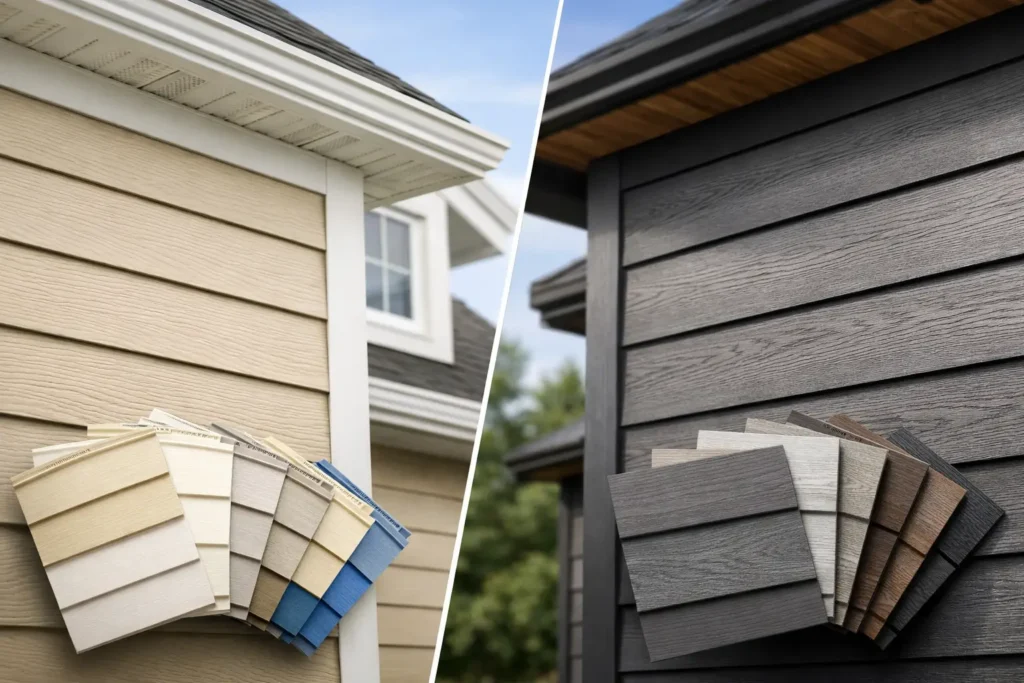
A siding decision can feel simple until you picture a Syracuse winter: snow piled against the foundation, wind-driven rain, freeze-thaw cycles, and a few hot, humid weeks in July. When comparing vinyl siding vs composite siding, the best choice is not always the product with the biggest warranty or the highest upfront price. It is the one that fits your home, your budget, and the level of maintenance you are willing to take on.
Both materials can protect your home and improve curb appeal when they are installed correctly. The differences show up in appearance, impact resistance, moisture management, cost, and how each product responds to Central New York weather over time.
Vinyl Siding vs Composite Siding at a Glance
Vinyl siding is made from PVC and has been a popular residential siding choice for decades. It is lightweight, cost-effective, and available in a wide range of colors and profiles. Because the color runs through the material, small scratches are often less noticeable than they would be on painted siding.
Composite siding is a broader category. Most products combine engineered wood fibers, resins, binders, and protective coatings, although the exact makeup varies by manufacturer. It is often designed to create a more realistic wood-grain look while offering better moisture and impact resistance than traditional wood siding.
Vinyl is generally the more affordable option and requires less routine upkeep. Composite usually costs more, but many homeowners prefer its thicker profile, more substantial look, and ability to hold a painted finish.
The right answer depends on what matters most to you. If you need a practical exterior update on a tight budget, vinyl may be the stronger fit. If appearance and a more premium finish are priorities, composite may justify the added investment.
Cost: Upfront Price Versus Long-Term Value
Vinyl siding typically has a lower material and installation cost than composite siding. Its lighter weight and simpler installation can help control labor costs, especially on straightforward homes without extensive trim work, damaged sheathing, or difficult access.
Composite siding usually carries a higher initial price because the boards are heavier, the installation process can be more detailed, and the material itself is more expensive. It may also require painting or finishing, depending on the product selected. Homes with intricate architecture, multiple stories, or extensive window and door trim can see a larger difference in installed cost.
That does not automatically make vinyl the better value. A lower-priced siding job can become costly if hidden water damage, poor flashing, or incorrect installation is ignored. Before choosing a material, make sure the estimate addresses removal of existing siding, inspection of the wall system, house wrap, flashing, trim, and repairs to any damaged areas underneath.
For homeowners planning to stay in their home for many years, the decision often comes down to whether the appearance and durability benefits of composite are worth the additional upfront cost. For a rental property, starter home, or budget-conscious replacement, vinyl can provide solid protection and a clean look without stretching the project budget.
Appearance and Curb Appeal
This is where composite siding often has an advantage. It tends to have deeper wood-grain texture, sharper edges, and a thicker profile than standard vinyl. On older homes, historic-style properties, and houses with detailed trim, that added depth can make a noticeable difference from the curb.
Composite also gives homeowners more flexibility with color. Many products can be painted, which is useful if you want a custom exterior palette or expect your preferences to change later. A properly applied finish can be refreshed instead of replacing the entire siding system.
Vinyl has improved significantly in appearance, particularly in premium insulated panels and wider plank styles. It can still look attractive on a well-maintained home, especially when paired with quality trim, shutters, and gutters. However, vinyl can show seams, and lower-grade panels may look flatter or less substantial in direct sunlight.
If matching the character of your home is your main concern, ask to see full-size samples installed outdoors. A small color swatch in a showroom does not show how a siding profile will look across an entire wall.
Weather Performance in Central New York
Central New York siding needs to handle more than rain. It has to stand up to snow, ice, wind, temperature swings, and moisture that can work its way behind a damaged exterior.
Vinyl does not absorb water and will not rot. That is a major benefit in a wet climate. It can also expand and contract as temperatures change, which is normal when it has been installed with the proper spacing and fastening technique. If it is nailed too tightly, vinyl may buckle, wave, or crack under stress.
Composite siding is typically engineered for stronger impact resistance and can feel more solid against wind and everyday bumps. Depending on the product, it may perform better than vinyl when struck by a ladder, thrown debris, or an errant baseball. Its resistance to moisture depends heavily on the product design and installation details. Cut edges, joints, penetrations, and transitions around windows must be properly protected.
Neither material can compensate for poor wall flashing. Water intrusion often starts around roof-to-wall intersections, windows, doors, chimneys, and poorly integrated gutters. If your siding replacement follows a roof leak, ice dam, or storm damage event, identify and fix the source before new siding goes up.
Maintenance Needs and Repairs
Vinyl is the low-maintenance choice for most homeowners. A gentle seasonal rinse can remove dirt, pollen, and mildew. Avoid high-pressure washing too close to the panels, since forcing water behind the siding can create problems where you cannot see them.
Repairs to vinyl can be relatively simple when matching panels are still available. The challenge is color matching after years of sun exposure. New panels may look brighter than the existing siding, even when they are technically the same color.
Composite siding generally needs more attention than vinyl, particularly if it has a painted finish. Inspect it each year for cracked caulk, loose boards, damaged paint, or exposed edges. Repainting may eventually be necessary, but this also gives you the ability to renew the home’s appearance without a full siding replacement.
For either material, keep shrubs and mulch away from the siding, maintain gutters, and address loose or damaged pieces quickly. Small openings can allow water, insects, and cold air into the wall assembly.
Installation Matters as Much as the Material
A quality siding job is not just about covering walls with new panels or boards. The work should include careful preparation, proper water-resistant barriers, correctly installed flashing, ventilation considerations, and clean finishing around every opening.
Vinyl must be installed so it can move with temperature changes. Composite must be cut, fastened, sealed, and finished according to the manufacturer’s specifications. Shortcuts in either system can lead to water intrusion, visible defects, and warranty issues.
This is also the right time to inspect soffit, fascia, roof edges, gutters, and masonry transitions. Exterior systems work together. Replacing siding while leaving a failing gutter system or roof flashing detail untouched can put the new investment at risk.
Alpha Omega Roofing LLC helps homeowners look at the full exterior picture, not just the surface material. A clear inspection and straightforward estimate can help you determine whether your home needs siding replacement alone or related repairs before the project begins.
Which Siding Is Right for Your Home?
Choose vinyl siding if you want the lowest-maintenance option, have a defined budget, and prefer a durable material that does not need painting. It is a sensible choice for many homes when installed with quality underlayment, trim, and flashing.
Consider composite siding if you want a more realistic wood appearance, thicker siding profiles, greater impact resistance, and the option to repaint in the future. It can be especially appealing for homeowners who see siding as a long-term curb appeal investment.
Do not choose based on samples alone. Ask what specific composite product is being proposed, how it handles moisture at cut edges, what maintenance it requires, and what is included in the installation scope. Compare complete estimates, not just the price per square foot.
A siding project should leave your home looking better and better protected when the next hard rain, lake-effect snowstorm, or windy night arrives. The best next step is a professional exterior inspection that gives you clear options before a small siding concern turns into a larger repair.