
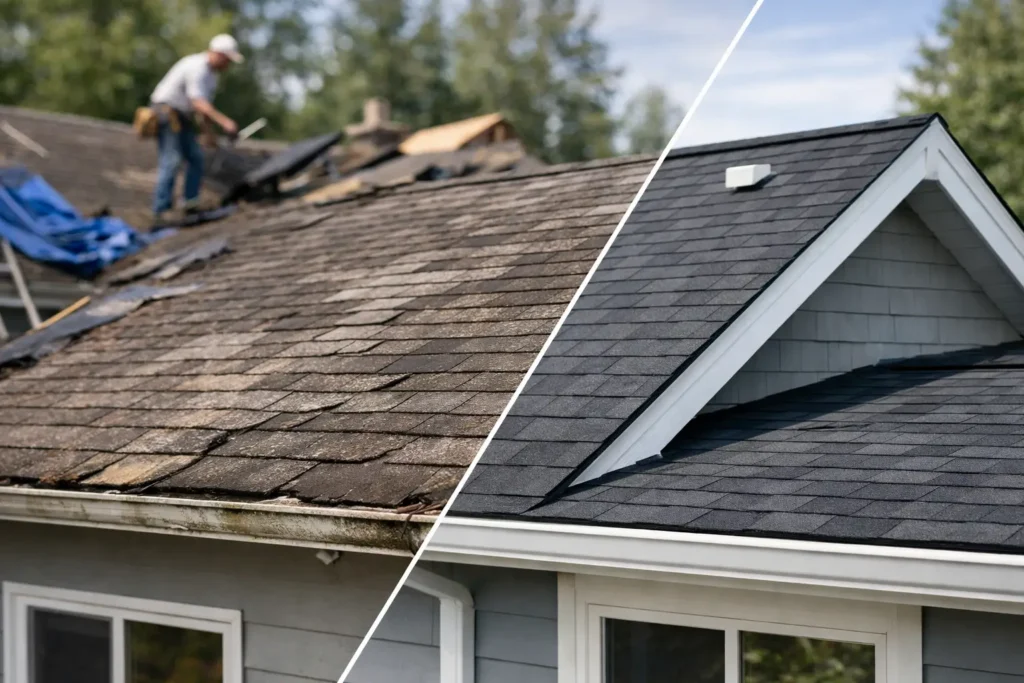
A roof can look fine from the driveway and still be one hard Central New York storm away from a leak. That is why roof replacement before and after is about more than a dramatic change in shingle color. The real difference is often found underneath the old roofing: weakened decking, failing flashing, inadequate ventilation, and water paths that have been building for years.
For homeowners, a replacement should leave the house better protected, better sealed, and easier to maintain – not simply newer looking. Knowing what should change from the first inspection to the final cleanup helps you make a clear decision and recognize quality work when you see it.
Before Roof Replacement: What a Professional Inspection Can Reveal
The “before” stage starts with an honest assessment, not a sales pitch. An experienced roofing contractor will inspect visible shingles, roof penetrations, valleys, flashing, gutters, and attic conditions when accessible. They are looking for signs that repairs can still solve the problem and signs that the entire roofing system has reached the end of its useful life.
Age matters, but it is not the only factor. A roof with scattered missing shingles after wind damage may be repairable if matching material is available and the surrounding shingles remain sound. On the other hand, widespread granule loss, curling edges, repeated leaks, soft areas, or damaged flashing in several locations often point toward replacement.
In Syracuse and across Central New York, winter weather makes these problems harder on a roof. Ice dams can force water beneath shingles. Freeze-thaw cycles can widen small gaps around flashing and vents. Heavy snow adds weight while spring rain tests every weak point. A roof that has handled one season poorly may not be prepared for the next one.
What the Roof May Look Like Before Work Begins
From the ground, you might notice dark streaks, bare shingle patches, lifted tabs, sagging roof lines, or shingle pieces in the yard. Indoors, the warning signs can be subtler: a brown ceiling stain, peeling paint near an exterior wall, a musty attic smell, or damp insulation.
None of these signs automatically means a full replacement is required. That is why a detailed inspection matters. The goal is to explain the condition of the roof in plain language, identify the source of the problem, and give you a realistic recommendation based on the roof’s remaining life.
The Estimate Should Set Clear Expectations
Before work starts, homeowners should understand the scope. A straightforward estimate identifies the roofing material, the areas being replaced, expected tear-off work, and components such as underlayment, ice and water protection, flashing, ventilation, and ridge caps.
It should also address what happens if hidden damage is found after old materials come off. Roof decking cannot always be fully evaluated until the shingles and underlayment are removed. A contractor should explain this possibility up front, document any affected areas, and discuss the needed repair before proceeding. Transparency at this stage prevents a surprise from becoming a dispute.
During the Replacement: The Changes You May Not See
A new roof is a layered system. Shingles are the visible finish, but the performance of the roof depends on the work below them. A proper replacement begins by removing worn roofing materials down to a sound surface.
Once the roof deck is exposed, the crew can check for soft, rotted, cracked, or delaminated wood. Any damaged decking should be replaced so the new roof has a stable base. Installing shingles over compromised decking may look acceptable for a short time, but it does not correct the underlying problem.
Next comes the water-shedding system. Underlayment provides a protective layer beneath the shingles. In vulnerable areas, particularly eaves, valleys, and locations where ice and snow collect, ice and water protection adds another defense against water backup. Properly installed materials matter because Central New York weather does not always give a roof a gentle test.
Flashing deserves close attention. Chimneys, skylights, sidewalls, vents, and valleys are common leak points because they interrupt the shingle field. Reusing failing or poorly installed flashing can undermine an otherwise excellent replacement. When necessary, new flashing is fitted and integrated with the roofing materials so water is directed away from the structure.
Ventilation is another detail that can change the long-term result. An attic that traps excessive heat and moisture can shorten shingle life and contribute to condensation problems. The right approach depends on the home, attic layout, intake ventilation, and exhaust ventilation. More vents are not automatically better. They need to work together as a balanced system.
Roof Replacement Before and After: What You Should Notice
After a complete roof replacement, the most obvious change is visual. Fresh shingles create consistent color, straight lines, and a clean roof profile. New ridge caps, carefully finished edges, and updated flashing can make the whole exterior look more cared for. If your old roof had stains, patchwork repairs, or curling shingles, the improvement in curb appeal can be immediate.
The more valuable changes are practical. A properly installed new roof can reduce the chance of leaks caused by aging materials, protect the roof deck from ongoing water exposure, and provide a stronger first line of defense during wind, rain, snow, and ice. It also gives homeowners a known starting point for maintenance rather than waiting for an old roof to fail unexpectedly.
You should not expect every issue in the home to disappear after replacement. For example, attic moisture may also involve bathroom exhaust fans, insulation gaps, or ventilation problems that extend beyond the roof itself. Water marks inside the home could come from siding, masonry, windows, or plumbing. A responsible contractor distinguishes between these issues rather than promising a roof will solve every moisture concern.
The Job Site Should Look Better Too
A quality result includes the property around the roof. Crews should take reasonable precautions to protect landscaping, siding, windows, and driveways during tear-off. At the end of the project, roofing debris should be removed and the area checked carefully for nails and loose material.
There will be noise and activity during a replacement. Tear-off, fastening, and material delivery are not quiet. Families who work from home, have young children, or keep pets should plan for that disruption. Most standard residential projects can be completed efficiently when weather cooperates, but scheduling must allow for safe working conditions.
How to Protect the New Roof After Installation
The best aftercare is simple and consistent. Keep gutters and downspouts clear so water can move away from the roof edge. Trim branches that scrape shingles or drop heavy debris. After major windstorms, look from the ground for missing shingles, lifted metal, or fallen branches, and schedule an inspection if anything seems off.
Avoid walking on the roof unless it is necessary and safe. Foot traffic can scuff shingles, disturb granules, and create risks for the person climbing up. For chimney work, satellite equipment, or other exterior projects, make sure anyone accessing the roof understands how to protect the new materials.
A periodic professional inspection is especially worthwhile after severe weather. Small damage is often simpler and less expensive to address before water reaches the deck, insulation, or interior ceilings. Keep your project paperwork as well, including material information and warranty details.
When Replacement Is the Right Next Step
A roof replacement is a significant home investment, and homeowners deserve a recommendation that fits the actual condition of the roof. If repairs are a sensible option, they should be discussed. If the roof has widespread age-related wear, recurring leaks, storm damage across multiple slopes, or hidden structural deterioration, replacement may be the more dependable path.
The right contractor will explain what changed, why it matters, and what your home needs to stay protected through the next stretch of Central New York weather. If you are seeing warning signs or want clarity after a storm, Alpha Omega Roofing LLC can provide a straightforward inspection and a free estimate so you can move forward with confidence.