A roof leak after a Central New York storm can make any homeowner want the first available contractor. That is understandable, but rushed hiring can create a second problem: poor repairs, surprise charges, or work that does not hold up through the next hard winter. Use this roofing contractor review checklist to look beyond the star rating and choose a company you can trust with your home.
Start With Recent, Detailed Reviews
A contractor with a strong overall rating is a good starting point, not a final answer. Read the newest reviews first, especially those describing roof repairs, replacements, storm damage, chimney work, or siding projects similar to yours.
The most useful reviews explain what happened. Look for comments about whether the contractor arrived when promised, protected landscaping and driveways, communicated clearly, handled cleanup, and completed the job on schedule. A review that says, “They fixed a leak quickly and explained the repair before starting,” tells you more than a simple five-star rating.
Pay attention to how the company responds when a customer has a concern. No contractor can control every delay, material issue, or weather interruption. What matters is whether they answer the phone, explain the situation honestly, and work toward a fair resolution. A defensive or dismissive response to reasonable criticism is worth taking seriously.
Check for Reviews That Match Your Situation
A roofing contractor may have many positive reviews, but they should reflect the work you need. A homeowner dealing with wind-lifted shingles after a storm needs a company experienced in damage assessment and urgent repairs. Someone planning a full replacement needs proof of organized project management, quality installation, and dependable cleanup.
Look for details such as:
- Repair reviews that mention finding the true source of a leak rather than covering it temporarily.
- Replacement reviews that discuss material options, ventilation, flashing, and workmanship.
- Storm damage reviews that describe clear documentation and helpful guidance during an insurance claim.
- Reviews from homeowners whose projects were completed months or years ago, when available, because long-term performance matters.
Central New York roofs deal with heavy snow, ice dams, wind, freeze-thaw cycles, and driving rain. A contractor should understand how those conditions affect shingles, flashing, underlayment, ventilation, gutters, masonry, and chimneys. Reviews that mention durable results through bad weather carry extra weight.
Verify the Basics Before You Request an Estimate
Reviews can point you in the right direction, but they cannot replace basic verification. Before signing anything, confirm that the contractor is properly insured and willing to provide proof. Insurance protects both the crew and the homeowner if an accident or property damage occurs during the job.
Also confirm the company’s local business identity. You should know the business name, a reliable phone number, and who will be responsible for your project. A local contractor with an established reputation has more reason to stand behind the work after the final payment is made.
Be cautious when someone appears at your door immediately after a storm and pressures you to sign that day. Fast help can be valuable when your roof is exposed, but urgency should not erase common sense. A dependable contractor can take steps to prevent further water damage while still giving you time to review the scope of work and ask questions.
Ask Who Will Perform the Work
Ask whether the company uses its own crews, subcontractors, or a combination of both. There is not one automatically wrong answer. The key is accountability. You should know who will be on your property, who supervises the work, and who to call if a concern comes up.
A professional contractor should answer directly, not dodge the question or make you feel unreasonable for asking it.
Compare Written Estimates, Not Just Prices
A low estimate can be tempting, particularly when a roof issue arrives without warning. But a lower number often means something has been left out, from tear-off and disposal to flashing replacement or proper underlayment. Comparing only the total price is one of the easiest ways to make a costly decision.
Ask each contractor for a clear written estimate that states the work to be performed, materials to be used, approximate timeline, payment terms, cleanup responsibilities, and warranty information. If the roof needs replacement, the estimate should make it clear whether old shingles will be removed and how the contractor will address flashing, ventilation, decking issues, and other conditions found during the project.
If one estimate is much lower than the others, ask why. It could be a legitimate difference in material choice or scope. It could also mean the contractor is planning a shortcut that will show up later as leaks, loose shingles, or added charges.
Watch for Vague Language and Open-Ended Costs
Phrases such as “as needed” or “additional work may be required” are not always red flags. Roofing work can uncover hidden rot or damaged decking after shingles come off. The concern is whether the contractor explains how those findings will be documented, priced, and approved before work continues.
You should never feel pushed to accept a blank check. A straightforward company will explain possible variables before the job begins and communicate promptly if conditions change.
Review Communication Before the Job Starts
The estimate process is a preview of the work experience. Notice whether the contractor listens to your concerns, inspects the roof carefully, and explains findings in plain language. You do not need a lecture on roofing systems. You do need enough information to understand the problem, your options, and the likely consequences of waiting.
Good contractors set realistic expectations. They will not promise a full replacement in a single day if weather, material availability, or the size of the project makes that unlikely. They will also tell you when a repair makes sense and when it may only postpone replacement.
For example, replacing a few missing shingles can be a practical repair if the roof is otherwise in good condition. If shingles are brittle, curled, or near the end of their service life, repeated patching may cost more over time. Honest guidance means discussing that trade-off clearly.
Confirm Warranties and What They Actually Cover
Ask about both material warranties and workmanship warranties. They are different. A manufacturer warranty generally applies to the roofing materials, while a workmanship warranty addresses installation-related issues. The details, length, exclusions, and claim process can vary.
Do not assume a long material warranty guarantees long-term protection if the roof is installed poorly. Proper flashing, ventilation, underlayment, fastening, and attention to roof penetrations are all part of a roof system that performs well.
Get warranty information in writing and keep it with your estimate, contract, photos, and final invoice. This paperwork can be useful if you sell your home or need future service.
Use This Final Roofing Contractor Review Checklist
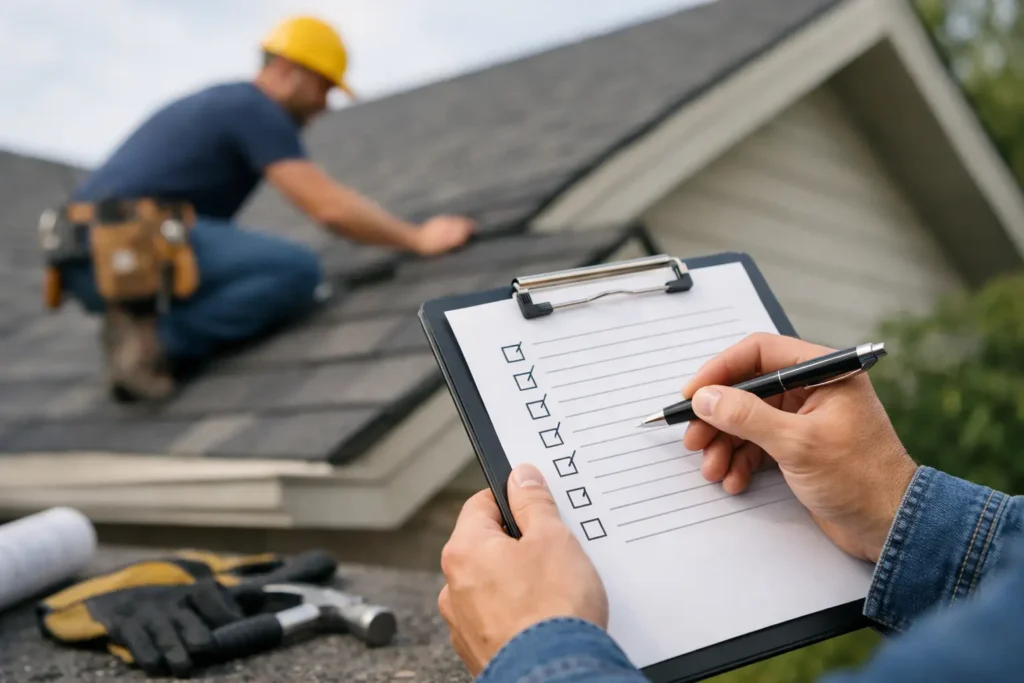
Before hiring, make sure you can answer yes to these questions:
- Have I read recent, detailed reviews related to work like mine?
- Has the contractor provided proof of insurance and a clear local business identity?
- Do I have a written estimate with a defined scope, materials, timeline, payment terms, and cleanup plan?
- Do I understand how change orders or hidden damage will be handled?
- Has the contractor explained repair versus replacement options without pressure?
- Do I know who will manage the project and how to reach them during the work?
- Have I reviewed workmanship and material warranty information in writing?
If you cannot get clear answers, keep looking. A roof is too important to hire based on a quick promise or the lowest price alone.
When Fast Service Is Needed
A sudden leak, missing shingles, or visible storm damage may need immediate attention. Move valuables away from the affected area, use containers to catch active drips if it is safe to do so, and document visible damage with photos. Then contact a qualified local contractor for an inspection and temporary protection if needed.
Fast response and careful decision-making can happen together. Alpha Omega Roofing LLC helps homeowners understand the condition of their roofs, receive a clear estimate, and make a practical next move without unnecessary pressure. The right contractor should leave you feeling informed and protected long before the first shingle is installed.