
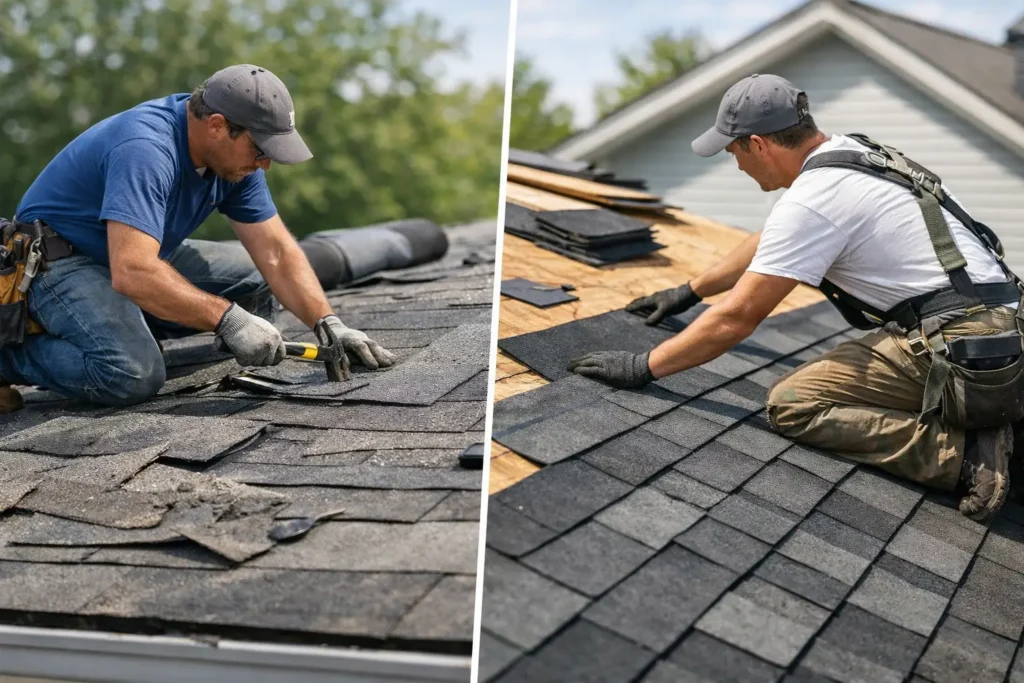
A roof leak rarely shows up at a convenient time. It starts as a water stain on the ceiling, a few shingles in the yard, or a draft you suddenly notice after a windy night. That is usually when homeowners start asking the real question: roof repair vs replacement – which one actually makes sense for your home, your budget, and the condition of the roof.
The honest answer is that it depends on more than the leak itself. Age, storm damage, ventilation, material condition, and how widespread the problem is all matter. A quick repair can be the right move in one situation and a waste of money in another.
Roof repair vs replacement depends on the whole roof
Many homeowners focus on the visible issue. If water is coming in near one vent or a few shingles blew off one slope, repair feels like the obvious answer. Sometimes it is. If the damage is isolated and the rest of the roof is still in solid shape, a targeted repair can stop the problem and buy you years of service.
But roofing problems do not always stay isolated. A small leak can point to aging underlayment, worn flashing, soft decking, poor attic ventilation, or storm damage in areas you cannot see from the ground. When those conditions are already widespread, repairing one section may only solve one symptom.
That is why a proper inspection matters. The goal is not to sell more work than you need. The goal is to determine whether the roof still has dependable life left in it or whether you are patching a system that is already near the end.
When a roof repair is the smarter choice
Roof repair usually makes sense when the issue is limited, the roof is relatively younger, and the surrounding materials are still performing well. A repair is often worth considering after a localized storm event, minor flashing failure, or damage around penetrations like chimneys, skylights, and pipe boots.
If your roof is under 10 to 15 years old and the shingles are not broadly curling, cracking, or losing granules, a repair may be the most cost-effective option. The same is true if the leak can be traced to one clear failure point and the decking underneath is still sound.
Repairs can also be the right short-term solution when timing matters. If a storm causes sudden damage in the middle of a Central New York winter, an immediate repair may protect the home until weather conditions allow for more extensive work. That approach only works, though, if everyone is clear that the repair is temporary or limited in scope.
A good contractor should tell you exactly what the repair is expected to do. Will it fully correct the problem for years, or is it meant to stabilize the roof until replacement becomes practical? Straight answers matter here.
Signs repair may be enough
A roof repair is often the right call when damage is confined to a small area, the roof is not near the end of its expected life, and there are no signs of widespread moisture intrusion. Missing shingles after a windstorm, lifted flashing, minor animal damage, or one leak around a roof penetration can often be handled without replacing the entire roof.
The key word is often. Matching materials, finding hidden damage, and checking the roof deck all affect the final decision. A repair should not just cover up the visible issue. It should address the cause.
When roof replacement is the better investment
Replacement becomes the smarter option when repairs start stacking up, the roof is aging out, or damage affects a large portion of the system. If you are calling for leak repairs every season, that roof is already telling you something.
An older roof may still look decent from the driveway, but closer inspection can reveal brittle shingles, exposed fiberglass mat, failing seal strips, and soft decking. At that point, another repair may only delay a larger and more expensive problem. Water intrusion has a way of moving beyond the roof itself into insulation, framing, drywall, and interior finishes.
Roof replacement also makes more sense after major storm damage. If wind has broken the seal on a wide section of shingles, hail has bruised the roof surface, or ice-related damage has compromised multiple areas, replacing the system may provide a more reliable result than piecing it together.
For many homeowners, the real issue is value. Spending smaller amounts over and over can feel easier in the moment, but it does not always cost less over time. If a replacement gives you long-term protection, improved curb appeal, updated ventilation, and fewer emergency calls, it may be the more responsible financial decision.
Signs it may be time to replace
Replacement deserves serious consideration if your roof is around 20 years old or older, if leaks are showing up in more than one area, or if shingles are curling, balding, or failing across multiple slopes. Sagging spots, recurring ice dam issues, widespread storm damage, and visible decking problems are also strong indicators that repairs may not be enough.
If the roof has already been patched several times, that history matters. Repeated repairs are often a sign that the overall system is wearing out.
Cost is important, but it should not be the only factor
Most homeowners start with price, and that is reasonable. A repair almost always costs less upfront than a full replacement. The problem is that upfront cost and overall value are not the same thing.
A lower repair bill can be the right move if it truly solves the issue. But if that repair only gets you through one more season before another leak appears, the savings disappear quickly. Add in interior water damage, emergency service calls, and the stress of repeated problems, and the cheap option can become the expensive one.
Replacement costs more because it addresses the full roofing system. That includes tear-off, underlayment, flashing, ventilation components, and installation of new materials designed to perform together. It is a bigger investment, but it also resets the clock.
This is where transparent pricing matters. Homeowners should understand what they are paying for, what condition the current roof is in, and what outcome to expect from each option. A trustworthy contractor will explain the trade-offs clearly instead of pushing one answer for every house.
Central New York weather changes the equation
Roofing decisions in places like Syracuse are not the same as roofing decisions in milder climates. Heavy snow loads, freeze-thaw cycles, wind-driven rain, and ice buildup put extra stress on shingles, flashing, valleys, and roof edges.
That means a repair that might hold up well elsewhere may not last as long here if the surrounding roof system is already worn. It also means minor issues can become major issues faster. Water gets into small openings, freezes, expands, and creates bigger failures.
For homeowners in this region, durability matters as much as price. If your roof has already taken years of winter weather and storm exposure, replacement may offer more peace of mind than another patch. If the roof is otherwise healthy, a properly executed repair can still be a smart move. The point is to make the choice based on how the roof will perform through real local conditions, not just how it looks on a dry day.
How to make the right call without guessing
The best decision usually comes from a thorough inspection and a straightforward conversation. You want to know the roof’s age, the extent of damage, whether moisture has reached the decking, how much life the materials likely have left, and whether ventilation issues are making things worse.
Ask direct questions. Is the problem isolated or widespread? Is this repair expected to last, or is it temporary? Are there signs of storm damage that could affect insurance? If you repair it now, what are the chances you will need more work soon?
Those answers should be practical, not vague. Good roofing guidance is not about pressure. It is about helping you understand risk, cost, and the likely lifespan of each option.
At Alpha Omega Roofing LLC, that is how we approach it. Some homeowners need a focused repair and nothing more. Others are better served by replacing the roof before additional leaks, structural issues, or repeated repair costs create a bigger headache.
The bottom line on roof repair vs replacement
If the roof is generally sound and the damage is limited, repair can be the right and responsible solution. If the roof is aging, leaking in multiple areas, or showing widespread wear, replacement is usually the better long-term move.
The important thing is not choosing the cheaper option or the bigger project by default. It is choosing the option that actually protects your home. A clear inspection, honest recommendations, and workmanship built for harsh weather will always take you further than guesswork. If your roof is giving you signs that something is wrong, now is the time to get answers before the next storm does the deciding for you.