
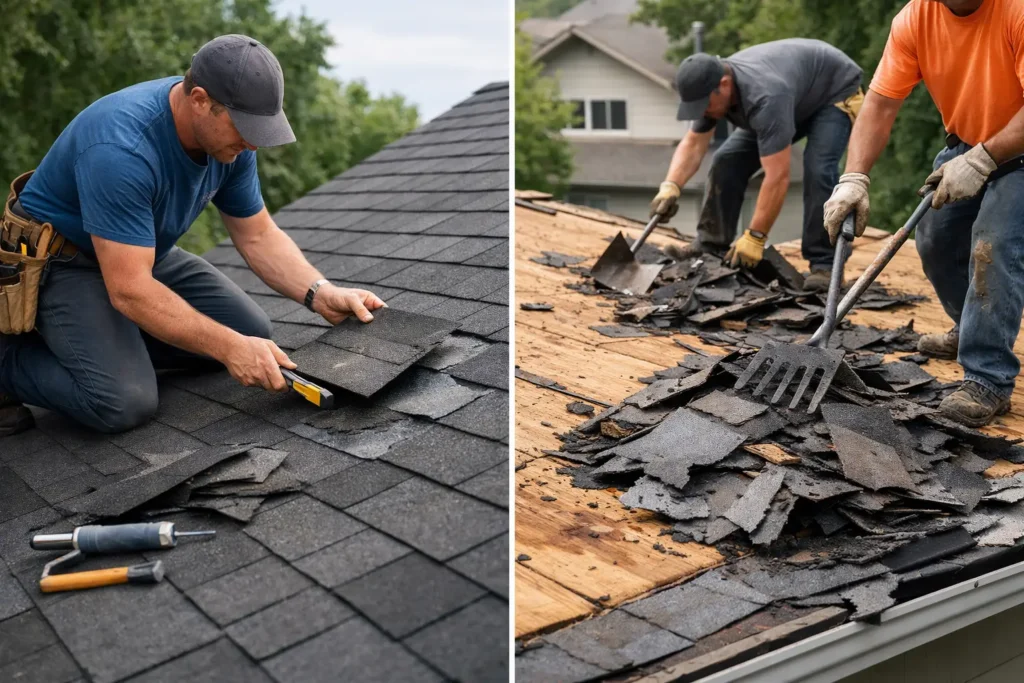
A water stain spreading across the ceiling after a heavy Syracuse storm is not a problem to put off. The first question most homeowners ask is whether they need roof repair or full tearoff. The honest answer depends on what caused the damage, how much of the roof is affected, and whether the existing roof still has useful life left.
A small, isolated issue can often be repaired and monitored. A roof with widespread wear, recurring leaks, or storm damage across multiple areas may need a full replacement to protect the home properly. The right choice is not always the lowest upfront price. It is the option that stops water intrusion and prevents you from paying for the same problem twice.
When Roof Repair Makes Sense
Roof repair is often the smart solution when the damage is limited and the rest of the roofing system is in solid condition. Missing shingles after a windstorm, a damaged pipe boot, loose flashing around a chimney, or a leak near one roof penetration may be repairable without replacing the entire roof.
Age matters. If your roof is relatively new, has no widespread curling or granule loss, and has performed well until one recent event, a targeted repair can restore protection at a reasonable cost. This is especially common after high winds lift a small section of shingles or a fallen branch causes localized damage.
A repair should address the source of the leak, not just the visible symptom inside the house. Water can travel along decking, rafters, insulation, or framing before it appears on a ceiling. A professional inspection should check the shingles, flashing, penetrations, valleys, gutters, attic ventilation, and roof decking where accessible.
A good repair can buy meaningful time on an otherwise healthy roof. It should not be used to cover up a roof that is failing across the entire surface.
Signs a Repair May Be Enough
A repair may be appropriate when the problem is confined to one area, the surrounding shingles remain secure, and the roof is well within its expected service life. It can also make sense if a recent storm created a clear, documentable point of damage.
Matching replacement shingles can be a factor. Even if an exact color match is unavailable due to fading or discontinued products, a repair can still be worthwhile when performance is the priority and the affected area is small. Your contractor should explain how the finished repair will look before work begins.
When a Full Tearoff Is the Better Investment
A full tearoff means removing the existing roofing materials down to the roof deck before installing a new roofing system. It is a larger project, but it gives the contractor the opportunity to inspect the decking, replace damaged wood if needed, and build the new roof on a clean, stable foundation.
This option is often best when a roof is nearing the end of its life, leaks have returned more than once, or shingles are failing in several locations. Widespread curling, cracking, bald spots from granule loss, soft areas, sagging, or extensive moss growth can all point to a roofing system that needs more than a patch.
Central New York weather is hard on roofs. Snow loads, freeze-thaw cycles, ice dams, wind, and driving rain can expose weak areas quickly. A roof may look acceptable from the driveway while moisture is already affecting the decking or attic. If the underlying materials are compromised, replacing a few shingles will not correct the bigger problem.
A full tearoff may also be necessary when there are multiple existing layers of roofing, when building requirements limit another layer, or when the roof deck needs repair. Installing new shingles over old ones can save money initially in certain situations, but it can hide deck issues, add weight, and make future repairs more difficult. A tearoff provides a clearer picture of what is beneath the shingles.
What a Full Tearoff Can Correct
A complete replacement gives your roofing contractor the chance to correct problems that are not visible from the exterior. These can include deteriorated decking, inadequate ventilation, worn underlayment, damaged flashing, and weak protection around valleys or roof penetrations.
It is also the right time to make decisions that affect long-term performance. Proper ventilation can help manage attic heat and moisture. Quality underlayment and ice-and-water protection can add defense in vulnerable areas. New flashing around chimneys, walls, skylights, and vents helps protect the details where many leaks begin.
The goal is not simply a roof that looks new. It is a complete system designed to handle the weather your home faces year after year.
Roof Repair or Full Tearoff: Questions That Decide It
The decision becomes clearer when you look beyond the active leak. Start with the roof’s age and maintenance history. An isolated leak on a 7-year-old roof deserves a different conversation than repeated repairs on a roof approaching the end of its expected lifespan.
Next, consider the extent of the damage. One damaged slope or a few missing shingles may be repairable. Damage on several slopes, large areas of lifted shingles, or moisture showing up in more than one place usually calls for a closer look at replacement.
Then look at what is happening inside the home. Water stains, damp attic insulation, mold-like odors, peeling paint, or warped drywall can indicate that the roof leak has existed longer than expected. The longer water enters the structure, the greater the risk of costly repairs beyond the roof itself.
Finally, consider your plans for the home. If you expect to sell soon and the roof has broad visible wear, replacement may improve buyer confidence. If you plan to stay for many years, investing in a properly installed new roof can reduce the uncertainty of ongoing repairs. Neither choice should be rushed, but delaying needed work usually raises the final cost.
Do Not Let Price Alone Make the Decision
A repair costs less than a full tearoff because it uses fewer materials and less labor. That does not make it the better value in every case. Repeated repairs can add up quickly, particularly when the roof continues to age and weather-related damage exposes new weak points.
On the other hand, replacing a roof that has many healthy years left may not be necessary. A trustworthy contractor should not pressure you into a full replacement when a lasting repair is realistic. You deserve a clear explanation of what was found, what work is recommended, and what risks come with each option.
Ask for a written estimate that separates immediate repair needs from optional improvements. If replacement is recommended, ask why repair is not expected to last. If repair is recommended, ask whether it will blend with the existing roof and how long the surrounding materials are likely to remain serviceable.
Storm Damage and Insurance Considerations
Wind, hail, falling limbs, and sudden water intrusion can create damage that may be covered under a homeowner’s insurance policy. Coverage depends on the policy, the cause of loss, the deductible, and the adjuster’s findings. Normal aging and long-term wear are typically handled differently than sudden storm damage.
After a storm, take photos from the ground if it is safe to do so. Document interior water damage, save any fallen shingles or debris, and schedule a professional inspection promptly. Do not climb onto a wet or damaged roof. A contractor can identify storm-related concerns, provide documentation of visible damage, and help you understand the scope of necessary work.
The priority is protecting the home from additional damage. Emergency repairs or temporary protection may be needed while a longer-term repair or replacement plan is finalized.
Get a Clear Answer Before Water Spreads
Roof problems rarely improve with time. What begins as a loose shingle or a small ceiling stain can become damaged decking, insulation loss, interior repairs, and mold concerns. The sooner the roof is inspected, the more options you may have.
Alpha Omega Roofing LLC helps Central New York homeowners evaluate the condition of their roofs without confusing sales talk. Whether the right answer is a focused repair or a full tearoff, the work should be based on what your home actually needs, with clear pricing and workmanship built for the weather ahead.
If you have noticed a leak, missing shingles, storm damage, or signs of aging, request a professional roof inspection before the next hard rain turns a manageable issue into a larger repair.