
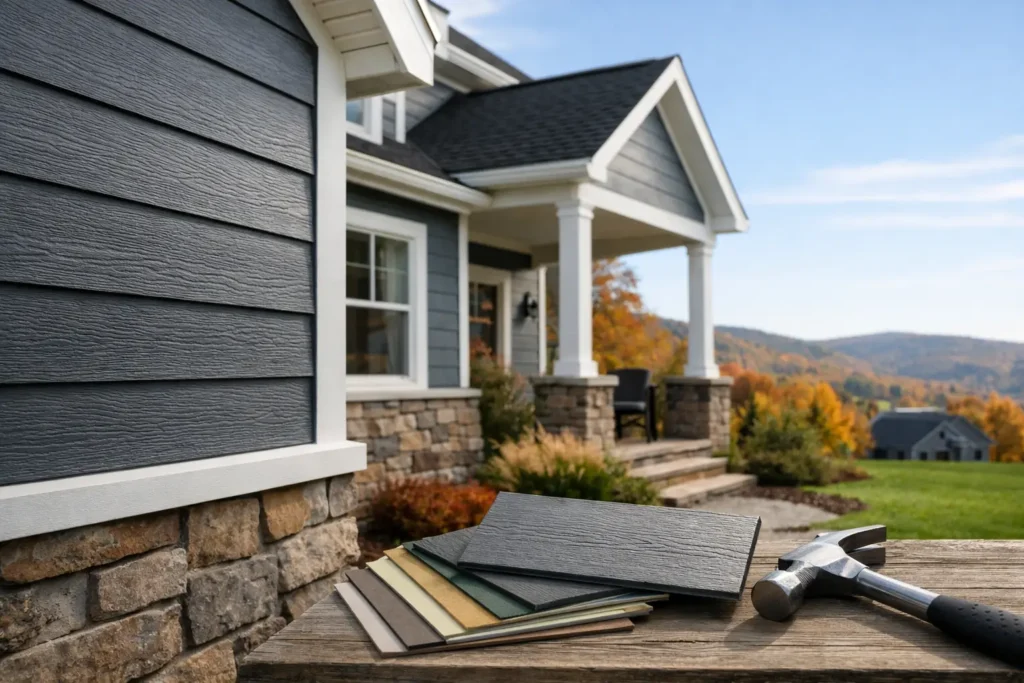
A fiber cement siding review should answer one practical question: will this material protect your home through wet springs, freezing winters, wind, and summer heat without becoming a constant maintenance project? For many Central New York homeowners, fiber cement is a strong contender because it delivers the look of painted wood with better resistance to rot, insects, and fire.
It is not the cheapest siding choice, and it is not maintenance-free. Installation also matters more than many homeowners realize. But when the material, detailing, and installation are right, fiber cement can be an excellent long-term exterior investment for a home that faces real weather.
Fiber Cement Siding Review: The Short Answer
Fiber cement siding is made from cement, sand, cellulose fibers, and water. It is formed into planks, panels, shingles, and trim that can resemble traditional lap siding, cedar shakes, or clean modern boards. Its appeal is straightforward: it is a hard, stable material that holds up well where moisture, pests, and changing temperatures can punish less durable options.
For homeowners planning to stay in their house for years, fiber cement often makes sense. It offers substantial curb appeal, takes paint well, and does not rot like wood or become brittle in the same way some lower-cost vinyl products can over time. It is particularly worth considering when an existing exterior has peeling paint, wood rot, warped boards, or repeated storm-related repairs.
The trade-off is upfront cost and the need for an experienced installer. Fiber cement is heavier and less forgiving than vinyl. It must be cut, fastened, flashed, and sealed according to manufacturer requirements. A good product installed poorly can still allow moisture behind the siding, especially around windows, doors, roof-to-wall intersections, and trim.
Where Fiber Cement Performs Well
Strong resistance to weather and moisture
Central New York homes go through freeze-thaw cycles, heavy rain, snow accumulation, and high winds. Fiber cement does not absorb water the way untreated wood can, so it is far less prone to swelling, rotting, and insect damage. That makes it a practical choice for homeowners who want a more durable alternative to wood siding without giving up a traditional appearance.
No siding is completely immune to water problems. If gutters overflow, roof flashing leaks, or siding is installed too close to grade, moisture can still cause damage to the wall system behind it. The siding protects the home best when it is part of a complete exterior system with proper housewrap, flashing, trim details, soffit ventilation, and drainage.
A painted finish that looks more substantial
Fiber cement has a solid, architectural look that many homeowners prefer over vinyl. It can be installed in long horizontal planks, vertical board-and-batten layouts, shingle-style accents, or panel designs. That flexibility works well on older Syracuse-area homes, updated colonials, farmhouses, and newer construction alike.
Factory-finished boards are popular because the color is applied under controlled conditions and often carries a finish warranty. Primed boards cost less initially and allow more color flexibility, but they need to be painted after installation. Either option can look excellent when the trim, caulking, and paint work are handled carefully.
Better fire and pest resistance
Fiber cement is noncombustible, which is a meaningful advantage compared with wood and many plastic-based exterior materials. It also does not provide a food source for termites, carpenter ants, or wood-boring insects. While fire resistance may not be the first concern for every homeowner, it is one more layer of protection in a material designed for long-term exterior exposure.
Long service life with realistic upkeep
A properly installed fiber cement siding system can last for decades. The boards themselves are durable, but the finish, caulk joints, and exposed details still need attention. Homeowners should expect occasional washing, periodic inspections, and repainting when the finish begins to wear.
That is less hands-on work than traditional wood siding in many cases, but it is not the same as choosing a siding material and forgetting about it. If maintenance-free is your top priority, vinyl may be the better fit. If appearance and durability matter more, fiber cement often earns the additional care it requires.
The Costs and Drawbacks to Consider
Fiber cement usually costs more than standard vinyl siding because the material is heavier, installation takes longer, and crews need specialized cutting practices. The final price depends on the size and shape of the home, siding style, trim package, wall repairs, insulation upgrades, window and door details, and how much old siding must be removed.
Homeowners should be cautious about comparing siding estimates by square footage alone. A lower bid may exclude damaged sheathing repair, proper flashing, removal of old materials, premium trim, or finish work. Those details affect both the final appearance and how well the siding protects the structure.
Weight is another consideration. Fiber cement is durable partly because it is dense, but that density makes handling and installation more demanding. The installer must use the right fasteners, maintain proper clearances from roofs and soil, and account for joints and expansion requirements. It is not a material for shortcuts.
There is also the issue of paint. Fiber cement holds paint very well, but it will eventually need repainting. The timing varies based on sun exposure, color, weather, and finish quality. Dark colors can add visual impact, though they may show fading sooner on hard-exposed elevations. A contractor can help homeowners balance design goals with practical maintenance expectations.
Fiber Cement vs. Vinyl and Engineered Wood
Vinyl siding is typically the budget-friendly option. It is lightweight, does not need painting, and is available in many colors. For a homeowner needing an economical exterior update, quality vinyl can be a sensible choice. Its limitations are mostly visual and physical: it can crack from impact in very cold conditions, warp near intense heat, and may not offer the same solid appearance as fiber cement.
Engineered wood siding gives homeowners a warmer, more natural wood appearance and is generally easier to install than fiber cement. Modern engineered wood products are treated for moisture and insect resistance, but they still rely on careful installation and paint maintenance. When water enters unprotected edges or joints, long-term problems can follow.
Fiber cement sits between these choices as a premium, durable option. It is usually more expensive and harder to install than both, but it offers strong weather resistance and a high-end painted finish. The right choice depends on your budget, preferred appearance, timeline, and willingness to maintain painted siding over time.
Installation Details That Protect Your Investment
The siding itself is only one part of the job. Before new boards go on the wall, the contractor should inspect for damaged sheathing, deteriorated trim, hidden moisture, and areas where water is entering around the roofline or openings. Covering those problems with new siding only delays a more expensive repair.
Proper flashing is especially important. Kick-out flashing where a roof meets a wall, head flashing above windows and doors, and correctly integrated water-resistive barriers direct water away from the home instead of trapping it behind the exterior. These details are easy to overlook once the project is complete, but they are what make siding work as a protective system.
Ask a prospective contractor how they handle clearances at roofing, decks, steps, chimneys, landscaping, and the ground. Fiber cement should not sit against soil or areas that stay wet. Also ask whether trim, caulk, and paint touch-ups are included in the estimate. Clear answers before work begins prevent surprises later.
At Alpha Omega Roofing LLC, exterior work is approached with the same focus used for roof repairs and replacements: find the source of exposure, explain the condition clearly, and build the repair or installation for Central New York weather rather than the easiest short-term fix.
Is Fiber Cement the Right Choice for Your Home?
Fiber cement is a smart option when you want a durable, painted exterior with the look of real wood and you are prepared to invest in professional installation. It is especially attractive for homes with recurring wood rot, dated siding, or a need for a more refined exterior appearance.
It may not be the best choice if the project budget is tight, the home needs a quick low-cost update, or you want to avoid future repainting entirely. In those situations, a well-installed vinyl product may provide better value. The best answer comes from an on-site inspection that considers the condition of the walls, roof edges, gutters, trim, and existing siding together.
Before choosing a color or profile, have a qualified local contractor inspect what is underneath the old siding. A sound exterior starts with dry, properly detailed walls, and that is what gives any new siding the chance to perform for years.