
A ceiling stain after an overnight storm is not a problem to watch for a few days. Water can travel along roof decking, rafters, insulation, and walls before it becomes visible inside. This guide to temporary roof protection explains what homeowners can safely do to limit damage while arranging a professional inspection and repair.
For Syracuse-area homes, temporary protection often becomes necessary after wind-driven rain, heavy snow, ice damage, fallen limbs, or missing shingles. The goal is simple: keep more water out, protect the interior, document the damage, and avoid turning a roofing emergency into a personal safety emergency.
Start With Safety and Interior Damage Control
Do not climb onto a wet, icy, steep, or visibly damaged roof. Central New York weather can make even a minor repair dangerous, especially when wind, snow, or loose shingles are involved. If electrical fixtures are near a leak, turn off power to that area only if you can safely access your electrical panel. Do not touch sagging ceilings, exposed wiring, or standing water near outlets.
Inside, move furniture, electronics, rugs, and valuables away from the affected area. Place buckets or waterproof containers beneath active drips, then lay towels around them to catch splashing. If water is pooling in a bulging section of ceiling drywall, do not puncture it unless you are certain there are no electrical hazards and can safely contain the water. A water-heavy ceiling can collapse without much warning, so this is a situation where a roofing professional and, if needed, an emergency water mitigation company should be called promptly.
Take clear photos and short videos before moving items or cleaning up. Capture the ceiling stain, dripping water, damaged belongings, and any visible exterior damage from the ground. These records can be useful when speaking with your insurance carrier and when a contractor evaluates the source of the leak.
A Guide to Temporary Roof Protection After Storm Damage
Temporary roof protection is a short-term measure, not a substitute for a proper repair. A tarp, emergency patch, or covered opening can reduce immediate water intrusion, but it does not restore the roof’s ability to withstand the next storm, snow load, or freeze-thaw cycle.
The right approach depends on the type and location of damage. A few missing shingles may be protected differently than a puncture from a branch or an opening around a damaged chimney. What matters most is preventing water from getting beneath the roofing materials while avoiding further damage to the roof.
When a roof tarp makes sense
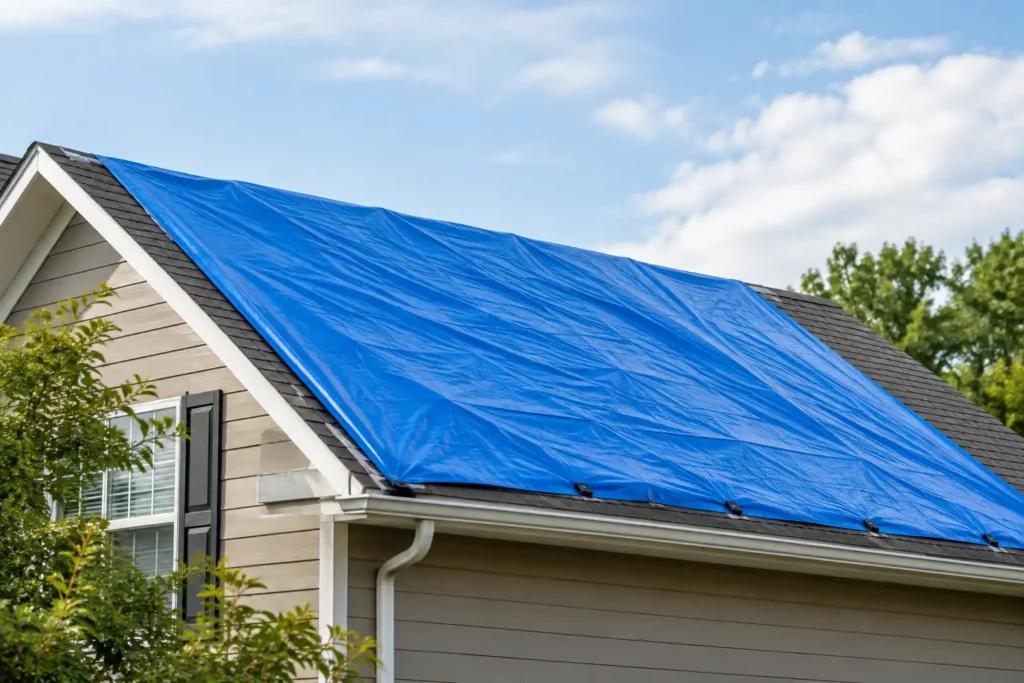
A tarp can be useful when shingles have blown off, a tree limb has damaged the roof, or a visible opening is allowing rain into the home. It should extend well beyond the damaged area, ideally from above the damage down past it, so water sheds over the tarp instead of running underneath it.
A tarp must be secured carefully. Driving nails or screws through the center of the tarp can create more holes in the roof and give water additional entry points. Professionals typically secure tarps using boards and fasteners placed strategically around the edges, with attention to the roof structure and water flow.
For most homeowners, installing a tarp is not a safe do-it-yourself job. The roof may have hidden structural damage, loose materials, or slick surfaces. If you can see damage from the ground, it is usually serious enough to justify calling for emergency help rather than climbing up to inspect it yourself.
What you can do from the ground
There are useful steps that do not require a ladder. Walk around the property and look for shingles, flashing, metal pieces, branches, or roofing granules on the ground. Check gutters and downspouts for blockage, but do not attempt to clear them during a storm or from a ladder.
If a branch is resting on the roof, keep people away from the area. Do not pull it down or cut it apart unless you know it is small, stable, and clear of utility lines. A branch can shift suddenly, damage more shingles, or create a larger opening when moved.
You can also cover outdoor belongings, relocate vehicles away from the structure, and keep children and pets away from the side of the home where debris may fall. These small precautions matter while you wait for an inspection.
Common Temporary Fixes That Cause Bigger Problems
When water is coming in, homeowners understandably want to act fast. But a few common shortcuts can make the final repair more expensive.
Avoid using roof cement, caulk, spray foam, or adhesive as a broad emergency fix. These materials may briefly slow a drip, but they can trap moisture, interfere with proper shingle installation, and make it harder for a roofer to locate the true source of the leak. A leak that appears near a vent, skylight, chimney, or valley may actually begin higher up the roof.
Do not place heavy objects, bricks, or loose boards on top of a tarp. Wind can turn those items into projectiles, and concentrated weight can damage shingles or decking. Do not use a pressure washer to remove debris, and do not rake snow from the roof unless you have the right equipment and know how to avoid tearing shingles.
Another costly mistake is waiting until rain stops to address the problem. Water may continue entering through melting snow, ice dams, or moisture trapped beneath damaged shingles. A temporary dry spell does not mean the roof is secure.
Ice, Snow, and Winter Roof Emergencies
Winter creates a different set of temporary protection challenges. Ice dams can force meltwater beneath shingles and into the home even when the roof itself is in otherwise good condition. Icicles along the eaves may look harmless, but heavy ice buildup can signal that water is not draining correctly.
Never chip ice off shingles with a hammer, axe, or shovel. You can crack roofing materials, damage gutters, and create a much larger leak. Avoid spreading rock salt or other harsh de-icing products on the roof, as they can harm roofing components, landscaping, and metal gutters.
If snow buildup is excessive, a roof rake may help from the ground when used carefully. Keep the rake head slightly above the shingles rather than scraping the surface. This can reduce snow weight near the eaves, but it will not fix ventilation problems, insulation gaps, or existing damage that contributes to ice dams.
A professional inspection is especially valuable after a winter leak. The visible symptom may be caused by ice backup, damaged flashing, inadequate ventilation, worn shingles, or more than one issue at once.
Document Damage Before Calling Insurance
If storm damage may be involved, document the condition as thoroughly as you can without putting yourself at risk. Photograph exterior damage from the ground, interior stains, wet insulation if visible from an attic access point, fallen branches, and damaged gutters or siding.
Keep receipts for reasonable emergency measures, such as professional tarping or water cleanup. Your insurance carrier may request them. At the same time, avoid authorizing major work before you understand the scope of damage, the repair plan, and the cost. A trustworthy contractor should explain what is temporary, what needs permanent repair, and what may be relevant to an insurance claim.
Do not rely on a storm chaser who appears immediately after severe weather and pressures you to sign paperwork on the spot. Local accountability matters. Choose an insured roofing contractor that understands the weather patterns, building styles, and common roof issues found throughout Central New York.
When to Call for Emergency Roofing Help
Call promptly when water is actively entering the home, shingles or flashing are missing, a tree has struck the roof, part of the roof is sagging, or damage is visible around a chimney, vent, skylight, or roof valley. These conditions can worsen quickly in wind or rain.
Even if the leak seems small, schedule an inspection if it follows a storm. Roof damage is often hidden beneath the surface, and a repair made early can prevent damaged decking, mold growth, insulation replacement, and interior drywall repairs later.
Alpha Omega Roofing LLC can assess roof damage, explain the condition in clear terms, and recommend the right next step for your home. Whether the answer is emergency tarping, a targeted repair, or a larger restoration plan, homeowners deserve straightforward guidance before damage spreads.
The best temporary protection is the kind that buys time safely, not the kind that creates another problem. Protect the interior, document what you see, stay off a dangerous roof, and get a qualified local roofer involved before the next round of weather arrives.