
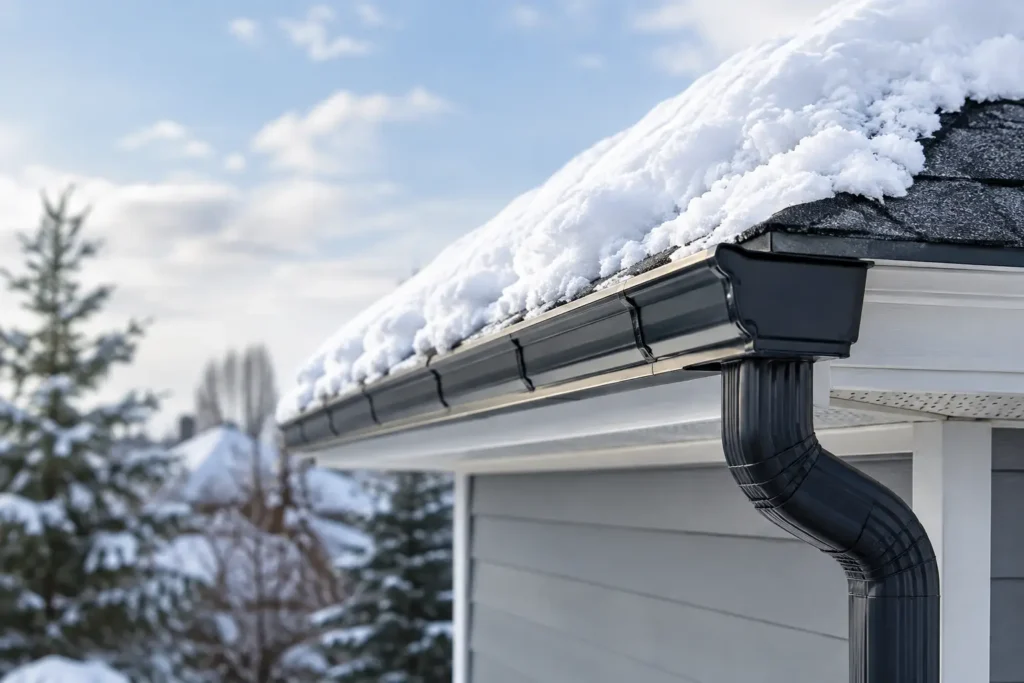
A hard Central New York storm can expose a drainage problem fast. When meltwater spills over gutters, freezes at the roof edge, or pools beside the foundation, small issues can turn into leaks, damaged siding, and costly repairs. The best roof drainage upgrades direct water safely away from your roof, walls, and foundation – even through heavy snow, ice, and spring rain.
Drainage is not a one-size-fits-all project. The right improvements depend on your roof shape, gutter condition, tree coverage, grading, and the way snow accumulates around your home. A professional inspection can identify where water is backing up and help you spend money where it will make the biggest difference.
7 Best Roof Drainage Upgrades to Consider
1. Replace undersized or damaged gutters
Gutters that are too small for your roof cannot keep up during a downpour or rapid snowmelt. Water runs over the front edge, soaks fascia boards, stains siding, and lands too close to the foundation. Sagging sections, separated seams, and gutters that hold standing water are also signs that the system is no longer doing its job.
For many homes, larger seamless aluminum gutters are a practical upgrade. They have fewer leak-prone joints and can carry more water than smaller systems. The correct gutter size depends on the roof area and slope. A steep or large roof sheds water quickly, which may call for a higher-capacity system rather than a standard replacement.
2. Add properly sized downspouts
A new gutter will still overflow if it does not have enough downspout capacity. Downspouts are the exit route for roof runoff, and too few of them force water to back up in the gutter during a storm.
Placement matters as much as quantity. Downspouts should be located where they can collect water efficiently without dumping it over walkways, driveways, or areas that freeze. Larger downspouts may be worthwhile on roof sections that handle heavy runoff. During an inspection, look for water marks below gutter outlets or sections that overflow only during hard rain. Those are common signs of a capacity issue.
3. Extend downspouts away from the foundation
Water should not stop at the bottom of the downspout. If it drains right beside your house, it can saturate soil around the foundation, contribute to basement moisture, and create freeze-thaw pressure in winter.
Extensions carry runoff farther from the home and are one of the most affordable drainage improvements available. The goal is to move water to an area that slopes away from the house without sending it toward a neighbor’s property, a driveway, or a sidewalk. Buried drain lines can offer a cleaner appearance, but they need the right pitch and a reliable discharge point. A buried line that clogs or freezes can create a hidden problem, so installation quality is critical.
4. Install gutter guards for your roof and tree coverage
Leaves, pine needles, seed pods, and roof grit can clog an open gutter quickly. Once debris blocks the flow, water has nowhere to go except over the gutter edge or behind it. That can damage fascia, soffits, siding, and landscaping.
Quality gutter guards reduce the debris that enters the system and make maintenance more manageable. They are especially helpful for homes near mature trees in Syracuse and surrounding Central New York communities. Still, guards are not maintenance-free. Fine debris can collect on top, and some guard styles are a poor fit for certain roof edges or snow conditions. The best choice is a guard that fits the existing gutter, sheds debris effectively, and does not interfere with water flow.
5. Repair fascia, soffits, and roof-edge flashing
Overflowing water is sometimes blamed entirely on the gutters, but the roof edge itself may be part of the problem. Rotten fascia can loosen gutter fasteners and change the gutter pitch. Damaged drip edge or flashing may allow water to run behind the gutter instead of into it.
This upgrade protects the structure that supports your drainage system. When replacing a roof or repairing a problem area, a contractor should inspect the fascia boards, soffits, drip edge, and flashing together. Addressing these components at the same time helps the gutter sit correctly and prevents water from getting behind the exterior finish.
6. Improve roof ventilation and insulation to limit ice dams
An ice dam starts when snow melts higher up on a warm roof, then refreezes at the colder eaves. The ridge of ice traps additional meltwater, which can push under shingles and leak into the home. Gutters are often caught in the middle of the problem, but they are not always the root cause.
Better attic insulation and ventilation can help keep the roof deck closer to the outdoor temperature, reducing uneven snowmelt. This is a larger project than adding extensions or guards, but it addresses the conditions that allow ice dams to form. Heated cables may help in limited trouble spots, but they should not be used to hide an insulation, ventilation, or roof repair issue. If you see recurring ice dams, stained ceilings, or water entering around exterior walls, schedule an inspection before winter makes the problem worse.
7. Correct grading and drainage at ground level
Roof drainage ends at the ground. If the soil, landscaping, or hardscaping directs water back toward the home, even a well-built gutter system cannot fully protect the foundation.
Look for puddles near the foundation after rain, mulch washed away beneath downspouts, or soil that slopes toward the house. Regrading may be needed to establish a positive slope away from the structure. In some cases, a catch basin, swale, or properly designed drainage system is the better answer. This work may involve an exterior drainage specialist, but it should be planned alongside any roof and gutter improvements.
How to Prioritize Drainage Upgrades
Start with the problem you can see. If gutters overflow during rain, focus on gutter size, pitch, downspouts, and clogs. If water pours behind the gutters or the boards at the roof edge look soft, inspect fascia and flashing. If ice forms along the eaves every winter, look beyond the gutter system to attic insulation, ventilation, and roof condition.
Homeowners often benefit from combining improvements rather than handling each symptom separately. For example, replacing failing gutters without repairing rotten fascia can shorten the life of the new installation. Adding guards to a poorly pitched gutter will not solve standing water. A clear diagnosis prevents paying twice for the same area.
A drainage inspection is also wise after wind damage, hail, or a heavy snow season. Missing shingles, lifted flashing, or damaged gutter hangers can interrupt the path water should take off the roof. Alpha Omega Roofing LLC can inspect the roof edge, gutters, and visible drainage concerns, explain what is urgent, and provide straightforward recommendations for your home.
When to Call for Help
Call for a professional inspection if you notice interior staining, dripping water, detached gutters, recurring ice dams, basement moisture, or visible rot around the roofline. These issues rarely improve on their own, and early repairs are usually less disruptive than waiting for a major leak.
The goal is simple: water should leave the roof, move through the gutter system, and drain well away from the house without finding a path into your home. Before the next heavy rain or thaw, take a close look at where your roof runoff goes. That one check can reveal the upgrade that protects your home for years.