
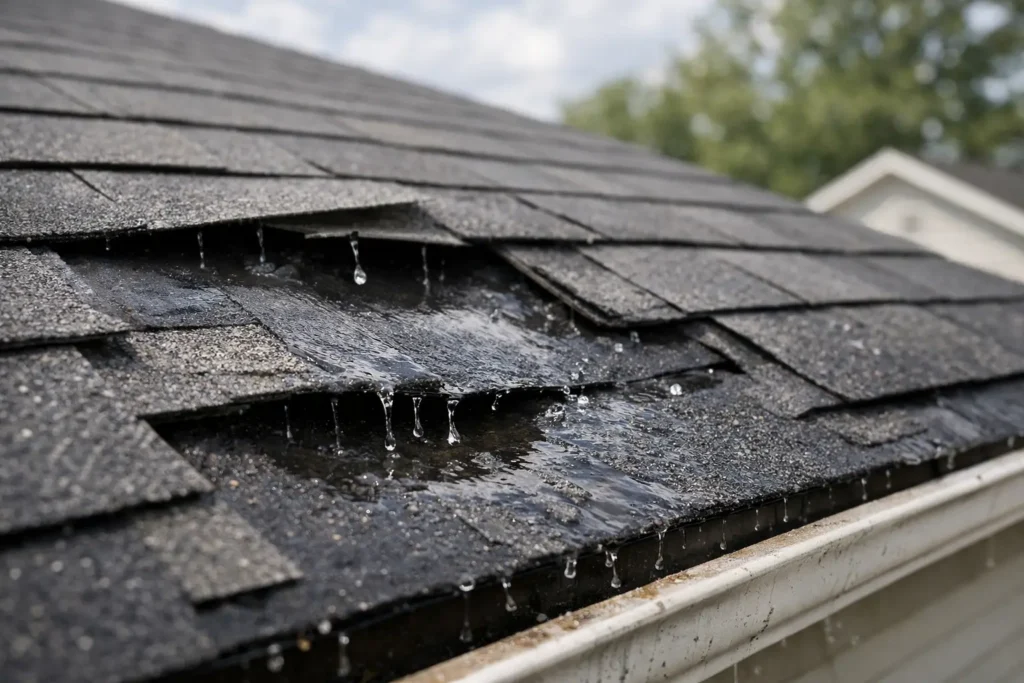
One windstorm is often all it takes. A few shingles blow off, the roof still looks mostly intact from the driveway, and it is easy to assume the problem can wait a week or two. But can missing shingles cause leaks? Yes – and in Central New York, where roofs take a beating from wind, snow, ice, and heavy rain, that risk can go from minor to expensive fast.
Missing shingles are not just a cosmetic issue. They are part of the roof’s outer water-shedding system. When they are gone, the layers underneath are exposed to direct weather, UV damage, and moisture intrusion. Sometimes a leak shows up right away as a water stain on the ceiling. Other times, water gets in quietly and starts damaging the roof deck, underlayment, insulation, or interior framing before you notice anything inside.
Why missing shingles lead to leaks
Shingles are designed to work as a system, not as individual pieces. Each row overlaps the next to direct water down and off the roof. When a section is missing, that protective path is broken. Rain can hit the exposed area directly, and wind-driven water can push under surrounding shingles.
That does not always mean you will see water dripping into a room the same day. It depends on where the shingles are missing, how many came off, the roof pitch, the condition of the underlayment, and what kind of weather follows. A small exposed spot on a steep newer roof may hold up briefly. A missing section near a valley, chimney, vent, or low-slope area is more likely to leak quickly.
In winter, the risk gets worse. Snow can sit on the exposed area, melt during the day, and refreeze at night. Ice backs water up and gives it more time to work into seams and openings. That is one reason homeowners in places like Syracuse often find that a “small shingle issue” turns into interior damage after the next freeze-thaw cycle.
Can missing shingles cause leaks right away?
They can, but not always. That gray area is what gets homeowners in trouble.
A roof may not leak immediately after shingles go missing because the underlayment underneath still provides some temporary protection. But underlayment is not meant to serve as the primary weather barrier for long. Sun exposure dries it out. Wind can lift surrounding materials. Water can find nail holes, seams, or decking joints. If another storm comes through before repairs are made, the odds of leakage go up significantly.
The number of missing shingles matters too. One missing shingle in an open field area of the roof is serious, but a cluster of missing shingles creates a much larger exposed section. If the damage happened during a storm strong enough to remove shingles, it is also possible that nearby shingles were loosened, creased, or partially lifted even if they did not come off completely.
That is why waiting for visible interior water before taking action is a mistake. By the time you see a stain, the roof has usually been letting moisture in for longer than you think.
What damage can happen beyond the leak itself?
Most homeowners think about ceiling stains first, but the bigger concern is hidden damage. Water entering through missing shingles can soak roof decking and lead to wood rot. It can dampen attic insulation, reducing energy efficiency and creating conditions for mold growth. It can also travel along rafters or framing and show up several feet away from the original entry point.
In some cases, a leak caused by missing shingles affects flashing around chimneys, vents, skylights, or wall connections. Once water starts moving under roofing materials, it can compromise multiple parts of the system. What might have been a straightforward repair becomes a wider repair area.
There is also the issue of timing. A roof problem discovered early is usually cheaper to fix than one left exposed through several rounds of bad weather. That is especially true in older roofs where surrounding materials may already be brittle or near the end of their service life.
Signs your roof may be leaking after shingles are missing
The obvious sign is water inside the house, but many leaks start with subtler warnings. You might notice discoloration on a ceiling, bubbling paint, a musty attic smell, damp insulation, or dark spots on roof decking. In some homes, homeowners first notice the problem because a bathroom fan, recessed light, or attic access area shows moisture.
Outside, look for bare patches where shingles should be, shingles in the yard, lifted edges, exposed underlayment, or granule loss collecting in gutters. If a storm just passed through and you know shingles are missing, it is smart to assume the roof is vulnerable even if the inside still looks dry.
One caution here: do not climb onto the roof unless you can do it safely and have the right equipment. A roof with wind damage may be slippery, unstable, or weaker than it looks.
What to do if shingles are missing
First, document what you can see from the ground. Take photos of missing areas, shingles in the yard, and any interior signs of water. If the damage followed a storm, those photos may help if an insurance claim becomes necessary.
Next, have the roof inspected as soon as possible. Fast response matters because the goal is not just to confirm that shingles are missing. It is to find out whether water has already gotten in, whether surrounding shingles were damaged, and whether a repair will solve the problem or if the roof has broader storm-related issues.
If water is actively entering the home, a temporary tarp may be needed to prevent further damage until permanent repairs can be completed. This is one of those situations where speed matters more than guesswork. A delayed repair can turn a localized roofing issue into interior drywall, insulation, and framing work.
Repair or replacement – which makes more sense?
It depends on the age and condition of the roof.
If the roof is otherwise in good shape and the missing shingles are limited to one area, a targeted repair is often the right move. The repair should address not only the missing shingles but also the underlayment, decking condition, seal integrity, and any nearby flashing concerns.
If the roof is older, has widespread shingle wear, repeated leak issues, or multiple storm-damaged sections, replacement may be the smarter investment. Homeowners sometimes pay for one repair after another on an aging roof, only to end up replacing it shortly after. A qualified inspection helps separate a repairable issue from a roof that is simply worn out.
Matching matters too. Even when a repair is possible, older shingles may be discontinued or faded, so the new section may not blend perfectly. For some homeowners, that is acceptable. For others, especially if curb appeal matters or the roof has extensive visible damage, replacement may offer better long-term value.
Why fast local help matters after storm damage
Roof damage is never convenient, but it is especially stressful when weather is still unsettled. In Central New York, that is common. Wind events are followed by rain. Snowmelt is followed by overnight refreezing. A quick inspection from a dependable local contractor gives you a clearer answer before the next storm tests the exposed area.
Alpha Omega Roofing LLC works with homeowners facing exactly these situations – missing shingles, sudden leaks, storm damage, and the question of whether they need a repair or something more. What matters most is getting a straight answer, clear pricing, and a solution that protects the home for the long term.
The bottom line on missing shingles and leaks
If shingles are missing, your roof is exposed. Maybe it leaks today, maybe it leaks after the next hard rain, or maybe water is already getting in where you cannot see it yet. Either way, it is not a problem that gets safer with time.
The best next step is simple: treat missing shingles like an urgent repair, not a minor eyesore. A quick inspection now can prevent much bigger headaches later, and that kind of peace of mind is worth acting on.