
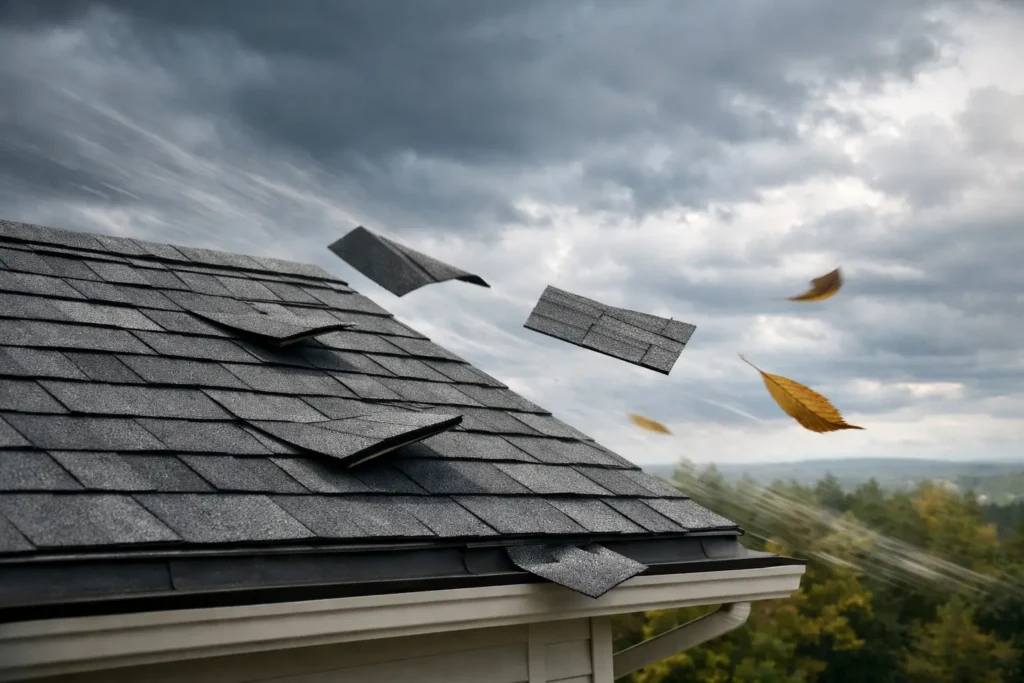
When a windstorm rolls through Central New York, the first roofing problem many homeowners notice is not a leak – it is shingles scattered across the yard. That is usually the moment the question changes from price to performance. If you are comparing the best shingles for wind resistance, the right answer depends on more than the label on the bundle. It comes down to the shingle design, the roof system underneath it, and whether the installation is done correctly.
A lot of homeowners assume all asphalt shingles perform about the same in high winds. They do not. Some are built to handle stronger gusts, resist uplift better, and stay sealed longer. Others may be perfectly fine on a budget replacement but are not the best fit for homes exposed to frequent storms, open lots, or aging roof decks.
What makes shingles wind resistant?
Wind does not tear off a roof all at once. It usually starts by getting under the edge of a shingle tab or lifting a weak section where the seal has failed. Once that happens, one damaged area can turn into a larger repair fast.
The best wind-resistant shingles are designed to reduce that uplift. Heavier construction helps. Stronger sealant strips help too. So does the shingle shape itself. Standard 3-tab shingles have more cutouts and less mass, which generally makes them more vulnerable to wind damage than architectural shingles.
Manufacturer wind ratings matter, but they should not be treated like a guarantee. A shingle rated for 110 mph or 130 mph still depends on proper nailing, attic ventilation, underlayment, starter shingles, and the condition of the roof deck. If those parts are off, even a premium product can fail earlier than expected.
Best shingles for wind resistance: what type usually performs best?
For most homes, laminated architectural asphalt shingles are the best balance of wind performance, lifespan, and value. They are thicker than 3-tab shingles and built in layered sections that hold better in rough weather. Many high-quality architectural shingles are rated for winds up to 130 mph when installed as part of a complete roofing system.
That does not mean every architectural shingle is automatically a high-wind shingle. Entry-level products and premium lines can perform very differently. Some use stronger adhesive strips and reinforced nailing zones, while others focus more on appearance than storm durability.
Designer asphalt shingles can also perform well, especially the heavier premium products. In some cases, they offer excellent wind resistance because of their weight and construction. The trade-off is cost. If your priority is storm protection and long-term value, a good architectural shingle is often the more practical choice.
Metal roofing deserves a mention too, because many homeowners ask about it after repeated storm damage. Metal can be extremely wind resistant when installed correctly, but it is a different system altogether, with a higher upfront cost and a different appearance. If you are specifically shopping for shingles, architectural asphalt remains the most common and realistic upgrade for many households.
3-tab vs architectural shingles in windy areas
If your main concern is wind, this is one of the easiest comparisons to make. 3-tab shingles are the lighter, flatter option. They cost less, but they are more likely to crease, lift, or break loose in stronger gusts. On an older roof, they tend to show storm wear sooner.
Architectural shingles are thicker and usually have better adhesive performance. They also create a more dimensional look, which many homeowners prefer. More important, they tend to hold up better over time in areas that deal with seasonal storms, freeze-thaw cycles, and winter weather.
In places like Syracuse and the surrounding area, where roofs take a beating from wind, snow, and temperature swings, architectural shingles are often the safer long-term investment. The upfront cost is higher, but repeated repairs on a lower-grade roof can add up quickly.
Wind ratings are helpful, but installation matters just as much
This is the part many homeowners do not hear until after a problem shows up. The shingle itself is only one part of wind resistance. A poorly installed premium roof can fail sooner than a properly installed mid-grade roof.
Nail placement is a major factor. If nails are driven too high, too few are used, or they miss the proper fastening zone, shingles become much more vulnerable to uplift. Starter shingles along the eaves and rakes also matter because roof edges are where wind often gets its first opening.
Roof deck condition matters too. If the decking is soft, rotted, or uneven, the shingles above it will never perform the way they should. The same goes for attic ventilation. Excess heat and moisture can shorten shingle life and weaken seals over time.
That is why a roof inspection matters before choosing materials. A contractor should be looking at the full system, not just handing over a few color samples and a price.
What to look for when choosing the best shingles for wind resistance
Start with the manufacturer wind rating, but do not stop there. Ask whether the shingles are rated at the base installation level or only when installed with upgraded accessories. Some published ratings require specific starter strips, ridge products, and exact nailing patterns.
Next, look at the warranty language. A wind warranty can be useful, but homeowners should understand the conditions. Coverage may depend on installation method, number of nails per shingle, and whether the roof system was installed to the manufacturer’s specifications.
It also helps to ask practical questions. Is the product proven in Northeast weather? Is it thick enough to stand up to repeated seasonal stress? Does the contractor have experience installing that specific product line? These are the details that often matter more than marketing claims.
Color and style still count, of course. You want the roof to look right on your home. But if your old roof has already lost shingles during storms, performance should lead the conversation.
When a repair is enough and when replacement makes more sense
Not every wind issue means you need a full roof replacement. If a few shingles blew off after a storm and the rest of the roof is in good shape, a targeted repair may be the right move. That is especially true on newer roofs with limited damage.
The decision changes when the roof is older, has widespread lifting or creasing, or has already been patched multiple times. In those cases, replacing the roof with a stronger architectural shingle may be more cost-effective than continuing to chase repairs after every major storm.
Storm damage can also affect more than the visible shingles. Underlayment, flashing, ridge vents, and decking may have taken damage too. That is why an inspection is important after high winds, even if the roof looks mostly intact from the ground.
The smartest choice for most homeowners
For most residential properties, the best combination of price and protection is a high-quality architectural asphalt shingle installed as part of a complete roofing system. It offers better wind resistance than basic 3-tab shingles, better curb appeal, and a practical cost for homeowners who want durability without jumping to a premium specialty material.
The exact brand and product line should depend on your home, your roof shape, your exposure to wind, and the condition of the existing system. A house surrounded by trees may face different wind pressure than one sitting open on a corner lot. A simple ranch roof may not have the same risk points as a steep, complex roof with multiple ridges and valleys.
That is why the best roofing decision is usually made on-site, not from a generic chart online. A good contractor should explain your options clearly, point out any weak spots, and recommend a product that fits both your budget and the weather your home actually faces.
If you are dealing with missing shingles, storm damage, or a roof that has started to show its age, it helps to get answers before the next wind event puts the problem on your lawn. A straightforward inspection can tell you whether a repair will hold or whether it is time to upgrade to a roof built to stay put.