
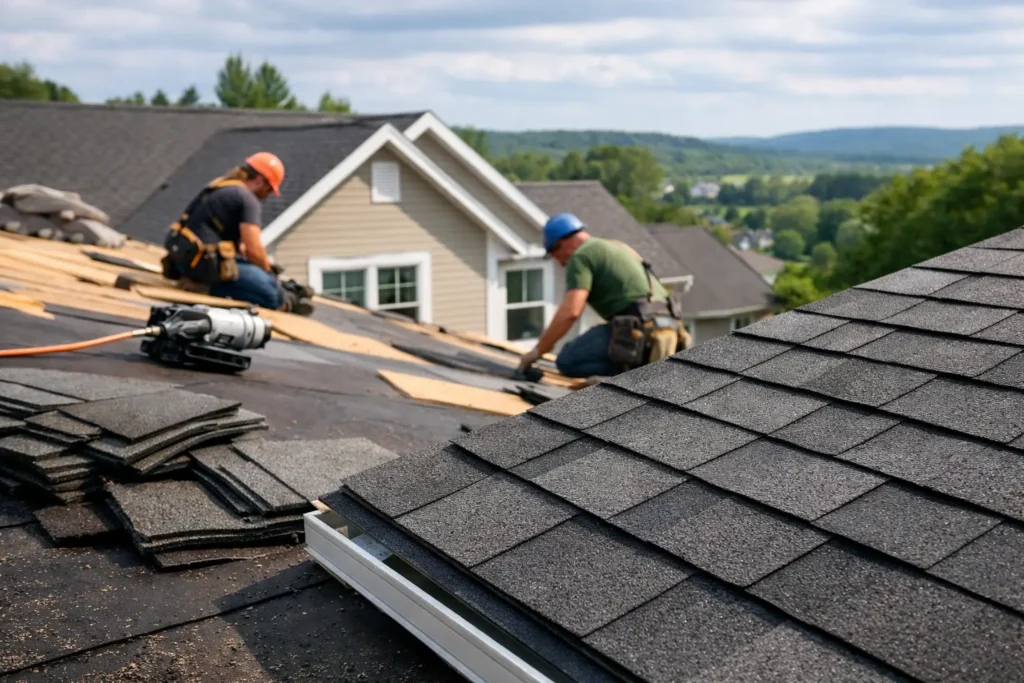
A roof in Central New York usually does not fail all at once. It starts with a dark stain on the ceiling after a hard rain, a few shingles in the yard after winter wind, or that nagging feeling that your roof has simply reached the end of its run. If you are weighing a Central New York roof replacement, the biggest questions are usually the same: how bad is it, how much will it cost, and how quickly do I need to act?
Those are fair questions, especially in a region where snow load, ice dams, freeze-thaw cycles, and wind can shorten the life of roofing materials. Homeowners here do not need sales pressure. They need a clear explanation of what drives replacement decisions and what to expect before the work starts.
When a Central New York roof replacement makes sense
Not every roofing problem means full replacement. Some roofs need a targeted repair, especially when damage is limited to one section after a storm or when a flashing issue is causing a single leak. But there comes a point when repeated repairs stop being the smart financial choice.
If your roof is older, showing widespread shingle wear, losing granules, developing soft spots, or leaking in multiple areas, replacement is often the more reliable path. The same is true when storm damage affects a large enough section that patching one area only leaves another weak point behind. A roof can look passable from the driveway and still be failing where it counts.
Age matters, but condition matters more. An asphalt shingle roof that has handled years of Central New York winters may be near the end of its service life even if it has not had a dramatic failure yet. That is why an inspection is the first step. You want to know whether you are looking at isolated damage or a system that is wearing out across the board.
What affects roof replacement cost
Homeowners naturally want a number right away. The challenge is that roof pricing is based on more than square footage. Two homes with similar footprints can have very different replacement costs depending on complexity and existing damage.
The roof size is the starting point, but pitch and design also matter. A steep roof, multiple valleys, dormers, chimneys, skylights, and complicated transitions all add labor time and material waste. Tear-off conditions matter too. If old roofing layers need to be removed or the decking underneath has moisture damage, that changes the scope.
Material selection is another major factor. Architectural asphalt shingles are a common choice because they balance appearance, durability, and value well for local homes. Premium products can offer stronger wind resistance, longer manufacturer coverage, or upgraded curb appeal, but they come at a higher price point. For some homeowners, that extra investment makes sense. For others, a high-quality standard system is the practical choice.
Timing can also affect urgency and cost. A planned replacement in stable conditions is different from an emergency job after a storm has opened the roof to water intrusion. Fast response is critical in that situation, but emergency conditions can add pressure to the schedule.
Harsh weather changes the decision
Roofing in this region is not the same as roofing in a milder climate. Central New York roofs take a beating. Heavy snow sits longer. Ice dams force water where it does not belong. Winter temperature swings stress shingles, underlayment, flashing, and ventilation systems.
That is why replacement should never be treated like a simple cosmetic update. It is a protective system. The shingles matter, but so do the ice and water barriers, ventilation layout, flashing details, and installation quality. If one part is weak, the roof can fail long before the material itself should.
This is also where cheaper bids can become expensive later. A lower price may reflect shortcuts in ventilation, flashing replacement, or decking preparation. Homeowners are right to compare estimates, but the real comparison is scope, not just total cost. You want to know exactly what is being replaced, what is being protected, and what happens if hidden damage is found during tear-off.
Repair or replace? The answer depends
There are times when repair is absolutely the right move. If the roof is relatively young and the issue is limited, repairing storm damage can extend the roof life without forcing a larger expense. If a few shingles blew off or flashing around a chimney failed, a good repair may solve the problem.
The harder calls happen when the roof is in the gray area. Maybe it is old but not collapsing. Maybe it has had two or three repairs already. Maybe a leak seems small, but the attic tells a different story. In those cases, the decision comes down to risk tolerance and long-term cost.
A repair can buy time, but sometimes it only buys a short amount of time. If a homeowner plans to stay in the house for years, replacement often provides better value than continuing to patch an aging system. If the damage is isolated and the rest of the roof is sound, repair may still be the practical option. A trustworthy contractor should be able to explain both paths without forcing the more expensive one.
What a professional replacement should include
A proper roof replacement is more than putting new shingles over old problems. The process should start with a close inspection of the roof surface, penetrations, decking condition, attic ventilation, and any visible signs of moisture intrusion.
From there, the estimate should clearly explain the materials, tear-off plan, protection for the property, cleanup expectations, and warranty details. Homeowners should not have to guess what they are paying for. Straightforward pricing and a clear scope are part of professional service.
During installation, attention to detail matters. Flashing around chimneys, vents, and walls needs to be replaced or properly integrated. Vulnerable areas need the right waterproofing protection. Ventilation should support the long-term health of the roof, not just the look of the finished job. When crews move quickly but carefully, the result is a roof that is built for the next storm season, not just for inspection day.
Storm damage and insurance questions
In Central New York, some roof replacements begin with weather, not age. Wind can remove shingles. Hail can bruise roofing materials in ways that are hard to spot from the ground. Ice-related water intrusion can affect more than the roof itself.
If storm damage is involved, documentation matters early. A professional inspection can help determine whether the issue is isolated wear or sudden weather-related damage. That distinction can matter when insurance enters the picture.
Homeowners often feel stuck between filing a claim too soon and waiting too long. The best approach is usually to get the roof inspected promptly, understand the condition, and make decisions based on evidence rather than guesswork. A contractor experienced with storm-related situations can help explain what they are seeing and what steps make sense next. That kind of guidance reduces stress at a time when most people just want the house protected again.
Choosing the right roofing contractor
A roof replacement is not a small purchase, and homeowners should be selective. In this market, local experience matters. A contractor who understands how roofs fail in Syracuse and the surrounding area is better equipped to recommend systems that hold up under real regional conditions.
Look for clear communication, insured service, written estimates, and a willingness to answer direct questions. If a contractor avoids specifics, rushes the conversation, or gives a vague price without discussing ventilation, flashing, or decking, that is a warning sign. The right company should make the process feel more manageable, not more confusing.
That is one reason many homeowners choose a local contractor like Alpha Omega Roofing LLC. They want someone who knows the climate, responds quickly when leaks or storm damage show up, and treats the job like a long-term protection issue rather than a one-day sale.
How to prepare before work begins
Once you decide to move forward, a little preparation helps the project go more smoothly. Vehicles should be moved away from the work zone, and fragile items inside the home should be secured since roof work can cause vibration. Homeowners with kids or pets may also want a plan for noise during the busiest parts of the day.
It also helps to ask ahead of time about scheduling, cleanup, and what happens if bad weather interrupts the job. Good contractors expect those questions. Clear answers build confidence before the first shingle comes off.
A roof replacement is a major home project, but it should not feel like a gamble. When the inspection is thorough, the pricing is transparent, and the workmanship is built for Central New York weather, the decision gets a lot easier. The real goal is not just a new roof. It is knowing the next heavy snow, hard wind, or driving rain has a lot less chance of becoming your next emergency.