
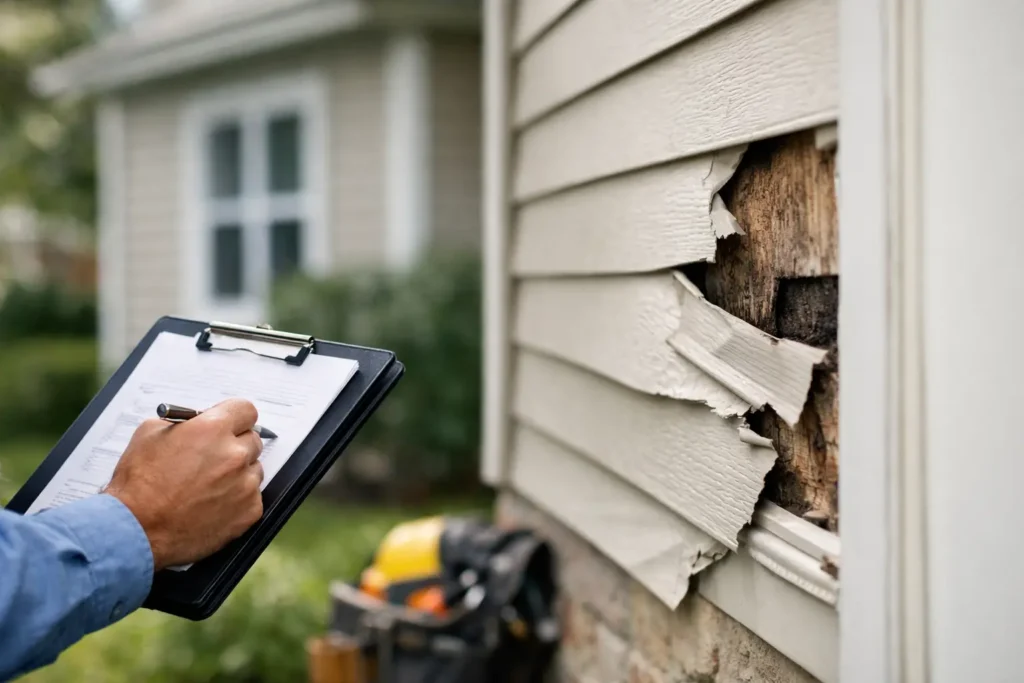
A windstorm tears a few panels loose, hail leaves visible dents, or water gets behind aging siding and suddenly you are asking the question every homeowner asks at the worst possible time: does homeowners insurance cover siding? Sometimes it does. Sometimes it does not. The difference usually comes down to what caused the damage, how your policy is written, and whether the siding was already worn out before the storm hit.
For homeowners, that can feel frustratingly vague. But there are some clear patterns. Insurance is generally there for sudden, accidental damage. It is not there for old age, neglected maintenance, or gradual deterioration. If your siding was damaged by a covered event, you may have a valid claim. If the issue developed over time, approval is much less likely.
When does homeowners insurance cover siding?
In most cases, homeowners insurance covers siding when the damage is caused by a named peril or another covered event in your policy. Common examples include wind, hail, fire, falling tree limbs, vandalism, and in some cases damage from a sudden impact.
Storm-related claims are the most common. In Central New York, strong winds, ice, and hail can crack vinyl siding, pull loose sections away from the home, or leave enough damage for water to get behind the exterior. If that damage happened during a specific weather event and you can tie the loss to that event, you are in much stronger shape than if the siding simply looks worn or faded.
Coverage may also extend beyond the visibly damaged panel. If wind-driven rain got behind the siding and caused hidden water damage to the wall system underneath, that part of the repair may be part of the claim as well. That said, insurers will still look closely at whether the water intrusion was sudden or the result of a long-term problem.
What siding damage is usually not covered?
This is where many claims run into trouble. Insurance companies do not cover siding problems caused by normal wear and tear. Fading from sun exposure, brittleness due to age, rot from long-term moisture exposure, insect damage, poor installation, and lack of upkeep are usually excluded.
If your siding is 20 years old and already showing signs of cracking, warping, or loose sections, the insurance company may argue that the storm did not create the problem – it only exposed an existing one. That does not always end the claim, but it can reduce what gets approved.
Cosmetic damage can also be a gray area. Some policies will pay when hail leaves dents or marks that affect the siding’s function and value. Others may deny the claim if the siding still technically protects the home. The exact wording matters, and so does the adjuster’s interpretation.
Matching issues are one of the biggest claim problems
Even when insurance agrees to cover siding, another issue often comes up fast: matching.
Let’s say only one elevation of your house was damaged. The insurer may agree to pay for the affected section only. But if your current color or profile has been discontinued, the replacement may stand out sharply from the rest of the home. Homeowners then end up with a house that is repaired but visibly patched.
Whether insurance pays to replace all siding for a uniform appearance depends on state rules, policy language, and the insurer’s position on matching. Some policies include limited matching language. Others do not. In New York, this can become a claim negotiation issue rather than an automatic approval.
That is why a thorough inspection matters. A contractor who understands storm restoration can document not just what is broken, but whether a partial repair creates a practical and visual problem for the whole exterior.
Actual cash value vs. replacement cost
If you want to know what your claim may actually pay, look at whether your policy covers siding on an actual cash value basis or replacement cost basis.
Replacement cost coverage generally pays what it costs to repair or replace the damaged siding with new material of like kind and quality, minus your deductible. That is usually the better form of coverage for homeowners.
Actual cash value coverage factors in depreciation. In plain terms, the older your siding is, the less the insurer may pay. If the siding has significant age or wear, the payout can be much lower than the cost of a full repair.
This catches many homeowners off guard. They assume approval means the entire project is covered, when in reality depreciation and deductibles may leave a large out-of-pocket balance.
What to do right after siding damage
If you suspect storm damage, timing matters. Waiting too long can complicate your claim and make it easier for the insurer to question what happened.
Start by taking clear photos of all visible damage from the ground. If there are loose pieces, cracks, dents, or missing panels, document them. If water got inside the home, photograph that too. It is also smart to note the date of the storm and save any local weather reports or alerts.
Next, arrange for a professional exterior inspection. A qualified contractor can identify damage that is easy to miss, including lifted sections, broken locking tabs, water intrusion behind the siding, or related roof and gutter damage from the same event. This is especially important after high winds or hail, where siding damage may only be part of the problem.
Then contact your insurance company to start the claim. Be factual and direct. Explain what happened, when you noticed it, and what damage is visible. Avoid guessing about the cause if you are not sure. Let the inspection and documentation support the claim.
How the claims process usually works
Once a claim is opened, the insurance company will typically assign an adjuster to inspect the property. Their job is to evaluate cause, scope, and value. If the damage is straightforward, the process can move quickly. If the siding is older, discontinued, or mixed with pre-existing wear, expect more back-and-forth.
This is where homeowners benefit from having good documentation and a contractor who can clearly explain the damage. A detailed inspection report, photos, measurements, and a repair estimate help keep the conversation grounded in facts instead of opinions.
If the adjuster misses damage or writes an incomplete scope, you are allowed to ask questions. You can also request a reinspection if there is a legitimate disagreement about what was caused by the storm. That does not mean every denied item will be overturned, but it does mean the first answer is not always the final one.
Why some siding claims get denied
Most denials fall into a few categories. The insurer may say the damage was not caused by a covered peril. They may classify it as wear and tear. They may argue the damage is cosmetic only. Or they may find that the homeowner waited too long and the condition worsened afterward.
Another common problem is lack of proof. If there is no clear storm date, no photos, and no inspection tying the damage to a covered event, the claim becomes harder to support.
That does not mean you should file every time siding looks old or weathered. It means you should act quickly when there is real storm damage and have the property checked before minor issues turn into bigger ones.
A practical answer for homeowners
So, does homeowners insurance cover siding? Yes, if the damage was sudden, accidental, and caused by a covered event like wind or hail. No, if the siding failed because it was old, poorly maintained, or deteriorating over time. And sometimes the real dispute is not whether there is coverage, but how much the insurer will pay and whether the repair will truly restore the home’s appearance.
That is why a fast, honest inspection is the best first step. If your siding was damaged in a storm, get it documented properly before moisture, drafts, or hidden wall damage make the situation worse. A local contractor experienced with exterior storm damage, including teams like Alpha Omega Roofing LLC, can help you understand what you are looking at, what may be claim-related, and what your next move should be.
When your home’s exterior takes a hit, clarity matters just as much as coverage. The sooner you know whether you are dealing with an insurance claim or a repair bill, the sooner you can protect the house and move forward with confidence.