
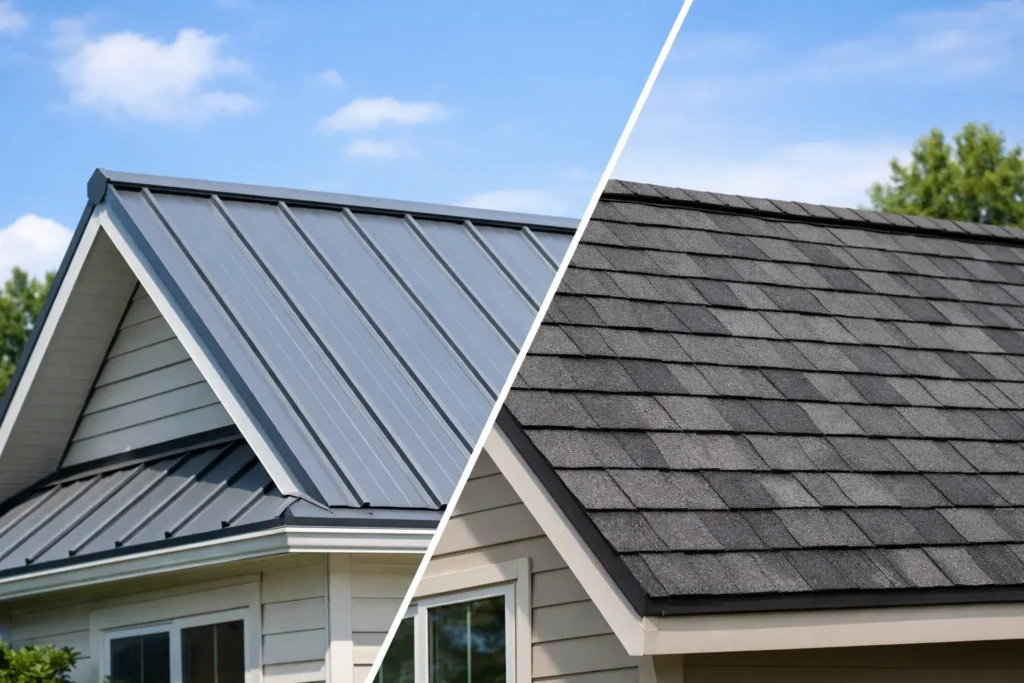
When a roof replacement is staring you in the face, the metal roof vs shingles question gets real fast. Most homeowners are not looking for a roofing theory lesson. They want to know which option will protect the house, hold up in Central New York weather, and make sense for the budget they have right now.
The honest answer is that there is no one-size-fits-all winner. A metal roof can outlast shingles by decades, but asphalt shingles cost less upfront and still perform well when installed properly. The better choice depends on your home, your timeline, your budget, and how long you plan to stay in the property.
Metal roof vs shingles: the biggest difference
The biggest difference comes down to upfront cost versus long-term performance. Asphalt shingles are the more affordable and more common residential roofing option. They are familiar, attractive, and effective for many homes. Metal roofing usually costs more at the beginning, but it offers a longer lifespan, strong weather resistance, and lower maintenance over time.
For many homeowners, that first price tag drives the decision. That is understandable. A roof replacement is a major investment, and not every family wants to spend more now for benefits they may not use 20 years from today. On the other hand, if you plan to stay in your home long term, the higher initial cost of metal may start to look a lot more practical.
Cost: shingles usually win the short-term budget battle
If your main concern is keeping the project affordable today, shingles usually come out ahead. Asphalt shingles generally have a lower material cost and a lower installation cost than metal roofing. They are widely available, and most homes are already built with shingles in mind, which can make the process more straightforward.
Metal roofing is more expensive for a few reasons. The materials cost more, and installation requires a higher level of skill and precision. Not every crew installs metal roofing the right way, and details matter. Fasteners, seams, flashing, underlayment, and ventilation all need to be handled correctly if you want the roof to perform the way it should.
That said, lower upfront cost does not always mean lower long-term cost. If a shingle roof needs replacement sooner, or if storm damage and aging lead to more repairs over time, the numbers can shift.
Lifespan: metal has the edge
This is where metal roofing usually pulls ahead. A properly installed metal roof can last 40 to 70 years depending on the system and material. Asphalt shingles more often fall in the 15 to 30 year range, depending on the product, attic ventilation, sun exposure, weather, and installation quality.
In a region with snow, ice, wind, and freeze-thaw cycles, lifespan is not just about the product brochure. It is about how the roof system performs season after season. Even a good shingle roof can wear down faster if it faces repeated storm exposure or poor attic ventilation. A metal roof generally handles those conditions better over the long haul.
If you are replacing a roof on what you expect to be your forever home, metal can make a lot of sense. If you plan to move within several years, shingles may be the more practical choice.
Weather performance in Central New York
Roofing decisions look different in places that deal with lake-effect snow, ice buildup, heavy rain, and strong winds. In Central New York, weather resistance is not a bonus feature. It is the job.
Metal roofing performs very well in harsh conditions. Snow tends to shed more easily from metal than from shingles, which can help reduce heavy snow loads. Metal also resists moisture well and can stand up to wind when installed correctly. That does not mean it is invincible, but it is a strong performer in demanding climates.
Shingles can also protect a home well, especially architectural shingles installed by an experienced local contractor. Modern shingle systems are much better than many people assume. The problem is not that shingles cannot handle bad weather. The problem is that lower-grade materials or poor installation leave less room for error.
Ice dams are another concern in this region. Neither metal nor shingles alone solves an ice dam problem. Proper attic insulation, ventilation, and underlayment matter just as much as the outer roofing material. If a contractor talks only about surface material and ignores the whole roofing system, that is a red flag.
Appearance and curb appeal
Shingles are still the most common choice in residential neighborhoods for a reason. They fit the look of many homes, come in a wide range of colors, and offer a familiar appearance that many buyers expect. If you want a traditional style that blends easily with surrounding homes, shingles are often the safe choice.
Metal roofing has come a long way. It is not limited to agricultural or industrial-looking panels. Many residential metal roofing systems are clean, attractive, and available in styles that work well on modern, farmhouse, and even traditional homes. For some properties, metal adds real curb appeal. For others, it can feel out of place.
This is one of those areas where personal preference matters. The best-looking roof is the one that fits the house, not the one that wins a trend contest.
Maintenance and repairs
Metal roofs generally require less maintenance over time, but that does not mean no maintenance. Flashing can still fail, fasteners can loosen on some systems, and storm damage is still possible. The advantage is that metal is less likely to suffer from the kind of surface wear and granule loss you see with aging shingles.
Shingle roofs are easier and often less expensive to repair in smaller sections. If a few shingles are damaged in a storm, targeted repairs may be possible. With metal, repairs can be more specialized depending on the panel design and how the system was installed.
This is where workmanship matters as much as material. A poorly installed metal roof can become an expensive headache. A properly installed shingle roof can give you years of dependable protection with fewer issues than people expect.
Noise, energy use, and comfort
A common concern is that metal roofs are noisy in the rain. In most residential applications, that is overstated. With proper decking, underlayment, insulation, and attic space, a metal roof should not sound dramatically louder than shingles inside the home.
On energy efficiency, metal can reflect more solar heat, which may help reduce cooling costs in warmer months. Shingles tend to absorb more heat, though color and product type make a difference. In Central New York, summer heat matters, but winter performance and overall insulation tend to be a bigger part of the comfort equation.
In other words, roofing material can affect energy use, but it is only one part of the picture. Ventilation, insulation, and attic condition often have just as much impact.
Resale value and insurance considerations
A newer roof of either type is usually a selling point. Buyers like knowing they will not be facing a replacement right after move-in. Metal roofing may appeal to buyers looking for longevity and durability, while shingles appeal to buyers who want a familiar look and lower replacement cost if they ever need future work.
Insurance can vary. In some cases, metal roofing may be viewed favorably because of its durability. In other cases, rates may not change much at all. What matters most is the condition of the roof, the local risk factors, and the specifics of the policy. If storm damage is part of your current roofing situation, it is smart to have the roof inspected before making assumptions about repair versus replacement.
So which roof is right for your home?
Choose shingles if you want a solid, proven roofing system with a lower upfront cost, a traditional appearance, and good protection when installed with quality materials. For many homeowners, that is the right answer.
Choose metal if you are thinking long term, want maximum lifespan, and are willing to invest more now for durability and lower maintenance later. If your home is exposed to tough weather and you plan to stay put, metal becomes a stronger case.
The real key is not picking a material in the abstract. It is choosing the right roofing system for your house, your budget, and your priorities. Roof pitch, existing ventilation, storm history, neighborhood style, and how long you expect to own the home all matter.
That is why a quick online comparison only gets you so far. A roof should be assessed in person, with honest recommendations based on its condition and the weather it has to handle. For homeowners in Syracuse and surrounding communities, that local perspective matters. A contractor who understands snow loads, ice, wind exposure, and the way roofs age in this region can give you a much clearer answer than any national chart.
If you are stuck between metal and shingles, the best next step is not guessing. It is getting a straightforward inspection and estimate from a roofing company that will explain the trade-offs clearly, price the options honestly, and help you choose what protects your home best for the years ahead.