
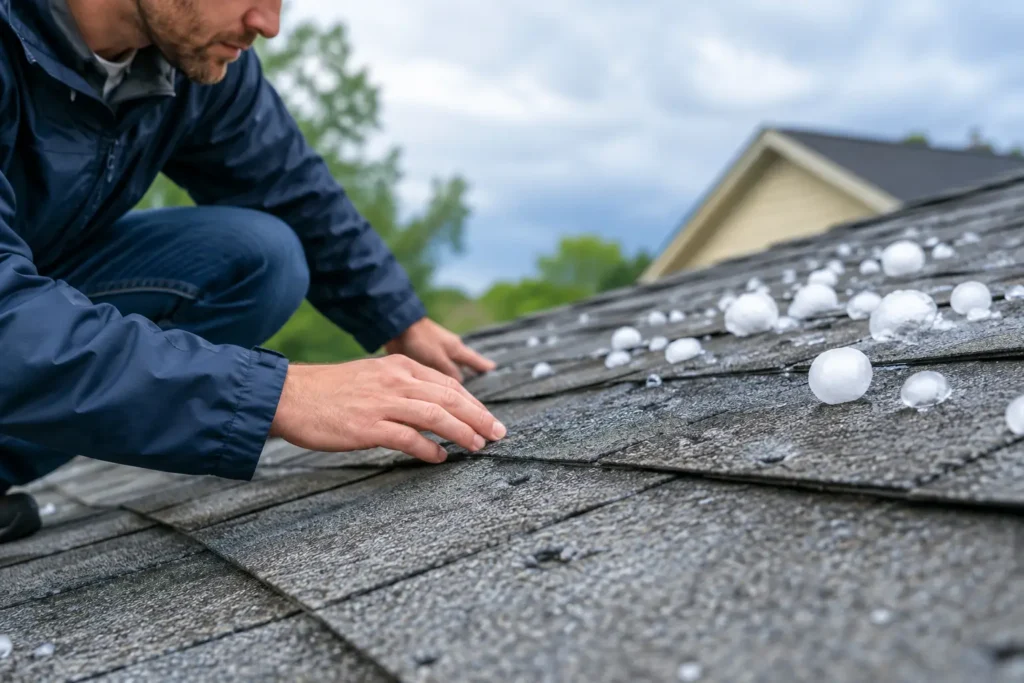
A hailstorm can be over in minutes, but the roof damage it leaves behind may not be obvious from the driveway. Can hail damage shingles? Absolutely. Even when shingles are still in place and no water is dripping into the house, hail can bruise, crack, loosen, or strip the protective granules that help your roof shed water and withstand Central New York weather.
That is why a roof should be checked after a significant hail event, especially if the storm also brought high winds, heavy rain, or fallen branches. Waiting for a visible leak can turn a manageable repair into damaged decking, stained ceilings, mold concerns, and a larger insurance claim.
How Hail Can Damage Shingles
Most asphalt shingles are built with a fiberglass mat, an asphalt layer, and a coating of mineral granules. Those granules are more than a cosmetic surface. They protect the asphalt from sunlight, add fire resistance, and help the shingle hold up against weather.
When hail strikes, the impact can knock loose granules or create a soft, bruised area beneath the surface. Think of it less like a clean hole and more like an impact injury. A shingle may look mostly normal from the ground while its protective layer has been compromised.
The severity depends on several factors: hail size and density, wind speed, the direction of the storm, the age and condition of the roof, and the type of shingle installed. Hail the size of peas may leave little or no roofing damage. Hail around one inch or larger is more likely to cause concern, particularly on older shingles that have become brittle.
A newer, high-quality roof can withstand some storms well. That does not mean it is immune. Conversely, an aging roof may show damage from smaller hail that would not affect a newer installation. This is why a professional inspection matters more than trying to judge the situation by hail size alone.
What Hail Damage to Shingles Looks Like
Hail damage does not always look dramatic. Homeowners often expect to find missing shingles or obvious punctures, but those problems are more commonly associated with severe wind damage or impact from debris. Hail damage can be subtle and easy to overlook.
On asphalt shingles, a trained inspector may find dark spots where granules have been displaced, circular or irregular impact marks, exposed asphalt, cracking, or areas that feel soft when carefully tested. Damage often appears in random patterns rather than in one neat section of the roof.
A few loose granules in gutters are not automatic proof of hail damage. Every asphalt roof sheds some granules as it ages, and newly installed shingles can release excess granules as well. The concern is a noticeable increase after a storm, especially when paired with visible impact marks on shingles, metal vents, flashing, gutters, or downspouts.
Damage to other exterior surfaces can offer useful clues. Dented metal components, pitted window screens, bruised siding, cracked skylight covers, or dented vehicles suggest the storm had enough force to warrant a closer roof inspection. These signs do not confirm roof damage by themselves, but they help establish that the property was exposed to significant hail.
Why a Roof Can Leak Months After a Hailstorm
A hail-damaged roof does not always leak right away. The roof may continue shedding water for a while, particularly if the damage is limited to granule loss or minor bruising. But once the shingle surface has been weakened, everyday weather begins to take over.
Sunlight can dry and age exposed asphalt. Rain can work under cracked or loosened shingle edges. Freeze-thaw cycles common in the Syracuse area can widen small cracks and stress vulnerable sections. Wind-driven rain may then find a route beneath shingles that once provided reliable protection.
By the time a ceiling stain appears, water may have already affected roof decking, insulation, or framing. That delay is one reason prompt documentation and inspection are so valuable after a major storm. You are not overreacting by having the roof checked. You are protecting the part of the home that protects everything else.
Safe Steps to Take After a Hailstorm
Do not climb onto the roof to investigate. Wet shingles, steep slopes, hidden soft spots, and storm debris create real fall hazards. A ground-level check is a safer first step.
Walk around the property and photograph any visible signs of storm impact, including dents on gutters or roof vents, damaged screens, fallen branches, or granule buildup near downspout outlets. Note the date of the storm and any indoor changes, such as water spots, attic moisture, or dripping around vents and chimneys.
Inside the home, check the attic during daylight hours if it is safe to do so. Look for damp insulation, wet wood, dark staining, or daylight coming through the roof structure. Do not assume a dry attic means there is no hail damage. It simply means the damage has not created an active leak yet.
Then schedule a professional roof inspection. A qualified roofing contractor can inspect the roof surface, flashing, penetrations, ridge caps, gutters, and other vulnerable components without guesswork. The goal is not to sell a replacement when a repair will do. The goal is to identify whether the storm caused functional damage and explain the next best step clearly.
Repair or Replacement: What Makes Sense?
The right solution depends on the extent and location of the damage. If hail affected a limited area and the surrounding shingles are still in good condition, a targeted repair may restore protection. This is often the most sensible option when matching shingles are available and the roof has plenty of useful life remaining.
Replacement becomes more likely when damage is widespread, shingles are brittle or nearing the end of their lifespan, or repairs would leave the roof with inconsistent protection. Multiple damaged slopes, compromised ridge shingles, and extensive granule loss may also make replacement the better long-term value.
There is a practical trade-off. A small repair costs less upfront, but patching an old roof repeatedly can become expensive and may not address broader wear. A full replacement is a larger investment, but it provides a consistent roofing system and a new warranty period. An honest inspection should help you understand both options without pressure.
Can Hail Damage Shingles Enough for an Insurance Claim?
Hail damage may be covered under many homeowners insurance policies, but coverage depends on the policy, deductible, exclusions, roof age, and the insurer’s assessment of the loss. Some policies provide replacement cost coverage, while others may account for depreciation. Cosmetic damage may also be handled differently than damage that affects the roof’s ability to perform.
Start by reviewing your policy and documenting the storm-related conditions you can see. A roofing inspection report, photos, and repair recommendations can help you communicate clearly with your insurance company. Avoid signing contracts that promise a specific claim outcome or encourage you to file before the roof has been properly assessed.
A reputable local contractor can explain the observed damage, provide a clear estimate, and help you understand what information an adjuster may need. The final coverage decision belongs to the insurance carrier, but good documentation gives you a stronger foundation for the conversation.
Do Not Wait for a Leak to Get Answers
Hail may leave your roof looking intact while reducing its ability to handle the next hard rain, windstorm, or winter freeze. If your home in Syracuse or the surrounding Central New York area was in the path of a significant hailstorm, a timely inspection is a practical way to protect your home and avoid uncertainty.
Alpha Omega Roofing LLC can assess the condition of your shingles, identify storm-related concerns, and give you straightforward guidance on repair, replacement, or simply monitoring the roof. A clear answer now is better than discovering a preventable problem after water reaches the ceiling.