
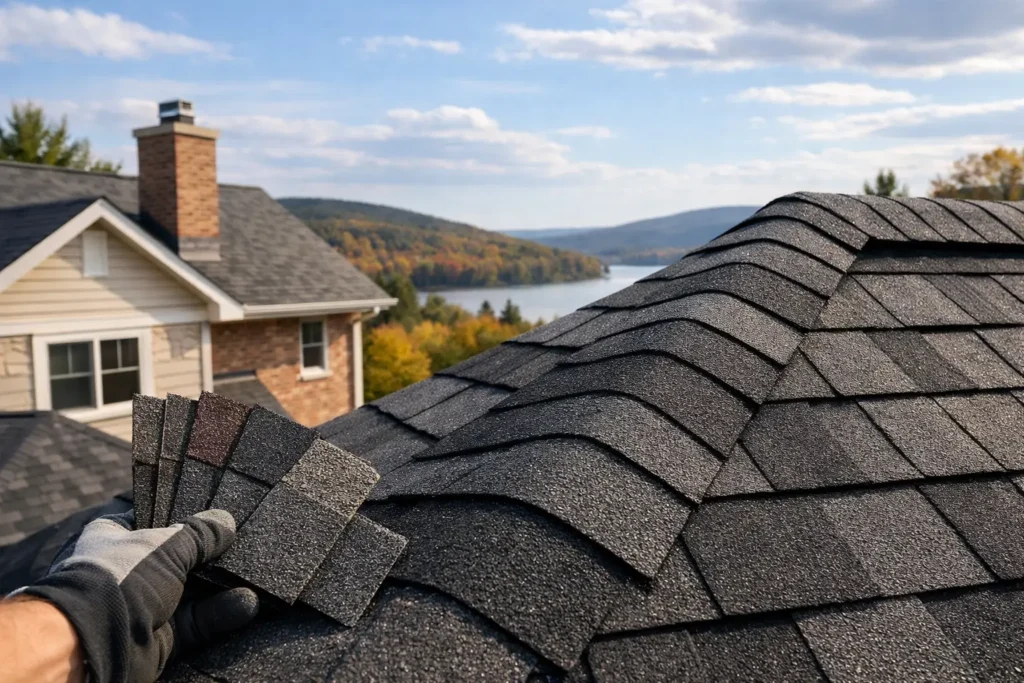
A roof in Central New York has to handle more than rain. It has to stand up to heavy snow, freeze-thaw cycles, wind-driven storms, ice dams, and long stretches of damp weather. This asphalt shingle review looks at why asphalt shingles remain the most practical roofing choice for many local homeowners, where they perform well, and what separates a dependable roof replacement from one that creates problems too soon.
Asphalt Shingle Review: Is It the Right Roof?
For most Syracuse-area homes, asphalt shingles offer a sensible balance of cost, appearance, repairability, and weather protection. They are not the longest-lasting roofing material on the market, but they are a strong fit for homeowners who want reliable performance without the cost of metal, slate, or tile.
The key is understanding that asphalt shingles are a system, not just a visible layer of material. Shingle quality matters, but so do the underlayment, ice and water protection, flashing, attic ventilation, fastener placement, and installation method. A premium shingle installed over weak decking or inadequate flashing will not deliver premium results.
A good asphalt roof can provide decades of service when it is properly selected for the home and installed by an experienced local contractor. Its value is especially clear when a storm damages one area of the roof. Individual shingles can often be repaired or replaced more easily than many other roofing materials.
What Asphalt Shingles Do Well
Asphalt shingles have improved significantly from the basic three-tab roofs many homeowners remember. Architectural shingles, also called dimensional shingles, are the standard choice for most replacements because they are thicker, more attractive, and generally more wind-resistant than three-tab options.
They also offer a wide range of colors and profiles. That matters when a roof covers a large part of the home’s exterior. The right color can complement siding, brick, stone, and trim, while a poor choice can make an otherwise well-kept home look dated.
More importantly, asphalt shingles are designed for straightforward maintenance and repair. If a branch loosens a few shingles or wind damages a ridge cap, a qualified roofer can assess the affected area and explain whether a focused repair is reasonable. Homeowners do not automatically need a full replacement for every roofing issue.
For many families, cost is another major advantage. Asphalt shingles usually provide a lower upfront investment than metal or synthetic roofing while still offering dependable protection. The exact price depends on roof size, slope, tear-off requirements, accessibility, material selection, and the condition of the roof deck beneath the old shingles.
Where Asphalt Shingles Have Limits
An honest review also needs to address the trade-offs. Asphalt shingles can wear faster when a roof has poor ventilation, repeated ice damming, standing moisture, overhanging tree branches, or installation errors. Shingles can also become brittle with age, making them more vulnerable to wind damage and cracking during cold-weather repairs.
They are not always the best option for every property. A homeowner planning to stay in a house for several decades may want to compare the long-term economics of a high-end asphalt shingle with metal roofing. A home with a very low-slope roof may need a different roofing system entirely, since standard shingles require adequate slope for proper drainage.
Color choice also has practical consequences. Dark shingles can help snow melt sooner in some conditions, but they may absorb more heat during summer. Lighter shingles can reduce heat absorption, although attic ventilation still plays a much larger role in controlling moisture and temperature beneath the roof.
The right decision depends on the home’s design, the roof’s pitch, your expected length of ownership, and the condition of the existing system. No single shingle is automatically right for every house.
Performance in Snow, Wind, and Ice
Central New York weather puts roofing details to the test. Snow itself is not usually the biggest threat. The trouble starts when heat escaping into the attic melts snow higher on the roof, then the water refreezes near the colder eaves. That buildup can trap water behind an ice dam and force it under shingles.
Asphalt shingles need a properly designed defense against this problem. Ice and water membrane should be installed in vulnerable areas, especially along eaves, valleys, around penetrations, and other locations where water is more likely to back up. Proper attic insulation and ventilation are also critical, because they help keep the roof deck temperature more consistent.
Wind resistance is another consideration. A shingle’s wind rating matters, but installation matters just as much. Nails must be placed in the correct nailing zone and driven flush, not overdriven or underdriven. Starter shingles, ridge caps, and flashing must all be installed correctly. These are small details on paper, but they are often the details that determine whether shingles stay in place during a hard storm.
If your roof has lost shingles after a windy day, do not assume the damage is cosmetic. Exposed nail holes, lifted edges, and missing seal strips can allow water into the roof system. A prompt inspection can help prevent a minor issue from becoming deck damage, ceiling stains, or mold concerns.
Choosing Between Three-Tab and Architectural Shingles
Three-tab shingles are thinner, flatter, and generally less expensive. They may make sense for certain budget-focused repairs, sheds, rental properties, or situations where matching an existing three-tab roof is necessary. However, they typically offer less depth, lower wind resistance, and a shorter expected service life than architectural shingles.
Architectural shingles are the better fit for most residential roof replacements. Their layered construction creates a more dimensional appearance and generally provides greater durability. They also come in a broader range of styles, including options that resemble wood shakes or slate without the weight and cost of those materials.
There are also premium architectural shingles designed for enhanced impact resistance or high-wind performance. These may be worth considering if your property has frequent tree exposure, sits in an open area, or has a history of storm-related claims. The higher material cost can be justified when the added protection fits the risks your home actually faces.
Do not select a shingle based on color samples alone. Review the warranty terms, wind rating, algae resistance, installation requirements, and the complete roofing system recommended for that product. A knowledgeable contractor should explain the differences in plain language rather than pushing the most expensive option without a reason.
What to Look for in a Roofing Estimate
A reliable estimate should make it clear what is included and what could change once work begins. Roofing projects sometimes reveal hidden deck damage after the old materials are removed, particularly on older homes or roofs with a history of leaks. That possibility should be discussed upfront, not introduced as a surprise after the crew arrives.
Ask whether the estimate includes removal of existing shingles, disposal, underlayment, ice and water protection, flashing work, ventilation improvements, and replacement of damaged decking if needed. Also ask how the contractor will protect landscaping, siding, driveways, and other areas around the home during the project.
The lowest estimate is not always the lowest-cost roof over time. A price that leaves out tear-off, flashing, proper underlayment, or cleanup can become expensive quickly. Compare the scope of work, not just the final number.
Insurance can add another layer when wind, hail, or fallen limbs have damaged the roof. Document visible damage, keep records of the date of the event, and arrange an inspection before authorizing major work. A contractor can help identify storm-related concerns and provide clear documentation, while the insurance company remains responsible for determining coverage.
Signs Your Asphalt Shingles Need Attention
A roof does not need to be actively leaking before it needs service. Curling edges, cracked shingles, bald spots where granules are missing, dark streaks, loose flashing, and shingles on the ground are all reasons to schedule an inspection. Inside the home, check for ceiling discoloration, peeling paint near exterior walls, or a musty smell in the attic.
Age matters too. If an asphalt roof is approaching the end of its expected service life, repairs may still be worthwhile, but it is smart to understand whether you are extending its life for a few years or repeatedly investing in a system that is close to failure. An honest inspection should distinguish between a repairable issue and a roof that is no longer a sound candidate for patchwork.
Alpha Omega Roofing LLC helps homeowners assess these questions with straightforward recommendations built around the condition of the roof, not a one-size-fits-all sales pitch. Whether the issue is a few missing shingles or an aging roof that has seen one winter too many, getting clear answers early gives you more control over the next step.
If you are comparing asphalt shingles for a replacement or concerned about recent storm damage, start with a professional inspection. The best roofing decision is the one that protects your home through the next hard weather event and leaves no unanswered questions about what was installed above your family.