
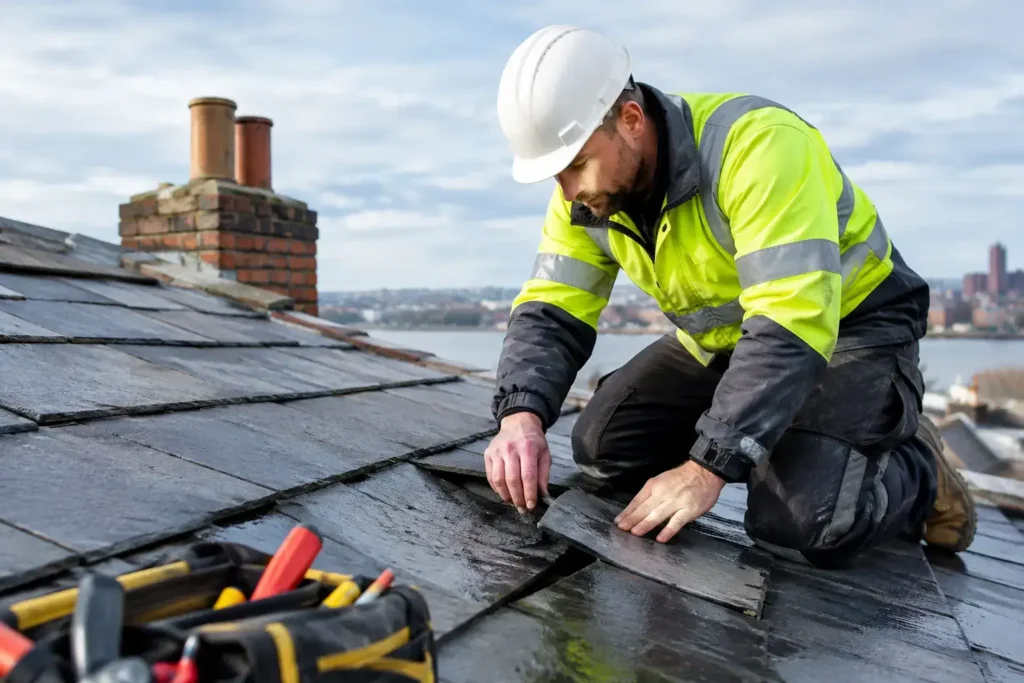
A water spot near an upstairs bedroom ceiling can look minor on Monday and become a wet insulation, stained drywall, and mold concern by the weekend. This Liverpool roof repair example shows why Central New York homeowners should treat even a small roof leak as a reason to schedule a professional inspection – especially after wind, heavy rain, snow, or a freeze-thaw cycle.
The goal is not to sell a replacement when a repair will do. It is to find the actual source of water intrusion, explain the condition of the roof clearly, and make a repair that holds up through the weather ahead.
A Liverpool Roof Repair Example: Finding the Real Leak Source
Consider a typical Liverpool home with an asphalt shingle roof that is about 12 years old. After a late-season storm, the homeowner notices a faint brown ring on the ceiling near an exterior wall. There is no active dripping, and the shingles look mostly normal from the ground.
That is exactly where roof problems can be misleading. Water does not always enter directly above the stain. It may get beneath a lifted shingle higher on the roof, travel along the roof decking or framing, and appear inside several feet away from where it started.
During an inspection, a roofing professional would look at the roof surface, roof penetrations, flashing, gutters, attic space, and the interior area around the stain. In this example, the inspection finds three related issues: wind had loosened several shingles near a plumbing vent, the rubber boot around the vent had cracked, and the underlayment beneath the affected shingles showed signs of moisture.
The roof did not need a full replacement. Most of the shingles still had useful life, and the decking was solid once the wet area was exposed and checked. The right recommendation was a focused repair that addressed the failed materials instead of covering up the symptom.
What a Proper Repair Could Include
A dependable repair begins by carefully removing the damaged shingles and examining what is underneath. If a contractor simply applies sealant over a crack or slides a shingle back into place without checking the layers below, water can remain trapped where it does damage out of sight.
For this kind of repair, the work may include replacing the damaged vent boot, installing compatible underlayment where needed, securing or replacing affected flashing, and fitting new shingles that match the existing roof as closely as possible. The crew should also inspect nearby shingles for broken seals, creases, exposed fasteners, or wind damage that could create the next leak.
Matching shingles matters, but weather protection matters more. A close color match is often possible, though an exact match can depend on the age of the roof, shingle availability, and how much the existing material has faded in the sun. A straightforward contractor will explain that before work begins rather than making promises that cannot be kept.
Once the exterior repair is complete, the attic should be checked again for signs of active moisture. If insulation got wet, it may need to be dried or replaced depending on the extent of the damage. Addressing that step protects indoor air quality and helps prevent the leak from turning into a larger restoration project.
Why Small Leaks Get Expensive in Central New York
Liverpool roofs face a demanding mix of rain, wind, snow load, ice, and changing temperatures. Water can enter through a small opening, freeze overnight, expand, and widen the gap around shingles or flashing. By spring, a repair that may have been limited to a few materials can involve decking, insulation, ceilings, or framing.
Ice dams are another concern. When snow melts unevenly and refreezes near the eaves, backed-up water can work beneath shingles. The visible issue may be an ice buildup at the roof edge, but the underlying cause can involve ventilation, insulation, air leakage, roof condition, or several factors together. Removing ice alone does not necessarily solve the problem.
This is why a good inspection does more than point at a stain. It separates a one-time storm-related issue from a roof system problem that needs a broader plan.
Repair or Replacement? The Answer Depends on the Roof
Homeowners often worry that calling about a leak means they will be pushed into a full roof replacement. That should not be the case. A repair is often the sensible option when damage is localized, the roof is still in good overall condition, and the remaining shingles have meaningful service life.
Replacement becomes more practical when leaks are recurring, shingles are brittle or curling across large areas, granule loss is widespread, or the roof is near the end of its expected life. Multiple past repairs can also be a sign that investing in a new roof will provide better long-term value than continuing to patch aging materials.
The difference comes down to evidence. A contractor should show you what they found, identify the damaged areas, explain the repair scope, and give you an honest recommendation based on the condition of your home. Clear pricing and a written scope make it easier to compare options without guessing what is included.
What to Do Before Your Roof Repair Appointment
If you see a ceiling stain or notice water entering your home, start by protecting the interior. Move furniture and valuables away from the affected area. If water is actively dripping, place a container underneath and use towels to limit spread. Do not climb onto a wet, icy, or storm-damaged roof to investigate it yourself.
Take a few photos of the interior stain, any visible roof damage from the ground, and any debris or shingles you find in the yard. If the issue followed a storm, note the date and take pictures before temporary cleanup changes the evidence. This documentation can be helpful if you need to speak with your insurance company about covered storm damage.
Then arrange a professional inspection promptly. The sooner the source is identified, the better the chance of keeping the repair limited and affordable. Alpha Omega Roofing LLC helps homeowners understand what happened, what needs attention now, and whether storm damage may call for an insurance conversation.
Questions Worth Asking Your Roofing Contractor
A reliable contractor should be comfortable answering practical questions. Ask what caused the leak, whether the roof decking was inspected, what materials will be replaced, and how the new work will tie into the existing roof. You can also ask whether related areas such as flashing, vents, gutters, or chimney connections showed wear.
It is also reasonable to ask about scheduling, cleanup, insurance, and the workmanship warranty for the repair. Fast service matters when water is coming in, but rushing past the diagnosis can lead to repeat leaks. The best repair is one that is completed promptly and correctly.
A roof leak rarely becomes less serious by waiting for better weather. If your ceiling has stained, a shingle has blown off, or you suspect storm damage, schedule an inspection while the issue is still small enough to control.