
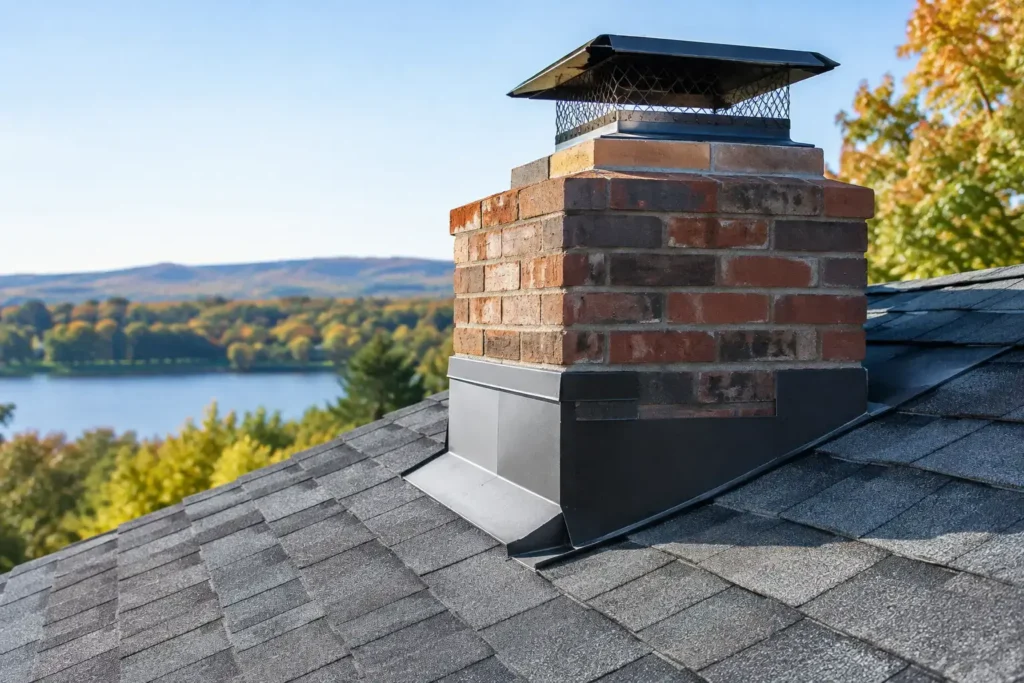
A chimney leak rarely announces itself with a steady drip in the middle of the room. More often, it starts as a brown ceiling stain near the fireplace, peeling paint on an upstairs wall, damp attic insulation, or a musty smell after heavy rain. This chimney flashing guide explains what protects the joint between your roof and chimney, how to spot trouble early, and when a repair needs a professional response.
In Syracuse and across Central New York, chimney flashing takes a beating. Wind-driven rain, deep snow, freeze-thaw cycles, ice dams, and shifting masonry can all open small gaps that allow water under the roofing system. The sooner those gaps are addressed, the better the chance of avoiding damaged decking, framing, insulation, drywall, and interior finishes.
What Chimney Flashing Does
Chimney flashing is the metal system installed where the roof meets the chimney. Its job is simple: direct water away from the chimney and onto the roof surface, where it can drain safely into the gutters.
This is one of the most leak-prone areas on any roof because two very different materials meet there. Roofing expands and contracts with temperature changes. Brick and mortar absorb moisture and can shift or deteriorate over time. A properly installed flashing system accounts for that movement while keeping the water barrier intact.
A dependable chimney flashing installation is not just a strip of metal covered with roofing cement. It is a layered system that works with the shingles, underlayment, and masonry. When one part fails, water can travel farther than most homeowners expect before it becomes visible indoors.
The Parts of a Proper Chimney Flashing System
Base Flashing
Base flashing, also called apron flashing at the front of the chimney, sits against the roof and the lower face of the chimney. It guides water around the chimney rather than allowing it to collect at the uphill side or run behind the shingles.
Step Flashing
Step flashing consists of individual metal pieces woven between each course of shingles along both sides of the chimney. This layered design is critical. Instead of relying on one long piece of metal, each section sheds water onto the next piece and out over the roof.
When step flashing is missing, poorly lapped, bent, or covered with excessive sealant, water can work behind the shingles during a hard rain or snowmelt cycle.
Counterflashing
Counterflashing covers the upper edge of the base and step flashing where the metal meets the chimney masonry. It is typically set into a mortar joint or otherwise secured to the chimney. This prevents water from running behind the flashing and into the roof assembly.
Counterflashing is especially important on brick chimneys. A repair that only caulks the metal to the brick may hold temporarily, but caulk is not a long-term substitute for properly integrated flashing.
Cricket or Saddle
A chimney cricket is a small peaked structure built on the uphill side of a wider chimney. It splits water, snow, and debris so they move around both sides rather than pooling behind the chimney.
Not every chimney needs a cricket, but it is often recommended for chimneys wider than 30 inches. In Central New York, where snow can sit on a roof for extended periods, a properly built cricket can reduce the chance of water backing up at the chimney base.
Signs Your Chimney Flashing May Be Failing
Some flashing problems are visible from the ground, while others show up inside the home. Do not climb onto a steep, wet, icy, or aging roof to investigate. A professional inspection is safer and can identify hidden damage around the chimney.
Watch for these common warning signs:
- Water stains on ceilings or walls near the chimney, especially after rain or snowmelt
- Loose, cracked, rusted, or visibly lifted metal around the chimney base
- Missing, curling, or damaged shingles beside the chimney
- Cracked mortar joints, spalling brick, or deteriorating chimney crown
- Damp attic insulation, wet roof decking, or mold-like odors near the chimney
A stain near the chimney does not always mean the flashing is the only problem. The chimney crown, cap, masonry joints, roof shingles, or a nearby vent can also allow water in. That is why a full inspection matters. The goal is to identify the actual entry point, not simply seal the place where water finally appeared.
Why Caulk-Only Repairs Often Fail
Roofing sealant has a place in chimney repair, but it should support a sound flashing system, not replace one. A thick line of tar or caulk around the chimney may look like a quick fix, yet it can crack as temperatures change. It can also trap water, hide deteriorated metal, and make a future repair more difficult.
The same concern applies to exposed face nails or screws placed where water naturally flows. Fasteners must be positioned and protected correctly. Otherwise, each fastener can become another potential leak point.
A lasting repair usually involves removing enough shingles to inspect the area, replacing damaged decking or underlayment if necessary, installing new step flashing where needed, and integrating the metal with the roofing system. Counterflashing may need to be repaired or reset into the masonry. If the surrounding shingles are brittle or near the end of their service life, replacing only the flashing can create a short-term patch on a larger roofing problem.
When Flashing Repair Is Enough and When Replacement Makes Sense
A localized flashing repair can make sense when the roof is in good condition, the chimney masonry is stable, and the issue is limited to a small section of failed metal or sealant. This approach can stop a leak without disturbing more of the roof than necessary.
Replacement becomes the better value when flashing is rusted through, repeatedly patched, improperly installed, or damaged across multiple sides of the chimney. It may also be recommended during a roof replacement. Installing new flashing with a new roof is usually more cost-effective than trying to reuse old metal that has already been exposed to years of weather.
Masonry conditions matter, too. If mortar joints are failing or bricks are cracked, new roof flashing alone may not solve the problem. Water can enter through damaged masonry and mimic a roof leak. Coordinating chimney repair with roofing work prevents one issue from undermining the other.
Protecting Chimney Flashing Through Central New York Winters
Snow and ice do not automatically mean a roof leak, but they increase the pressure on vulnerable details. Ice dams can force meltwater under shingles near a chimney, particularly when attic heat loss melts snow unevenly. Blocked gutters, poor attic ventilation, and insufficient insulation can contribute to the problem.
Homeowners can help by keeping gutters clear, watching for heavy snow buildup around roof transitions, and addressing visible masonry damage before winter. Avoid chopping ice away from flashing or using sharp tools on shingles. That can bend metal, loosen shingles, and create the very leak you were trying to prevent.
After a major windstorm, check the ground for shingle pieces or metal fragments and look for changes around the chimney from a safe distance. If you notice an active leak, place a container under the drip, move valuables away from the area, and call for a roof inspection promptly. Waiting for warmer weather can allow moisture to keep damaging the roof structure.
What a Professional Chimney Inspection Should Include
A thorough chimney-area roof inspection should look beyond the visible metal. A qualified contractor should evaluate the condition of shingles around the chimney, step and counterflashing, underlayment, roof decking, masonry joints, chimney crown, and drainage patterns. If there has been storm damage, the inspection should also document wind-lifted shingles, punctures, and other conditions that may affect an insurance claim.
Ask for a clear explanation of what failed, what work is recommended, and whether the repair addresses the source of the leak. Straightforward answers and a written estimate help you compare options without guessing what is included.
Alpha Omega Roofing LLC helps Central New York homeowners evaluate chimney flashing leaks, roof damage, and related masonry concerns with practical recommendations and clear repair options. A small flashing issue is easier to fix before the next heavy rain or snow event turns it into interior damage.
If your ceiling has a new stain, your chimney flashing looks worn, or you have had a leak near the fireplace, do not wait for the next storm to test it. A timely inspection can protect the roof, the chimney, and the home beneath them.