
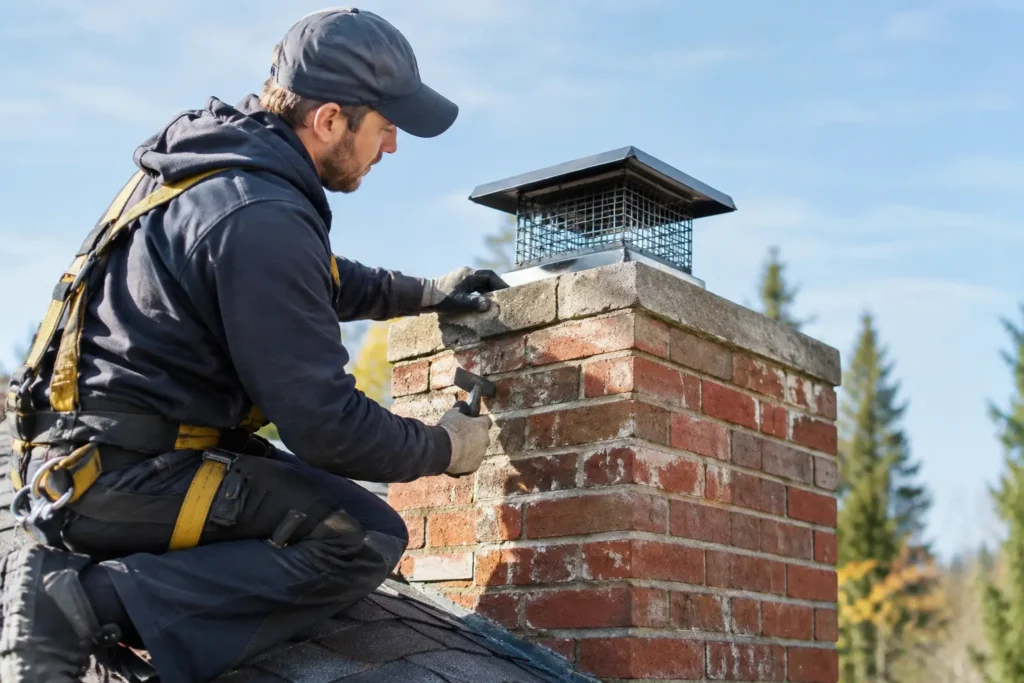
A chimney can look solid from the driveway and still be letting water into the structure behind it. In Camillus, freeze-thaw cycles, wind-driven rain, and heavy snow place constant pressure on brick, mortar, flashing, and chimney caps. Calling a Camillus chimney repair contractor before a small crack becomes interior water damage can protect both your roof and your home.
The key is knowing which signs call for a prompt inspection and what a qualified local contractor should look for. Chimney repair is not simply cosmetic masonry work. The chimney penetrates the roof, which means a problem at the chimney can become a roofing, attic, ceiling, or structural issue if it is left alone.
Signs Your Chimney Needs Professional Repair
Loose or missing mortar is one of the most common warning signs. Mortar joints are often the first part of a masonry chimney to fail after years of weather exposure. When joints become soft, cracked, or recessed, water can enter between the bricks. That moisture freezes, expands, and gradually pushes the masonry apart.
Spalling brick is another concern. This happens when the face of a brick flakes, chips, or breaks away. It is often a sign that moisture has entered the brick and is causing damage during winter freezes. Replacing only the visibly damaged bricks may not solve the problem if failed mortar, poor drainage, or an uncapped chimney is allowing more water in.
Homeowners should also watch for water stains near the fireplace, discoloration on ceilings or walls near the chimney, damp attic insulation, or a musty odor after rainfall. These symptoms can come from damaged chimney flashing, cracked crown concrete, missing counterflashing, or masonry deterioration. The source is not always obvious from inside the home, which is why a complete exterior inspection matters.
A leaning chimney, separated bricks, or gaps where the chimney meets the house require more urgent attention. These conditions may indicate movement or substantial deterioration. Avoid climbing on the roof or attempting a surface patch from a ladder. A temporary sealant can sometimes reduce immediate water entry, but it is not a substitute for correcting the underlying failure.
What a Camillus Chimney Repair Contractor Should Inspect
A proper chimney evaluation should cover more than the bricks visible above the roofline. The condition of the roof around the chimney is just as important, especially on older homes where flashing details may have been repaired more than once.
During an inspection, a contractor should assess the chimney crown, cap, mortar joints, brick condition, flashing, counterflashing, roof-to-chimney transition, and any signs of moisture intrusion. They should also look for damaged shingles around the chimney and confirm that water is being directed away from the masonry rather than pooling at its base.
Four areas deserve particular attention:
- The chimney crown: The concrete or masonry top should slope away from the flue. Cracks in the crown allow water directly into the chimney structure.
- The chimney cap: A properly fitted cap helps keep out rain, snow, leaves, and animals while allowing the chimney to vent as designed.
- Flashing and counterflashing: These metal components create the weatherproof connection between the roof and chimney. Failed flashing is a frequent cause of leaks.
- Mortar and brick faces: Deteriorated joints and spalling bricks can allow water deep into the chimney, where the damage is harder and more expensive to repair.
The contractor should explain what they find in plain language. A homeowner should be able to understand whether the work involves a targeted flashing repair, tuckpointing, a crown rebuild, brick replacement, partial rebuilding, or a larger chimney restoration.
Common Chimney Repairs and When They Make Sense
Not every damaged chimney needs to be rebuilt. The right repair depends on the extent of deterioration, the age of the masonry, and whether water has reached the roof decking or interior framing.
Tuckpointing, also called repointing, replaces failing mortar while preserving sound brick. It is often a practical choice when the bricks remain in good condition but the joints are cracked or eroded. Done correctly, the new mortar should be selected and installed to work with the existing masonry, not simply applied as a thin surface patch.
Brick replacement is needed when individual bricks are cracked, loose, or spalling. Replacing damaged brick early can help preserve the larger structure. If deterioration extends across much of the stack or the chimney is visibly unstable, a partial rebuild may be safer and more cost-effective than repeated spot repairs.
Chimney crown repair is another common service. Hairline cracks may sometimes be repaired with an appropriate coating or resurfacing material, depending on their depth and the condition of the crown. A badly cracked, flat, or crumbling crown may need to be rebuilt with a proper slope to shed water.
Flashing repair can be the answer when a chimney leak is localized at the roofline. However, flashing should not be treated as the automatic culprit. If the masonry above it is saturated or the crown is failing, replacing flashing alone may not stop the leak for long. The best repair addresses the full path water is taking into the home.
Why Central New York Weather Changes the Repair Timeline
Camillus homeowners know that a mild-looking crack in fall can become a larger problem after a Central New York winter. Water enters small openings in mortar or brick, freezes overnight, expands, and creates a wider opening for the next storm. This cycle repeats until a repair that could have been straightforward turns into masonry replacement or rebuilding.
Timing still depends on conditions. Some masonry work requires temperatures and weather conditions that allow repair materials to cure correctly. If an issue is discovered during cold or wet weather, a contractor may recommend a temporary protective measure followed by permanent repair when conditions allow. That is not a delay for its own sake. It is often the responsible way to avoid a repair that fails prematurely.
Roof work and chimney work should also be planned together when both areas are aging. If shingles around the chimney are near the end of their service life, it may make sense to coordinate the chimney repair with roof replacement. This can prevent the new flashing from being disturbed shortly afterward and gives the contractor a chance to build a more dependable roof-to-chimney transition.
Questions to Ask Before Hiring a Contractor
A chimney repair estimate should be clear enough to help you compare the scope of work, not just the final price. Ask what is causing the damage, which materials will be used, and whether the quoted work includes flashing, crown repair, brick replacement, or only a surface repair.
It is also reasonable to ask how the work area will be protected and how the contractor will prevent damage to the roof, landscaping, and siding. Chimney repairs can involve removing damaged masonry, working at roof height, and matching existing materials. Careful preparation and cleanup are part of professional workmanship.
Make sure the contractor is properly insured and experienced with both masonry and roofing details. A chimney can be structurally sound but still leak if the flashing is installed poorly. On the other hand, a watertight flashing repair will not fix a chimney stack that is breaking down from the top. The work needs to account for both systems.
Price matters, but the lowest estimate is not always the lowest long-term cost. A quote that leaves out flashing, skips brick replacement, or relies only on caulk may appear attractive until water returns after the next hard storm. A straightforward contractor will identify what is necessary now, what can be monitored, and where a temporary repair may be appropriate.
Protect the Roofline Before Damage Spreads
If you see crumbling mortar, damaged brick, rusted flashing, or water staining around your fireplace, schedule an inspection before winter weather makes the problem worse. Alpha Omega Roofing LLC helps homeowners evaluate chimney and roofline issues with honest recommendations, durable repair options, and clear estimates. A timely inspection can turn a worrying chimney issue into a manageable repair and help keep water where it belongs – outside your home.