A chimney usually gets ignored until something starts falling apart. Maybe you noticed loose bricks in the yard, white staining on the outside, or water showing up near the fireplace after a hard rain. Chimney brick repair is one of those jobs that feels easy to put off, but small masonry problems can turn into expensive structural damage fast, especially in Central New York where freeze-thaw cycles are tough on brick and mortar.
Why chimney damage gets worse so quickly
Brick is durable, but chimneys take a beating from every direction. They are exposed above the roofline, hit by rain, snow, wind, and temperature swings, and expected to stay watertight year after year. Once water gets into the masonry, the trouble usually spreads.
In winter, trapped moisture freezes and expands. That puts pressure on the face of the brick and the mortar joints between each course. Over time, the surface starts to flake, crack, or break away. Mortar loosens, gaps open up, and more water gets in. What starts as a minor maintenance issue can turn into leaning masonry, interior leaks, and major rebuild work.
That is why chimney brick problems should be addressed early. The repair itself is often much simpler and more affordable when the damage is limited to a few areas.
Common signs you may need chimney brick repair
Most homeowners do not inspect their chimney up close very often, and that is understandable. But there are a few clear warning signs worth paying attention to.
Cracked mortar joints are one of the first things contractors look for. If the mortar is crumbling or missing in places, the brickwork is already becoming more vulnerable to water. Spalling brick is another red flag. That is when the face of the brick chips, flakes, or pops off, leaving rough or broken surfaces behind.
You might also notice white powdery staining on the chimney exterior. That is called efflorescence, and while the staining itself is not the core problem, it usually means moisture is moving through the masonry. Leaning, bowing, or separated brickwork is more serious and should be inspected quickly. The same goes for loose bricks, pieces of masonry on the roof, or water stains around the fireplace or attic.
If your chimney looks worn from the ground, there is a good chance the areas you cannot see are in even worse shape.
What causes chimney masonry to fail
Water is the main cause, but not the only one. Chimneys often deteriorate because several issues are happening at once.
A damaged chimney crown can let water in from the top. Worn or missing flashing where the chimney meets the roof can allow leaks around the base. Old mortar naturally breaks down over time, especially on older homes. Low-quality previous repairs can also fail early if the wrong materials were used or if damaged brick was patched instead of properly replaced.
In this region, weather matters. Heavy snow, ice, and repeated freezing and thawing are especially hard on exterior masonry. Even a chimney that looked fine a few years ago can start breaking down quickly if moisture protection has been compromised.
Not every repair is the same
When homeowners hear chimney brick repair, they sometimes picture one standard fix. In reality, the right repair depends on the condition of the chimney and how far the damage has gone.
Tuckpointing and mortar joint repair
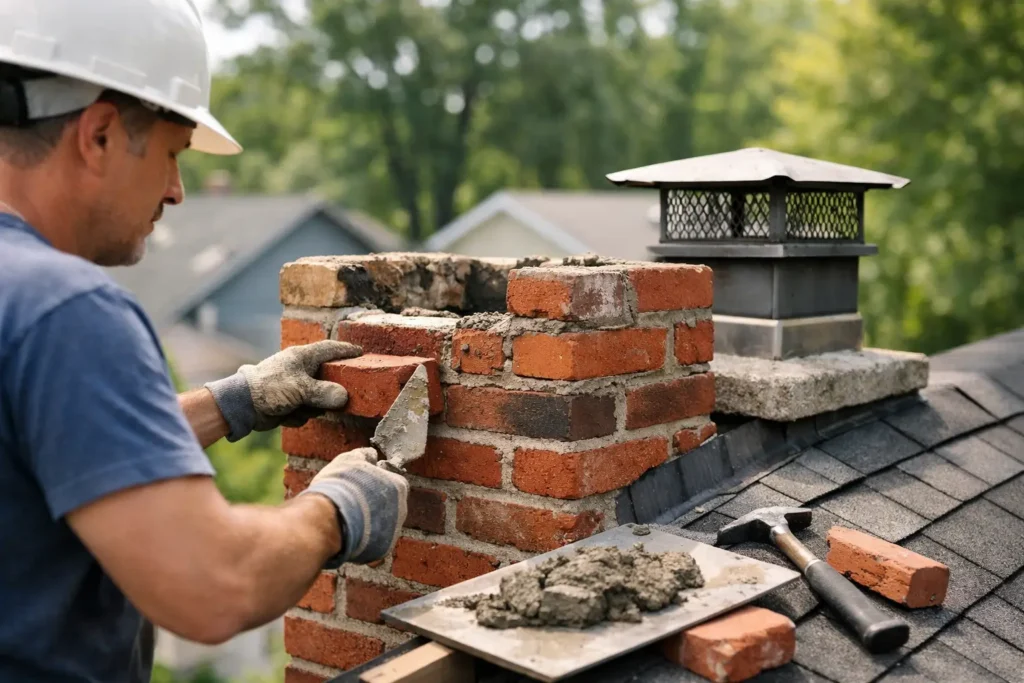
If the brick itself is still in good shape but the mortar joints are deteriorating, tuckpointing may be the right solution. This involves removing damaged mortar and replacing it with new mortar that matches the existing masonry as closely as possible. Done correctly, it restores strength and helps keep water out.
This is often the best option when damage is caught early. It is less invasive than rebuilding sections of the chimney, but it still requires skill. Poor mortar matching or shallow patching can lead to more problems later.
Replacing damaged bricks
If bricks are cracked, loose, or spalling, they usually need to be removed and replaced. This is more than a cosmetic fix. Damaged bricks allow moisture deeper into the chimney structure, which can weaken surrounding masonry over time.
A proper repair addresses both the visible brick damage and the reason it happened in the first place. Replacing a few failed bricks without correcting moisture entry is usually a short-term fix.
Partial rebuilds
Sometimes the top portion of the chimney has taken the worst of the weather and needs to be rebuilt from a certain point up. This is common when years of water exposure have damaged the upper courses, crown, or flue area.
A partial rebuild can be the most practical option when repairs in isolated spots are no longer enough. It costs more than minor masonry work, but it may save the lower chimney structure and prevent recurring leak issues.
Full chimney rebuilds
If the chimney is leaning, severely deteriorated, or structurally unsafe, a full rebuild may be necessary. That is not always what homeowners want to hear, but in some cases it is the safest and most cost-effective long-term answer.
A contractor should explain why a rebuild is needed, what parts are affected, and whether other roofline components such as flashing or surrounding shingles also need attention.
Why roof and chimney repairs often go together
A chimney does not exist in isolation. It passes through the roof system, which means masonry issues and roofing issues often overlap.
For example, what looks like a chimney leak may actually involve failed flashing. Water near the fireplace may be entering at the roof-to-chimney connection rather than through the brick alone. On the other hand, masonry damage can cause leaks that stain ceilings, damage decking, and affect nearby roofing materials.
That is why it helps to work with a contractor who understands both roofing and chimney systems. The goal is not just to patch a visible problem. It is to find the source and fix it correctly.
Should you repair the chimney yourself?
Small cosmetic issues can make DIY repairs look tempting, especially if a few mortar joints seem easy to patch. The problem is that chimney work is rarely as simple as it looks from the ground.
Matching mortar incorrectly can trap moisture and damage older brick. Surface patch products may cover cracks temporarily without solving water intrusion. Safety is also a major factor. Chimney repairs involve roof access, height, unstable masonry, and specialized tools.
For minor cleaning or observation, homeowners can keep an eye on visible changes. For actual repairs, it usually makes sense to bring in a professional. A failed repair often costs more to correct than doing it right the first time.
What to expect from a professional chimney inspection
A good inspection should look beyond the obvious damage. Contractors should examine the brick, mortar joints, crown, flashing, and surrounding roof area. They should also identify whether the problem is mostly cosmetic, moisture-related, or structural.
Homeowners should expect clear communication. That means photos if needed, a straightforward explanation of what is failing, and honest guidance on whether the chimney needs repair, rebuilding, waterproofing, or related roof work.
If you are dealing with active leaking, falling masonry, or visible movement, time matters. Waiting through another wet season or another Central New York winter can turn a manageable project into a larger one.
How to protect your chimney after repair
Once chimney brick repair is completed, the next step is keeping that repair in good shape. Water management is the priority.
That may include sealing or rebuilding the chimney crown, replacing flashing, installing or updating a chimney cap, and applying a breathable waterproofing treatment when appropriate. Routine inspections also help catch wear before it spreads. If your roof is being inspected after storm damage or aging concerns, the chimney should be part of that conversation too.
For homeowners, the practical takeaway is simple. Do not wait for the chimney to become an emergency. Loose mortar, cracked brick, and water stains are early warnings, not cosmetic annoyances.
If your chimney is showing signs of wear, a prompt inspection gives you options. And when the repair is done with the right materials, the right scope, and attention to the full roofline, you are not just fixing brick – you are protecting your home where weather hits hardest.