
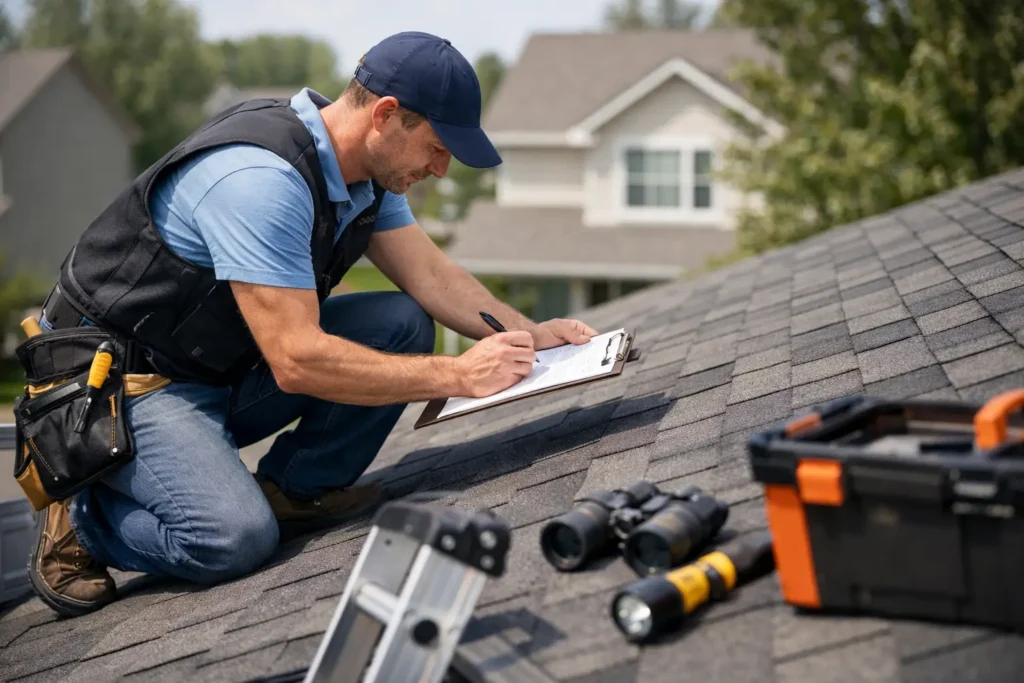
A small roof problem rarely stays small for long. One lifted shingle, a little flashing damage, or a minor leak around a vent can turn into stained ceilings, wet insulation, mold, or structural repairs if it gets missed. That is why a solid roof inspection checklist matters for homeowners, especially in Central New York where snow, wind, ice, and heavy rain put roofing systems to the test.
Most homeowners are not looking to become roofing experts. You just want to know what to watch for, what signals trouble, and when it is time to bring in a professional. A good inspection does exactly that. It helps you catch problems early, protect your investment, and avoid the bigger cost that comes from waiting too long.
What a roof inspection checklist should cover
A roof is not just shingles. It is a system made up of decking, underlayment, flashing, vents, pipes, gutters, soffits, fascia, and the attic space below. If one part fails, other parts are often affected too. That is why a reliable roof inspection checklist looks at both the surface of the roof and the signs showing up inside the home.
For homeowners, the goal is not to walk every inch of the roof or make a diagnosis from the ground. The goal is to notice conditions that deserve attention. In many cases, what looks minor from the driveway can signal a larger issue under the shingles or around roof penetrations.
Start with what you can safely see from the ground
The safest first step is a visual check from outside your home. Walk around the property and look at all roof slopes if possible. You are looking for changes, not perfection.
Missing shingles are an obvious red flag, but they are not the only one. Also watch for curled shingles, cracked tabs, dark streaks, exposed nail heads, uneven roof lines, or areas that look sunken. If one section appears patchy or different in color, it may have older repairs, storm damage, or premature wear.
Pay attention to the roof valleys, where two slopes meet. Valleys move a lot of water, so they are one of the most common places for leaks to start. Chimneys, skylights, plumbing vents, and wall intersections also deserve a close look because flashing failures often show up there first.
If your gutters are full of granules, that can be another warning sign. Asphalt shingles naturally shed some granules over time, but heavy buildup in gutters or at downspout exits may mean the roof is aging or wearing out faster than it should.
Check the gutters, fascia, and drainage
A roof inspection checklist should always include drainage. Water that cannot move off the roof properly tends to find another path, and that path is often into your home.
Look for gutters that are sagging, pulling away, clogged, or overflowing. Check whether downspouts are discharging water away from the foundation. Standing water near the home can create issues beyond the roof, but it often starts with blocked or damaged drainage components.
Fascia boards along the roof edge should also be inspected for peeling paint, staining, soft spots, or visible rot. Those signs often point to long-term moisture exposure. In winter climates, ice dams can also damage roof edges, gutters, and soffit areas, so these sections deserve extra attention after freeze-thaw cycles.
Inspect the attic before the leak reaches your ceiling
Many roof problems show up in the attic before they become obvious in the living space. If you can safely access your attic, bring a flashlight and look for water stains, damp insulation, moldy odors, darkened wood, or rusty nail tips. These are common signs that moisture is getting in or condensation is building up.
Proper ventilation matters here. A roof may look acceptable from the outside and still have trouble because warm, moist air is getting trapped in the attic. Poor ventilation can shorten shingle life, contribute to ice dams, and create moisture damage that homeowners mistake for a leak. If insulation is wet or compressed, that is another clue that the roof system needs attention.
You do not need to identify the exact source yourself. The important part is connecting interior signs to the possibility of a roofing issue instead of waiting for a drip to appear in a bedroom or hallway.
Look inside the home for subtle warning signs
Your ceiling may tell you more than your roofline does. Brown stains, bubbling paint, peeling drywall tape, or musty smells near exterior walls can all point to roof-related moisture intrusion. Sometimes the water enters high and travels before it becomes visible, so the stain you see is not always directly below the problem.
Window trim, upper corners of rooms, and areas around fireplaces can also offer clues. If you notice recurring moisture after storms or snow melt, it is worth taking seriously. Intermittent leaks are still leaks, and they often become harder and more expensive to fix the longer they continue.
A seasonal roof inspection checklist makes more sense than waiting
Homeowners often call after they see interior damage, but roof trouble usually starts earlier. A practical schedule is to inspect your roof in the spring and fall, and again after major weather events.
Spring inspections help identify damage from snow load, ice, and winter wind. Fall inspections help make sure the roof is ready for colder weather, especially before leaves clog gutters and freeze-thaw cycles begin again. After hail, strong wind, or a heavy storm, it is smart to have the roof checked even if you do not see obvious damage from the ground.
That matters in places like Syracuse and the surrounding area, where winter weather is hard on shingles, flashing, and roof edges. Weather exposure adds up. A roof that looked fine last season can develop problems quickly after one rough storm.
What homeowners should not do during an inspection
A roof inspection checklist is helpful, but safety comes first. Most homeowners should not climb onto a roof to inspect it. Steep slopes, wet surfaces, loose shingles, and hidden weak spots create a real fall risk. Even a one-story roof can be dangerous.
There is also the issue of misreading what you see. Walking on aging shingles can cause damage, and amateur repairs often make professional repair more complicated later. If the roof is high, steep, storm-damaged, or older, ground-level observations and an attic check are the smart limit for a homeowner.
When to call for a professional roof inspection
Some situations should move quickly from checklist to phone call. If you see missing shingles, active leaks, sagging areas, damaged flashing, repeated ice dam issues, or signs of storm impact, it is time for a professional inspection. The same goes for roofs that are simply getting older. Even if there is no emergency, age changes how roofing materials perform.
A professional inspection gives you more than a list of visible issues. It helps determine whether the problem is isolated or part of a broader failure. In some cases, a repair is enough. In others, patching one area only delays a larger replacement. The right answer depends on the age of the roof, the extent of damage, ventilation conditions, and whether moisture has already reached underlying materials.
That is where straightforward guidance matters. A contractor should be able to explain what they found, show you the problem areas, and tell you whether you need immediate repair, maintenance, or a plan for replacement down the line. If storm damage may be involved, documentation also matters for insurance purposes.
A practical roof inspection checklist to keep in mind
If you want a simple way to remember the basics, focus on five areas: shingles, flashing, drainage, attic conditions, and interior warning signs. That covers most of what homeowners can safely monitor without guessing at technical details.
You are looking for anything missing, lifted, rusted, clogged, stained, sagging, or wet. None of those signs automatically means full roof replacement, but all of them deserve attention. The earlier they are addressed, the more options you usually have.
At Alpha Omega Roofing LLC, we see this often – homeowners wait because the issue seems minor, then call when water has already made its way indoors. A timely inspection is almost always easier and less expensive than repairing secondary damage after the fact.
Your roof does not need attention every week, but it does need attention before a small problem turns into a major one. Keep this roof inspection checklist in mind, trust what your home is telling you, and if something looks off, have it checked before the next storm gives it a chance to get worse.