
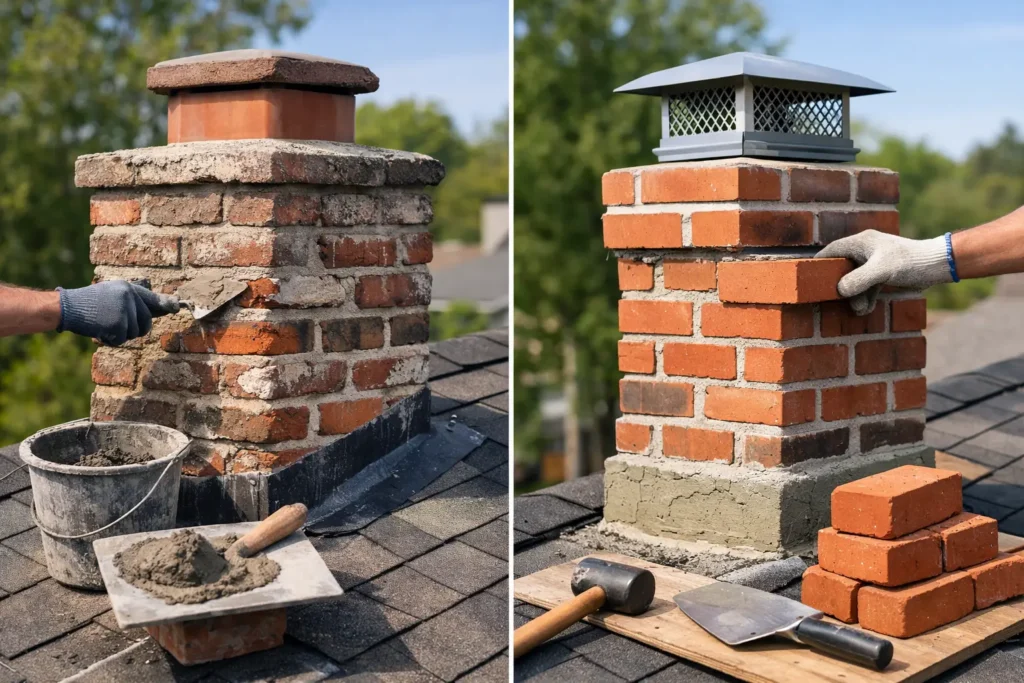
A chimney can look fine from the driveway while water is already working its way through failed mortar joints. That is why chimney repointing vs rebuilding costs is not simply a price comparison. The right choice depends on how much of the masonry is still structurally sound, where the damage is located, and whether moisture has reached the chimney’s interior.
For Central New York homeowners, the stakes are higher after repeated freeze-thaw cycles. Water enters small cracks, freezes, expands, and gradually loosens mortar and brick. Addressing the problem early may mean targeted repointing. Waiting until courses of brick shift, the crown fails, or the stack becomes unstable can turn the project into a partial or full rebuild.
What Does Chimney Repointing Cost?
Repointing, also called tuckpointing in some cases, means removing deteriorated mortar from between otherwise sound bricks and installing new mortar. The contractor does not replace the entire chimney. Instead, the work restores the joints that keep the masonry weather-resistant and stable.
For a small, accessible repair, homeowners may spend roughly $800 to $2,500. More extensive repointing on a tall chimney, roof-level chimney, or structure with widespread joint damage often falls between $2,500 and $6,000 or more. These are broad planning ranges, not a substitute for an on-site estimate.
The price rises when access is difficult. A chimney that requires roof protection, staging, scaffolding, or careful work around steep slopes takes more labor than a short chimney on a one-story home. Matching older mortar color and texture, repairing flashing, replacing damaged bricks, and rebuilding a cracked crown can also add to the project total.
Repointing is usually the better value when the bricks are solid, the chimney is plumb, and deterioration is mostly limited to mortar joints. Done correctly, it helps stop water intrusion before it causes larger masonry and roofing problems.
What Does Chimney Rebuilding Cost?
A rebuild involves taking down and reconstructing a damaged portion of the chimney, or in severe cases, rebuilding the chimney from the roofline up or from the ground up. This is needed when the brick itself is failing, the structure is leaning, mortar loss is deep and widespread, or previous repairs can no longer support the stack.
A partial rebuild above the roofline commonly costs about $4,000 to $10,000, depending on size, material selection, access, and how much demolition is required. Rebuilding a large chimney or reconstructing it from the ground up can range from $10,000 to $25,000 or higher. Historic homes, unusually tall chimneys, complex rooflines, and major structural corrections can move costs beyond those ranges.
That price reflects much more than new brick. A proper rebuild may include controlled demolition, disposal, replacement masonry, new mortar, reinforcement where appropriate, a new crown, flashing work, waterproofing, and roof repairs needed to tie everything back together. If the chimney serves a fireplace, furnace, or other vented appliance, liner and code-related considerations may also affect the scope.
Rebuilding costs more because it solves a deeper problem. If a chimney is structurally compromised, repointing over the surface may make it look better for a short time without correcting what is happening underneath.
Chimney Repointing vs Rebuilding Costs: What Changes the Price?
Two homes can have chimneys that look similar from the street and receive very different estimates. The condition of the masonry is the first factor, but it is not the only one.
Height and access matter immediately. Working safely around a second-story roof, a steep pitch, or a chimney located near valleys and dormers requires more setup and more time. Weather also matters in Syracuse and across Central New York. Masonry work needs appropriate temperatures and curing conditions, so scheduling can affect how and when work is completed.
The extent of water damage is another major variable. Failed flashing can allow water into the roof system around the chimney. A deteriorated crown can send water directly into the masonry. Spalling brick, where the face of the brick flakes or breaks away, may require replacement rather than repointing. When moisture damage extends beyond the visible joints, a smaller repair can quickly become a more involved project.
Material matching also affects cost. Many homeowners want a repaired chimney to blend with the existing home. Finding compatible brick, choosing the right mortar, and preserving the appearance of older masonry takes attention to detail. The cheapest material choice is not always the best long-term choice, especially when it creates an obvious patch or performs differently than the original masonry.
When Repointing Is Usually Enough
Repointing may be a practical solution when the chimney remains straight, the brick faces are largely intact, and mortar is crumbling mainly near the surface. You may notice small gaps between bricks, sandy mortar collecting on the roof, or minor moisture staining around the chimney.
The key is that the damage has not affected the chimney’s overall stability. A qualified inspection should include the visible stack, crown, flashing, roof intersection, and any accessible interior signs of water entry. A few bad joints do not automatically mean the whole chimney needs to come down.
Homeowners should be cautious about quick cosmetic fixes. Smearing new mortar over deteriorated joints without removing the failed material is not true repointing. It can trap moisture, crack prematurely, and leave the underlying damage unaddressed.
When Rebuilding Is the Safer Investment
Rebuilding becomes the responsible option when structural warning signs are present. A leaning chimney, separated brick courses, large vertical cracks, bulging walls, loose bricks, or sections that appear to be pulling away from the home need prompt professional attention.
A chimney may also need rebuilding if the upper section has absorbed years of water through a broken crown or missing cap. The damage is often most severe above the roofline because that portion receives the full force of rain, snow, wind, and freeze-thaw exposure. In some cases, rebuilding only that upper section is enough, preserving the sound masonry below.
Do not assume a rebuild recommendation means a contractor is overselling the job. Ask what specific conditions make rebuilding necessary, how much of the chimney is affected, and whether a partial rebuild is an option. A trustworthy contractor should be able to explain the condition in plain language and show you what they found.
Do Not Separate the Chimney From the Roof
Chimney repairs and roof performance are closely connected. Flashing is the metal system that directs water away from the chimney-roof joint. If it fails, water can damage decking, insulation, ceilings, and the masonry itself. Likewise, a chimney rebuild can require temporary removal and proper replacement of surrounding roofing materials.
This is why it helps to work with a contractor who understands both exterior systems. The repair should protect the chimney without creating a new leak at the roofline. At Alpha Omega Roofing LLC, inspections focus on the full area around the chimney so homeowners can understand whether the concern is mortar, brick, flashing, roofing, or a combination of issues.
How to Make a Smart Repair Decision
Start with an inspection before requesting a specific repair. It is reasonable to ask for an estimate that separates urgent safety work from recommended preventive work. That gives you a clear view of what needs immediate attention and what can be planned for later.
Ask whether the proposal includes brick replacement, crown repair, flashing work, cleanup, and protection for the roof and landscaping. If the chimney is leaking, ask where the water is entering rather than accepting a surface-level patch. For major rebuilds, confirm how the rebuilt section will be tied into the existing structure and how the contractor will manage weather exposure while work is underway.
Insurance may help when chimney damage is tied to a covered sudden event, such as storm damage or impact. Normal aging, long-term moisture exposure, and deferred maintenance are often treated differently. Documentation from a professional inspection can help you understand the cause and decide whether it makes sense to contact your insurer.
A chimney does not have to be visibly collapsing to deserve attention. If mortar is failing, bricks are flaking, or you see staining near the fireplace or chimney on an upper floor, schedule an inspection before another Central New York winter pushes a manageable repair into a rebuilding project.