
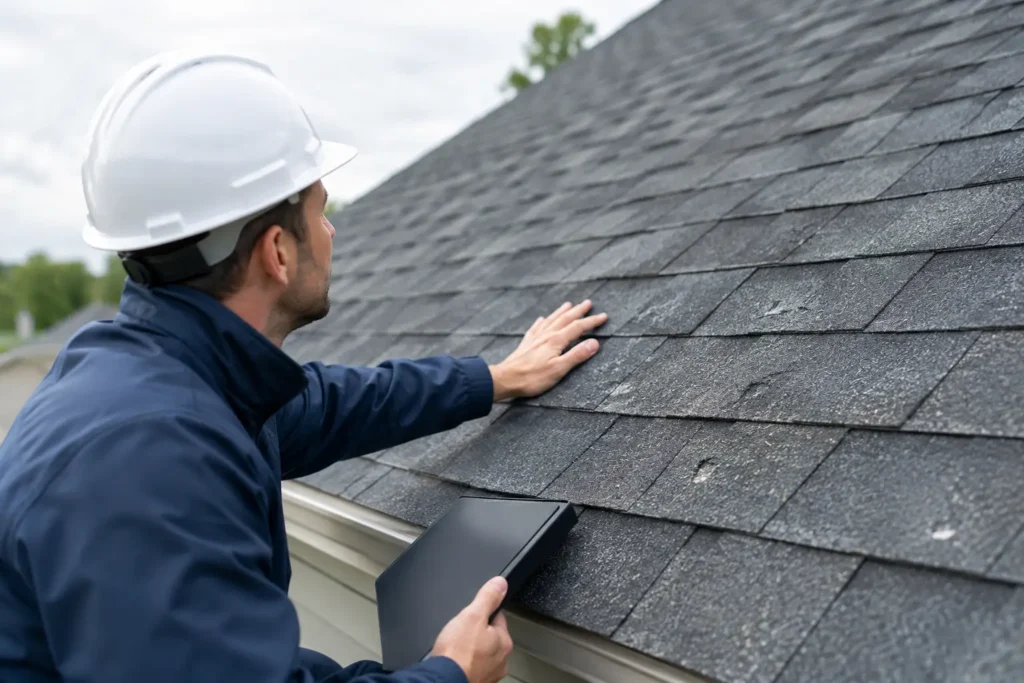
A hailstorm can leave a roof looking perfectly normal from the driveway while compromising the shingles that keep water out. Knowing how to assess hail damage helps you act before the next hard rain turns a hidden impact into a leak, stained ceiling, or insurance headache.
For Central New York homeowners, the first rule is simple: do not climb onto a potentially damaged roof. Wet shingles, loose granules, and steep pitches create real fall risks. You can gather useful evidence safely from the ground, then bring in a qualified roofing professional for a close inspection when the signs point to storm damage.
Start With the Storm Itself
Begin by thinking about what happened during the storm. Hail large enough to dent vehicles, damage screens, or break flowerpots deserves a closer look at your roof and exterior. However, hail size alone does not tell the whole story. Wind direction, roof age, shingle condition, slope, and the storm’s duration all affect the level of damage.
A newer, flexible architectural shingle may handle a brief hailstorm better than an older roof that has become brittle after years of sun, snow, and freeze-thaw cycles. The same storm can leave one side of a home largely untouched and damage the slope that faced the wind.
If possible, note the storm date, take photos of any hail accumulation, and save local weather alerts. This information can be helpful if you later need to discuss the damage with an insurer or contractor.
How to Assess Hail Damage From the Ground
Walk slowly around the property in daylight. Use binoculars or your phone’s zoom feature to look at the roof without putting yourself in danger. Start with the areas that are easier to see, then inspect the rest of the exterior for impact marks that suggest your roof may also have been hit.
Look for these common signs:
- Dark, round spots or irregular patches on asphalt shingles
- Areas where shingle granules appear missing or washed into gutters
- Dented metal flashing, vents, chimney caps, gutters, or downspouts
- Cracked, split, or bruised siding and window trim
- Torn window screens, damaged air-conditioning fins, or dents in soft metal fixtures
- New shingle tabs on the lawn or in the gutter line
Not every dark spot is hail damage. Natural shingle wear, algae staining, blistering, and manufacturing variations can look similar from the ground. That is why a visual check is a good first step, not a final diagnosis.
Check Gutters and Downspouts Carefully
Gutters often show storm impacts clearly because aluminum dents more easily than shingles. Look for fresh dings along the gutter face, downspouts, and metal drip edge at the roofline. Also check for an unusual buildup of coarse, sand-like shingle granules at the bottom of downspouts.
Some granule loss is normal, especially on a newer roof. A concentrated amount after a hailstorm, especially when paired with visible roof marks, may indicate a problem. Do not assume gutter dents automatically mean the roof needs replacement, though. Gutters and shingles respond differently to impact, so the roof still needs its own inspection.
What Hail Damage Looks Like on Asphalt Shingles
Most homes in Syracuse and the surrounding area have asphalt shingles, and hail damage on these roofs is not always obvious. A true hail strike often creates a small, random, circular area where granules have been knocked away. The exposed asphalt may look darker, slightly shiny, or soft compared with the surrounding shingle.
Roofing professionals also check for a bruised area beneath the shingle surface. A damaged shingle can feel less firm at the impact point because the mat below has been weakened. This is not something homeowners should test by walking around or pressing hard on shingles. Foot traffic can scuff shingles and make the situation worse, particularly on older roofs or in cold weather.
Pay attention to the pattern. Hail impacts are generally scattered and random. Damage that follows one clean line, appears mostly along shingle edges, or is concentrated where branches rubbed the roof may have another cause. Wind damage more often shows lifted, creased, or missing shingles, while hail damage tends to leave impact marks without removing the shingle.
Other Roof Types Need a Different Look
Metal roofing may show dents, paint damage, or marks around seams and fasteners. Slate, tile, and some synthetic roofing materials can crack or chip from a hard impact. On low-slope roofs, hail may damage membrane surfaces, flashings, drains, and rooftop equipment.
The trade-off is that visible dents do not always mean a roof’s water-shedding ability has failed, while subtle damage can sometimes shorten a roof’s life. Material type and the extent of the impacts matter. A professional inspection should identify both cosmetic damage and functional damage.
Inspect the Attic and Interior Too
Hail damage does not always cause an immediate leak. Still, it is worth checking your attic and upper floors after a severe storm, especially if your roof is older or has had repair issues before.
From inside, look for fresh water stains on ceilings, damp insulation, wet roof decking, peeling paint near exterior walls, or a musty odor in the attic. Check during or shortly after the next rainfall if it is safe to do so. Water can travel along framing before it becomes visible, so the stain may not appear directly under the damaged area.
A dry attic does not prove the roof is undamaged. It simply means the roof has not yet allowed water through. Hail can reduce shingle protection long before a leak becomes visible.
Document What You Find Without Creating More Damage
Clear documentation gives you a better starting point with a contractor and can help if you decide to file an insurance claim. Take wide photos that establish the location, then closer photos of dents, broken screens, damaged siding, and granules near downspouts. Include photos of any interior staining as well.
Keep a simple record of the storm date, what you observed, and when you noticed it. Avoid making permanent repairs or throwing away damaged materials before they have been documented, unless an urgent temporary repair is needed to stop active water intrusion.
If water is entering the home, protect the interior first. Move belongings, place containers under drips, and contact a roofing contractor for emergency help. Temporary measures can limit further damage, but they should not replace a full roof assessment.
When to Call for a Professional Roof Inspection
Schedule an inspection promptly if you see dents on metal components, missing granules, cracked shingles, interior water signs, or widespread exterior impacts after a hailstorm. It is also smart to call if neighbors on your street are repairing roofs or filing storm claims. Similar homes in the same storm path may have experienced similar exposure.
A qualified local roofer can inspect every roof slope, shingles, flashing, vents, valleys, gutters, and attic conditions. More importantly, they can explain the findings in plain language: whether the roof needs a small repair, storm-related restoration, monitoring, or no work at all.
Be cautious with anyone who arrives uninvited and insists you must sign immediately. After a major storm, reputable contractors should be able to show proof of insurance, explain their inspection findings, provide a written estimate, and give you room to make an informed decision. No honest assessment should rely on pressure.
Understand the Insurance Decision
If a professional finds likely hail damage, contact your insurance carrier to understand your policy, deductible, deadlines, and claim process. Coverage depends on your individual policy and the insurer’s assessment. A contractor can document visible conditions and discuss repair options, but your insurance company determines coverage.
Do not delay too long simply because the roof is not leaking. Policies may include reporting deadlines, and storm-related damage can become harder to separate from ordinary aging over time. Prompt documentation and a thorough inspection give you the clearest picture of your options.
Hail does not always announce its damage with a hole in the roof. If your home was in the path of a strong storm, a careful ground-level check followed by a professional inspection can protect your home before a small impact becomes an expensive interior repair. Alpha Omega Roofing LLC can provide straightforward guidance and a thorough assessment for homeowners across Central New York.