
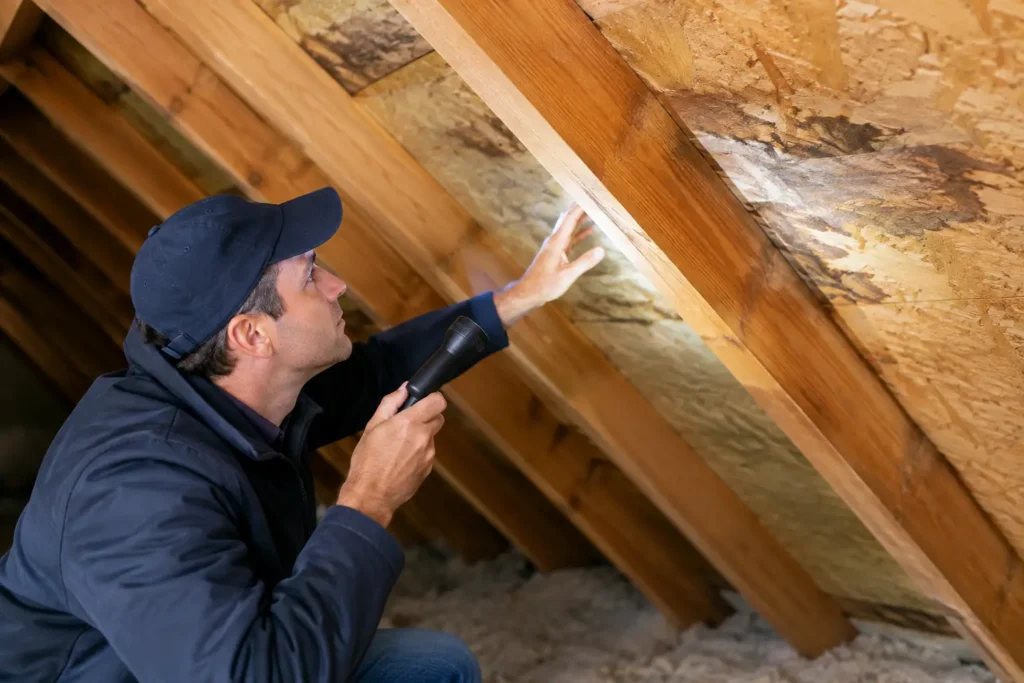
A small stain on an upstairs ceiling can be the first visible sign of a problem that started weeks earlier in the attic. Knowing how to identify attic leaks gives you a chance to address water intrusion before insulation becomes saturated, framing begins to deteriorate, or mold has time to develop.
In Central New York, that early warning matters. Heavy snow, ice dams, wind-driven rain, and repeated freeze-thaw cycles can expose weak points around shingles, flashing, vents, chimneys, and roof penetrations. The leak you see indoors is not always directly below the roof damage, so a careful attic check is often the best place to start.
How to Identify Attic Leaks Safely
Start with the right conditions. A rainy day is useful because active leaks are easier to trace, but do not enter an attic during lightning, severe winds, or unsafe weather. Bring a bright flashlight, wear stable shoes, and step only on framing members or designated flooring. Never put your weight on exposed drywall between joists.
Look first at the underside of the roof deck, especially near ridges, valleys, roof vents, plumbing stacks, chimneys, and skylights. Water follows gravity, but it can also run along rafters, nails, wiring, or the roof decking before it drips. The point where moisture appears may be several feet away from the actual opening in the roof.
Active dripping is the clearest evidence, but many attic leaks leave quieter signs. Pay attention to dark rings, streaks on wood, damp insulation, rusted roofing nails, or white mineral deposits. Fresh water stains often look darker than the surrounding wood. Older stains may be dry, but they still deserve a closer look to determine whether the issue is historic or ongoing.
A musty odor is another warning sign. Attics should not smell damp or earthy. That odor can indicate persistent moisture in insulation, framing, or roof sheathing, even when there is no visible drip.
Signs That Point to a Roof Leak
Not every attic moisture problem begins with the roof, but several signs strongly suggest water is entering from above. Inspect the attic after a steady rain or after snow begins to melt. If you find wet wood, droplets on the roof deck, or insulation that feels heavy and compressed, take photos and note the location.
Look for these common indicators:
- Water stains or darkened areas on rafters, trusses, or roof decking
- Damp, clumped, or discolored insulation
- Rust on nails, metal connectors, electrical boxes, or vent components
- Mold-like spotting on wood or a persistent musty smell
- Daylight visible through the roof deck or around a penetration
- Ceiling stains, peeling paint, bubbling drywall, or sagging areas below the attic
Ceiling damage does not always mean the leak is directly overhead. Water may travel across the top side of a ceiling before soaking through at its lowest point. That is why an attic inspection should include the entire area above the affected room, plus the roof features nearby.
Check Around Roof Penetrations
The most vulnerable parts of a roof are often where something passes through it. Plumbing vent boots can crack with age. Flashing around chimneys can loosen or corrode. Exhaust vents may be improperly sealed, and skylight flashing can fail after years of weather exposure.
If the attic leak appears near one of these features, do not assume a bead of caulk is the answer. Caulk may provide a short-term patch in limited situations, but it does not correct worn flashing, damaged shingles, failed vent boots, or improper installation. A lasting repair requires identifying the failed component and addressing the water path.
Inspect Valleys, Eaves, and Roof Edges
Roof valleys handle a large volume of water, particularly during hard rain or spring snowmelt. In the attic, staining or damp wood beneath a valley may signal damaged shingles, failed underlayment, or debris that has forced water where it does not belong.
Leaks near the eaves can be more complicated. During Syracuse winters, ice dams can hold melting snow at the roof edge and push water beneath shingles. You may see staining near exterior walls, wet insulation at the perimeter of the attic, or water marks on soffits. The immediate issue may be ice-related, but the long-term solution can involve roof repairs, proper ventilation, insulation improvements, or a combination of those measures.
Make Sure It Is Not Condensation
Condensation can look a lot like a roof leak. Warm indoor air that escapes into a cold attic can create moisture on the underside of the roof deck, nails, and metal ductwork. This is especially common during long cold spells.
The difference is usually in the pattern. A roof leak tends to be localized around a specific roof feature, valley, or damaged area. Condensation often appears more broadly across the attic, with widespread frosted nails, damp sheathing, or moisture around bathroom exhaust ducts.
Check that bathroom and kitchen fans vent outdoors rather than into the attic. A disconnected or poorly sealed exhaust duct can release warm, humid air directly into the space. Also look for gaps around attic hatches, recessed lights, plumbing openings, and other ceiling penetrations that allow indoor air to escape.
Condensation still needs attention. Left alone, it can wet insulation, encourage mold growth, and shorten the life of roof decking. The repair, however, is different from fixing a roof leak. A professional inspection can determine whether you are dealing with a roofing failure, ventilation issue, air leakage, or more than one problem at once.
What to Do When You Find Water in the Attic
First, protect the area below the leak. Move stored belongings away from wet insulation and place a container under active drips if it is safe to do so. If a ceiling is bulging with water, stay clear of it. A water-filled ceiling can collapse without much warning.
Take clear photos of the affected area, including wet framing, stains, damaged insulation, and any visible exterior-related clues. This documentation can help track whether the problem worsens and may be useful if storm damage leads to an insurance claim.
Avoid climbing onto a wet, snowy, icy, or steep roof to investigate. Homeowners can often identify signs of attic leaks from inside, but locating and repairing the exterior entry point requires safe access and roofing experience. Walking on compromised shingles can also cause further damage.
If the leak began after a storm, visible missing shingles, lifted flashing, or tree debris may be involved. In that situation, prompt professional attention can limit interior damage and prevent a minor roof repair from becoming a larger restoration project.
When to Call for a Professional Roof Inspection
Call for an inspection promptly if you see active dripping, wet insulation, soft or sagging ceilings, visible daylight through the roof deck, or recurring water stains. You should also schedule an inspection when a stain returns after a previous repair. Repeated staining usually means the original water path was not fully corrected.
A qualified roofing professional can inspect the attic and roof together, which is essential for finding the real source. The inspection should consider shingles, flashing, penetrations, valleys, ventilation, chimney areas, and storm-related damage rather than focusing only on the visible stain.
For homeowners in Syracuse and surrounding Central New York communities, fast action is particularly valuable after high winds, heavy rain, or snowmelt. Alpha Omega Roofing LLC can assess the condition of the roof, explain what is causing the moisture, and provide a clear recommendation for repair or replacement when needed.
A dry attic is easy to take for granted, but it protects far more than stored boxes and insulation. If you notice a stain, odor, or damp spot, treat it as an early signal and have it checked before the next storm turns a small entry point into a costly repair.