
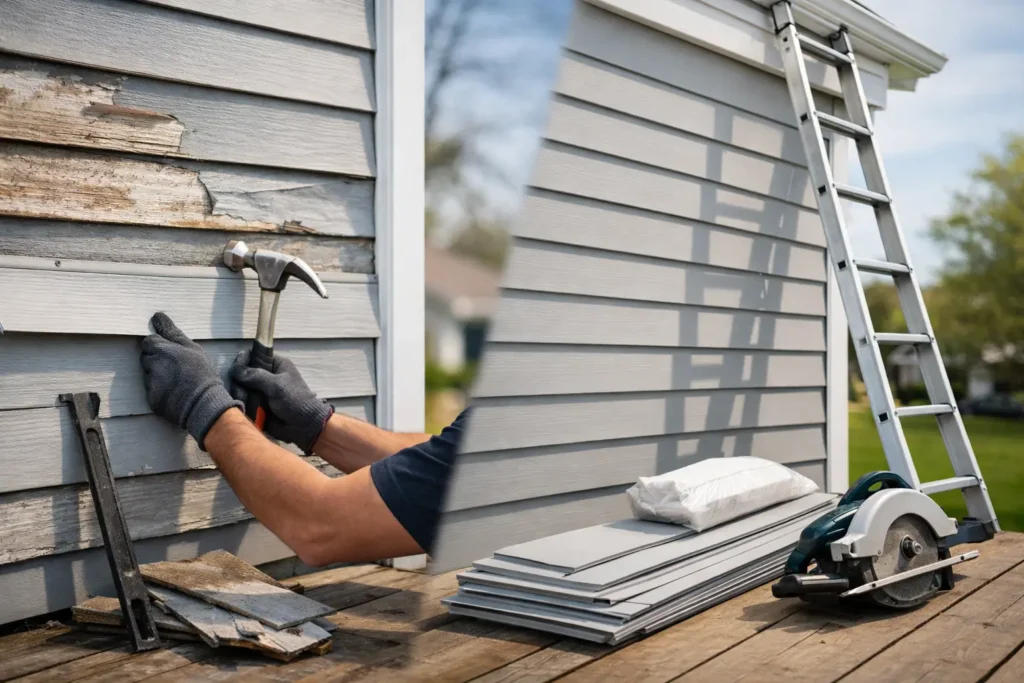
A few loose panels after a windstorm can look like a small problem. Then the next rain hits, moisture gets behind the siding, and what could have been a straightforward fix starts turning into a bigger exterior issue. That is why siding repair vs replacement is not just a budget question. It is a home protection decision.
For most homeowners, the right answer depends on three things: how widespread the damage is, how old the siding is, and whether the problem is cosmetic or structural. A cracked panel in one area is very different from repeated moisture problems, warping, or sections that have started failing across multiple sides of the house. The goal is not to sell more work than you need. The goal is to stop damage early and make sure the outside of your home can still do its job.
How to think about siding repair vs replacement
Siding repair makes sense when the damage is isolated and the rest of the system is still in good shape. If a few panels are loose, cracked, dented, or partially pulled away after wind or impact, a targeted repair can often restore protection without replacing large sections. This is usually the more cost-effective option when the underlayment is dry, the framing is sound, and the siding has years of service life left.
Replacement becomes the better investment when the siding is failing in multiple places or when hidden issues are likely. If moisture has been getting behind the panels, if boards are rotting, if large areas are warped, or if the siding has reached the end of its expected life, patching one section may only delay the next repair. In those cases, replacement can save money over time because it addresses the whole problem instead of repeating short-term fixes.
There is also a practical middle ground. Sometimes a home does not need full replacement, but it does need more than a minor patch. Partial replacement can be the right call when one elevation gets hit hardest by weather or when one section has damage that cannot be repaired cleanly. That option depends heavily on whether matching materials and colors are still available.
When siding repair is usually the smarter move
Repair is often the right choice when the issue is recent, limited, and clearly visible. Storm-related damage is a good example. If wind loosened a section of vinyl siding or hail damaged a few areas, a contractor may be able to replace those affected panels and secure the surrounding pieces without disturbing the rest of the home.
Repair also works well when the siding itself is still performing as it should. That means no widespread brittleness, no repeated cracks in different places, no signs that water has been entering behind the exterior, and no major fading that makes new pieces stand out badly. In a case like that, a focused repair gives you more life from the existing siding and avoids unnecessary expense.
Another factor is timing. If you know you plan to do a broader exterior update in a few years, a repair may be the most reasonable move now. It can protect the home, keep the issue from spreading, and buy you time to plan a larger project on your own schedule.
Signs replacement is the better long-term answer
The biggest reason to replace siding is that the problem is no longer isolated. Once damage shows up in multiple areas, especially on older siding, repairs can become a cycle. You fix one section, then another fails next season. That is usually a sign the material has aged out or that weather exposure has taken a toll beyond what spot repairs can solve.
Moisture is another major red flag. If siding is allowing water behind the surface, the visible damage is only part of the story. Soft sheathing, mold concerns, staining, interior drafts, and hidden wood rot all point to a deeper issue. In Central New York, where homes deal with snow, ice, wind, and freeze-thaw cycles, small openings in the exterior can become bigger problems faster than many homeowners expect.
Replacement also makes sense when appearance and performance are both declining. Severely faded color, warped lines, multiple patched areas, and uneven sections can affect curb appeal, but they can also signal that the siding is no longer sealing and protecting the way it should. At that point, replacement is not just about looks. It is about restoring the home envelope.
The cost question homeowners really care about
Most people start with price, and that makes sense. Repair usually costs less upfront than replacement. If the damage is minor and repairable, it is often the best short-term value.
But the lowest immediate price is not always the lowest total cost. If you pay for repeated repairs over a short period, or if a repair leaves moisture issues unresolved, the long-term cost can rise quickly. Water damage to sheathing, trim, insulation, or framing is almost always more expensive than dealing with the siding problem early.
This is where a thorough inspection matters. A good contractor should be able to tell you whether the damage is truly limited or whether the siding is showing broader signs of failure. That kind of honest assessment helps you avoid paying twice – once for a patch and again for a larger fix that should have been addressed from the start.
Material type matters more than many homeowners realize
Not all siding ages or fails the same way. Vinyl can crack, loosen, or fade. Wood may rot, split, or hold moisture. Fiber cement tends to be durable, but damaged sections still need careful evaluation. The repair-versus-replace decision depends partly on what material is on your home and how that specific product has held up over time.
Matching also matters. Even when repair is technically possible, older siding may have faded enough that new pieces are obvious. Sometimes that is acceptable, especially on a less visible side of the home. Sometimes it leaves the house looking patched together. If appearance is a priority, or if matching profiles are no longer available, replacement may offer a cleaner result.
What weather does to siding in Central New York
Harsh weather changes the equation. In the Syracuse area, siding takes a beating from wind, heavy rain, snow load, ice, and sharp temperature swings. Materials expand and contract. Wind can get under loose edges. Moisture can sit longer in shaded areas and find its way into vulnerable joints.
That means even modest-looking damage should be checked sooner rather than later. A panel that came loose in one storm may have allowed water in for weeks before anyone noticed. What looks minor from the yard can be more serious once the affected area is opened up and inspected.
This is one reason local experience matters. A contractor familiar with regional weather patterns will look beyond the visible crack or missing piece and evaluate how the system is performing as a whole.
Questions to ask before you decide
If you are weighing siding repair vs replacement, ask a few direct questions. Is the damage isolated, or are there signs of failure in other areas? Is there evidence of moisture behind the siding? Can the material be matched closely enough for a clean repair? How much service life is realistically left in the existing siding?
You should also ask whether repair solves the root issue or just covers the symptom. For example, if wind damage happened because panels were already brittle or improperly secured, replacing only the visibly damaged section may not prevent another problem later.
A trustworthy contractor should walk you through those answers clearly, without pushing you toward the bigger job by default. Sometimes the honest recommendation is a simple repair. Sometimes replacement is the responsible call because it protects the home better and avoids repeat costs.
The right choice is the one that protects the house
There is no one-size-fits-all answer to siding repair vs replacement. The best decision comes from looking at condition, age, weather exposure, and whether the problem is isolated or spreading. If the siding still has solid life left, a repair can be a smart and practical solution. If damage is widespread or moisture is involved, replacement is often the better investment.
What matters most is acting before a small exterior issue turns into interior damage, structural repairs, or ongoing frustration. A clear inspection, straightforward pricing, and honest guidance can make the decision a lot easier. If your siding has started to crack, pull away, warp, or leak after a storm, getting it looked at now is the best way to protect your home and your peace of mind.