
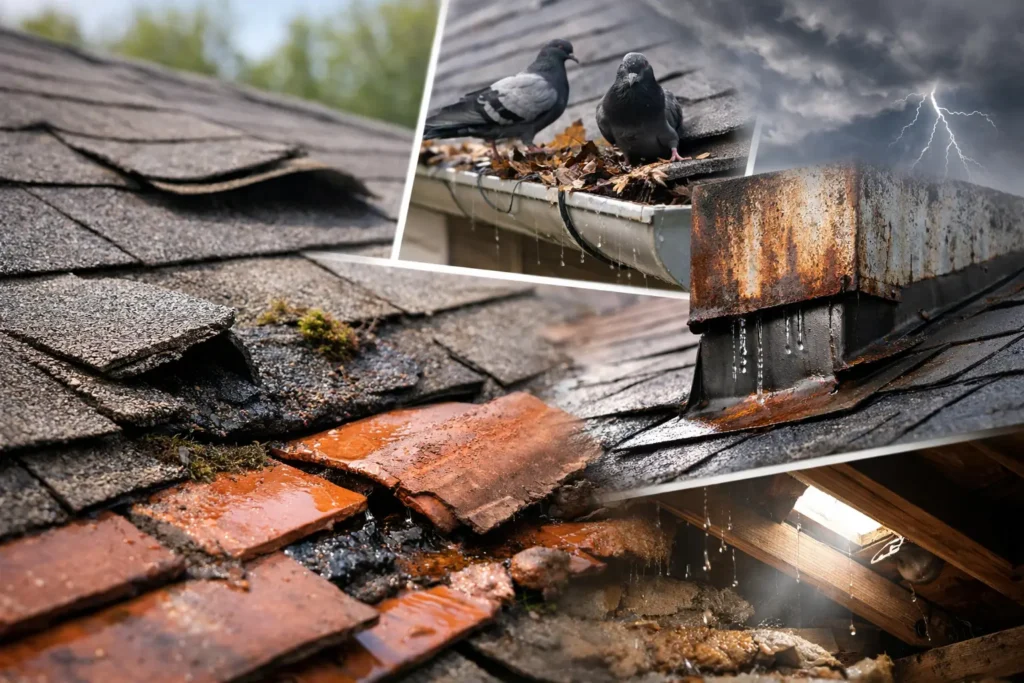
A roof problem rarely starts with a bucket catching water in the hallway. More often, the top roof warning signs show up earlier and in quieter ways – a few shingles in the yard, dark streaks near flashing, a ceiling stain that seems too small to matter. In Central New York, where snow, wind, ice, and heavy rain all put stress on roofing systems, catching those signs early can save you from a much bigger repair bill.
For most homeowners, the hard part is knowing what counts as normal aging and what signals real trouble. Some issues can wait for a scheduled inspection. Others need fast attention before water gets into the decking, insulation, or framing. Here are the warning signs worth taking seriously.
The top roof warning signs that deserve a closer look
One of the clearest signs is missing or damaged shingles. If you notice bare spots after a windstorm or see shingles that are cracked, curling, or lifting at the edges, your roof is losing its ability to shed water the way it should. A few damaged shingles may seem minor, but they often point to broader wear across the slope, especially on an older roof.
Granule loss is another issue many homeowners overlook. Asphalt shingles naturally shed some granules over time, but heavy buildup in gutters or downspouts is different. Those granules help protect shingles from sun exposure and weathering. Once that outer layer starts wearing away, shingles age faster and become more vulnerable to leaks and storm damage.
Water stains on ceilings or walls are among the most obvious interior signs. The stain itself is not always directly below the roof problem, which is why leaks can be deceptive. Water can travel along rafters or other framing before it finally shows up indoors. Even if the stain dries out, that does not mean the issue is gone. It may simply mean conditions have changed for the moment.
A sagging roofline is a more serious warning. If any part of the roof looks uneven, dipped, or wavy from the street, that can indicate trapped moisture, weakened decking, or even structural deterioration. This is not a wait-and-see issue. A sagging section should be inspected quickly because the longer it sits, the more expensive and hazardous it can become.
Warning signs around flashing, chimneys, and roof edges
Many leaks start at transitions, not in the middle of a shingle field. Flashing around chimneys, skylights, valleys, and vents takes a lot of abuse through freeze-thaw cycles. If flashing becomes loose, rusted, separated, or improperly sealed, water can work its way in even when the rest of the roof still looks decent.
This matters a lot on homes with older masonry chimneys. In our region, chimney and flashing issues often show up together. You may notice staining on brick, moisture in the attic near the chimney chase, or leaks that seem to happen only during wind-driven rain. Those are signs the problem may be more than just shingles.
Roof edges also deserve attention. Fascia and soffits with peeling paint, soft spots, or water staining can point to poor drainage or roof runoff getting where it should not. Ice dams can make this even worse in winter. If melting snow backs up at the edge of the roof, water may push under shingles and into the home.
What your attic can reveal
If you want to catch roof problems early, the attic often tells the story before the living room does. A musty smell, damp insulation, darkened wood, or visible daylight coming through the roof boards all suggest trouble. Good attic ventilation and insulation matter, but they do not fix an active roof leak.
Mold or mildew in the attic is another sign homeowners sometimes mistake for just a ventilation problem. Sometimes it is. Sometimes it is roof-related moisture getting in through failed materials or hidden entry points. It depends on the age of the roof, how the attic is vented, and whether the staining is widespread or concentrated near penetrations and seams.
If you see frosty nails or moisture buildup in winter, do not assume the roof is failing, but do not ignore it either. In Central New York, cold-weather condensation can happen, yet it can also point to insulation or ventilation issues that shorten roof life over time. A professional inspection helps sort out the difference.
Storm damage is not always dramatic
After a major storm, most people know to look for obvious damage. The problem is that not all storm damage is easy to spot from the ground. Wind can break the seal on shingles without tearing them off. Hail can bruise roofing materials in ways that weaken them months before a leak appears. Ice can pry apart vulnerable areas around flashing and roof penetrations.
If your neighborhood had strong wind or hail and your roof is older, it is smart to have it checked even if nothing looks dramatic from the driveway. Waiting until you see interior damage usually means the problem has had time to spread. That is especially true when a storm event may also involve siding, gutters, or chimney components.
Homeowners dealing with insurance questions should also be careful not to delay too long. Documentation matters. A clear inspection can help establish the condition of the roof and whether the damage appears storm-related, age-related, or a mix of both.
Age still matters, even if the roof looks fine
Some roofs do not show obvious distress until they are close to failure. That is why age itself belongs on any list of top roof warning signs. If your asphalt roof is approaching the end of its expected lifespan, small issues should be taken more seriously. Repairs can still make sense in some cases, but there comes a point when patching one section at a time stops being cost-effective.
That does not mean every older roof needs full replacement right away. A newer roof with isolated storm damage may be a good repair candidate. An older roof with recurring leaks, widespread shingle wear, and soft decking may not be. The right answer depends on the extent of the damage, the number of existing problem areas, and how long you plan to stay in the home.
A trustworthy contractor should be able to explain that plainly. You should not have to guess whether you are being pushed toward a replacement you do not need or a repair that will only buy a few months.
When to call for an inspection
If you have one of these signs, it is worth scheduling an inspection. If you have several at once, do not put it off. A roof leak rarely gets cheaper with time, and moisture problems can spread into insulation, drywall, trim, and framing before they become fully visible.
For homeowners in Syracuse and surrounding communities, seasonal timing matters too. Fall is a good time to catch issues before snow loads and ice dams add stress. Spring is when many winter-related problems finally show themselves. After any major storm, a prompt inspection can give you clarity before a small issue turns into interior damage.
At Alpha Omega Roofing LLC, the goal is not to make the process complicated. It is to identify what is happening, explain your options clearly, and help you protect your home with the right repair or replacement plan.
If your roof has been showing signs you have been trying to ignore, this is a good time to stop guessing. A quick look now can prevent a much larger problem later, and that peace of mind is worth a lot when the next stretch of bad weather rolls in.