
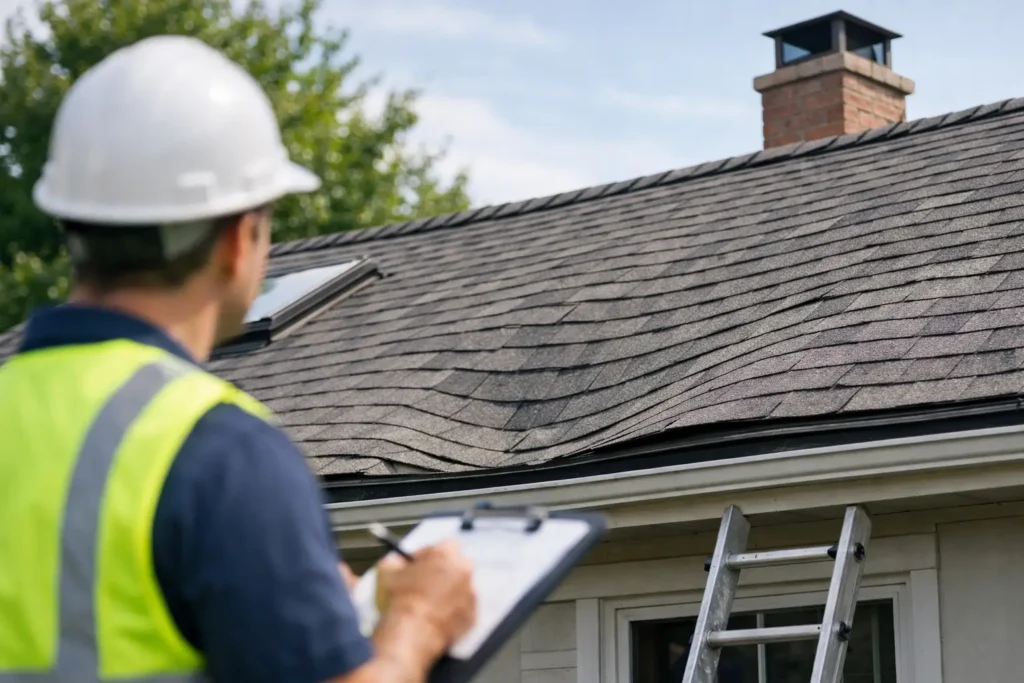
A roof rarely fails all at once. More often, it starts with small changes that are easy to miss from the driveway – a dip along the ridgeline, a ceiling line that looks slightly off, shingles that no longer sit flat. If you are wondering how to spot roof sagging, the key is knowing what looks normal and what suggests the structure underneath is starting to give.
In Central New York, that matters. Heavy snow loads, freeze-thaw cycles, ice damming, older framing, and long-term moisture problems can all put extra stress on a roof system. A sagging roof is not just a cosmetic issue. It can point to rotten decking, weakened rafters, compromised trusses, or too much weight pressing down on the structure. The earlier you catch it, the more options you usually have for repair.
How to spot roof sagging from the outside
The first signs often show up before there is an active leak inside. Stand back far enough to see the full roofline from the front and side of the house. A healthy roof should look straight and consistent. If one section appears lower than the rest, or if the ridge has a wave or dip in it, that is a red flag.
Pay close attention to the ridgeline. It should not bow in the middle or sink near one end. Also look at the planes of the roof. If a slope appears to curve inward, hold water, or look uneven instead of flat and uniform, the framing or decking below may be failing.
Shingles can also give clues. You may notice lines that look rippled, shingles that buckle in one concentrated area, or patches that appear sunken compared to surrounding sections. Sometimes homeowners assume that is just old roofing material. Sometimes it is. But when the surface looks distorted, the problem may be deeper than the shingles themselves.
Gutters and fascia can help tell the story too. If the roof edge looks wavy, if gutters appear to pull away in one section, or if the fascia line no longer runs straight, that can indicate movement in the roof structure. It does not always mean major structural damage, but it does mean the roof should be evaluated.
Signs of roof sagging inside the house
You do not need to climb onto your roof to notice trouble. In many cases, the interior of the home shows warning signs first.
Start in the attic, if you can access it safely. Look for rafters that appear cracked, bowed, split, or twisted. Check the underside of the roof decking for dark stains, mold, soft spots, or areas that look damp. If the wood appears spongy or discolored, moisture may have weakened it over time.
Then look at the ceiling below. A ceiling line that dips, cracks that widen around corners, doors that suddenly stick near the affected area, or drywall seams that separate can all point to movement above. Those signs do not confirm roof sagging on their own, but taken together, they deserve attention.
Another common clue is recurring water intrusion. If you have had leaks for months or years in the same general area, there is a chance the framing has been absorbing moisture for too long. Once structural lumber starts to rot, it loses strength, and that is when sagging can follow.
What causes a roof to sag?
There is no single answer, and that is where homeowners can get tripped up. A roof may sag because of age, poor original construction, storm damage, trapped moisture, or excessive weight. Sometimes it is one problem. Often it is a combination.
In older homes, undersized rafters or decades of wear can be part of the issue. In newer homes, the cause may be more localized, such as water damage around a vent, chimney, or flashing failure. After a severe winter, snow load can expose weaknesses that were already there. If ice dams have forced water back under the shingles year after year, the decking may have slowly deteriorated without obvious exterior damage.
Poor ventilation can also contribute. When warm, moist air gets trapped in the attic, it can condense on cold surfaces and slowly damage the wood from the inside. That kind of deterioration tends to build quietly until the roofline starts to change.
Then there is the weight factor. Multiple roofing layers, heavy snow accumulation, and water-soaked materials can all increase the load on the structure. A roof built to handle one set of conditions may struggle when those conditions pile up over time.
When a sag is minor and when it is serious
Not every uneven roofline means the house is on the verge of collapse. Some older homes have slight settling or framing irregularities that have been stable for years. The challenge is knowing the difference between an old imperfection and an active structural problem.
If the sag appears small, has not changed, and there are no signs of leaks, cracked framing, or interior movement, the issue may still be manageable. It should still be inspected, because small sags do not stay small forever when moisture is involved.
A serious roof sag usually comes with more than one warning sign. You may see a visible dip that seems to worsen, hear creaking, notice interior cracks spreading, or find water damage in the attic. If the roof looks like it is sinking in a concentrated area, especially near the ridge or over a load-bearing wall, that is not something to watch and wait on.
The biggest mistake homeowners make is assuming that if the roof is not actively leaking today, it can wait until next season. Structural issues tend to get more expensive the longer they sit.
How to inspect safely without making the problem worse
If you suspect sagging, avoid walking on the roof. A weakened section may not support weight the way it should, and even a careful inspection can make the damage worse or put you at risk.
Instead, inspect from the ground with a clear line of sight, and use binoculars if needed. Inside the attic, step only on secure framing members if you know how to move safely in that space. If you are not comfortable in an attic, do not force it. Limited visibility is better than an injury.
Take photos from the same angle over time if you are trying to confirm whether a section is changing. That can help a contractor compare movement and identify whether the problem looks recent or long-term.
What happens after roof sagging is confirmed
The next step depends on the cause and severity. In some cases, the roof decking or a small section of framing can be repaired before the damage spreads. In others, the issue goes beyond the roofing material and requires structural reinforcement, partial reframing, or full roof replacement.
This is why a proper inspection matters. You are not just checking shingles. You are trying to understand whether the problem is surface-level, structural, or moisture-related. A quick patch may stop a leak, but it will not solve rotten decking or overloaded framing.
For homeowners in places like Syracuse, where winter weather can punish an already stressed roof, timing matters. If a roof is sagging going into another snow season, waiting can turn a repairable issue into a much larger restoration project.
A trustworthy contractor should be clear about what they see, what is causing it, and whether the recommendation is repair, reinforcement, or replacement. Straight answers matter here. You should know what is urgent, what can be planned, and what the long-term fix looks like.
When to call a professional right away
Call for an inspection promptly if you notice a visible dip in the roofline, ongoing leaks, attic moisture, cracked or bowed rafters, or ceiling changes below the roof. If the sag seemed to appear after a storm or heavy snowfall, that raises the urgency. The same is true if doors or windows nearby suddenly stop operating normally, which can suggest structural movement.
At Alpha Omega Roofing LLC, this is the kind of issue we encourage homeowners to take seriously early. A fast inspection can help determine whether you are dealing with aging materials, storm-related damage, hidden rot, or a larger framing problem.
A sagging roof does not always mean the worst-case scenario, but it does mean the roof is asking for attention. Catching it early gives you more control over the repair, the cost, and the safety of your home.