
A roof emergency usually starts small – a stain on the ceiling, a few shingles in the yard, a drip that shows up during a hard rain. Then the weather shifts, the leak spreads, and what looked manageable turns into damaged insulation, ruined drywall, and a much bigger repair bill. Knowing the right emergency roof repair steps can help you protect your home in the moment and avoid making the situation worse.
The first priority is safety. If water is coming through the ceiling, stay out of any area where the drywall is sagging or bulging. That can mean water is pooling overhead, and the material may give way without much warning. If the leak is close to light fixtures, outlets, or your electrical panel, shut off power to that area if you can do so safely. When conditions are icy, windy, or storming, do not climb onto the roof. A lot of emergency calls start with roof damage and turn into personal injury because a homeowner tried to handle too much too quickly.
Emergency roof repair steps to take right away
Once everyone is safe, focus on limiting interior damage. Move furniture, rugs, electronics, and valuables away from the leak path. Use buckets, storage bins, or towels to catch dripping water. If a ceiling is bulging with trapped water, some homeowners are tempted to ignore it and hope it dries out on its own. Usually it does not. In some cases, carefully draining that bulge into a bucket can reduce the chance of a full ceiling collapse, but this depends on where the water is located and whether electricity is nearby. If you are unsure, leave it alone and call a professional.
Your next step is to document what you are seeing. Take clear photos of the ceiling leak, wet insulation if visible, damaged shingles on the ground, flashing that appears lifted, or tree limbs that may have caused the problem. This matters for two reasons. First, it gives your roofing contractor a clearer picture of what may be happening before they arrive. Second, if the damage is storm-related, those photos may help support an insurance claim.
Then do a basic check from the ground. Walk the perimeter of the house and look for obvious signs such as missing shingles, bent flashing, detached gutters, or debris impact. If you can see damage from ground level, that is enough for now. There is no benefit in taking risks for a closer look during an active emergency.
What you can do to reduce damage before help arrives
Temporary protection has its place, but only when it can be done safely. If water is entering through an attic space and you can reach the area without stepping onto the roof, placing a tarp or plastic sheet underneath the leak path may help redirect water into a container. In some homes, that buys valuable time until a crew can complete a proper emergency service call.
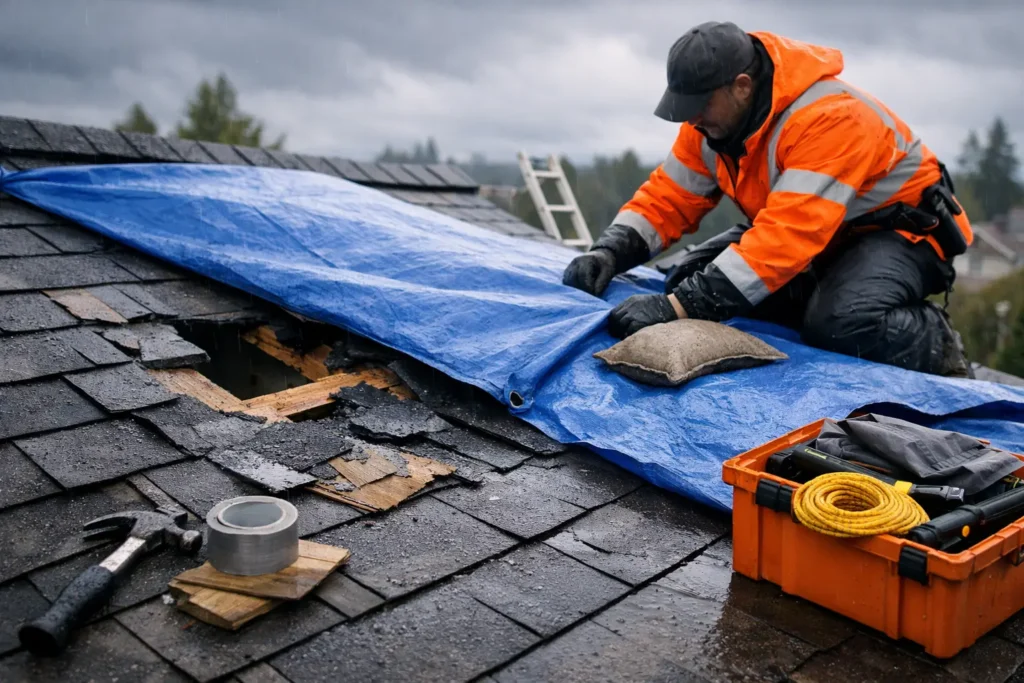
Exterior tarping can also help, but this is where homeowners often get into trouble. A tarp only works if it is secured correctly and extends beyond the damaged section. A loose tarp can catch wind, tear away, or even allow more water underneath. On a steep roof, a wet roof, or a roof with storm debris, tarping should be left to an insured roofing contractor.
There is also a trade-off between moving quickly and doing something that creates a larger repair later. For example, applying roofing cement in the wrong spot or nailing a tarp through vulnerable areas can trap water or puncture materials that were otherwise salvageable. In an emergency, the goal is not a perfect fix. It is controlled damage until the roof can be inspected and repaired the right way.
When to call for emergency roof repair
If water is actively entering the home, call right away. The same goes for visible storm damage, fallen branches, lifted flashing, missing sections of shingles, or any leak that has appeared suddenly after high winds, hail, or heavy snow. In Central New York, freeze-thaw cycles can make roof problems move fast. A small opening can let in water during the day, then expand overnight as temperatures drop and moisture freezes.
Some roof issues look minor but still need urgent attention. A leak around a chimney, vent pipe, or roof valley may not dump gallons of water into the living room, but it can soak decking and insulation behind the scenes. By the time the stain becomes obvious indoors, the affected area may already be larger than expected.
That is why a professional inspection matters. A trained roofer does not just look at the wet spot inside. They trace the water path, check the surrounding roofing system, inspect flashing details, and determine whether the problem is isolated or part of wider storm damage. That distinction affects cost, repair scope, and whether a repair makes sense or a replacement should be considered.
Common causes behind a roof emergency
Storm damage is the one most homeowners think of first, and for good reason. High winds can tear shingles loose or lift flashing around chimneys and vents. Hail can bruise asphalt shingles and shorten their service life even if the damage is not obvious from the driveway. Falling branches can puncture roofing materials or damage decking underneath.
But weather is not the only reason roofs fail suddenly. Aging shingles often become brittle and lose granules over time. Flashing can separate. Sealant can crack. Ice dams can force water back under the roof covering. Poor past repairs are another common issue. A patch that held for one season may fail during the next heavy storm, especially when snow, wind, and repeated freezing temperatures are involved.
In older homes, more than one problem may be happening at once. A homeowner may notice a leak near the chimney and assume the masonry is the issue, when the real cause is worn flashing and aging shingles in the same area. That is one reason rushed guesswork tends to cost more than it saves.
What to expect from a roofing contractor during an emergency
A reliable contractor should start by stabilizing the situation. That may include tarping, sealing an active entry point, removing debris, or securing loose materials that could worsen in the next storm. After that, the contractor should explain what they found in plain language and lay out next steps.
In some cases, the repair is straightforward. A limited section of shingles may need replacement, or flashing may need to be reset and sealed. In other cases, the emergency response is temporary because hidden moisture, decking damage, or widespread storm impact requires a more complete repair plan. Honest contractors will tell you which is which.
You should also expect clear pricing, photos of the damage when possible, and an explanation of whether the issue may qualify for insurance review. If the damage is related to a recent storm, it helps to work with a contractor who understands how to document conditions properly. That does not mean every leak becomes an insurance claim. It means you get a fair assessment without guesswork.
For homeowners in Syracuse and surrounding communities, fast response matters because weather windows can close quickly. A roof that is exposed on Monday may face wind, rain, or snow again before the week is over. That is where a local company with emergency experience has real value. Alpha Omega Roofing LLC is built around that kind of response – straightforward service, durable repairs, and guidance that helps homeowners make the right decision under pressure.
How to make a roof emergency less likely next time
The best emergency call is the one you never have to make. Regular roof inspections help catch loose shingles, failing flashing, soft spots, and drainage problems before they turn into active leaks. This is especially important after major storms and at seasonal transition points, when winter damage often starts to show.
Keep gutters clear, trim back overhanging branches, and pay attention to small interior warning signs. A musty attic smell, a faint ceiling stain, or shingle granules collecting near downspouts may not feel urgent today, but they often point to wear that gets worse under stress.
If your roof is older, be realistic about repair limits. Emergency service can stop immediate damage, but repeated spot repairs on a roof near the end of its life do not always save money. Sometimes the better decision is to fix the urgent issue now and plan for replacement before the next severe weather event makes the choice for you.
When a leak starts, speed matters, but calm decisions matter too. Protect the inside of your home, avoid unsafe shortcuts, document the damage, and get a professional inspection as soon as possible. The right response in the first few hours can make a major difference in how much damage your home takes and how quickly life gets back to normal.