
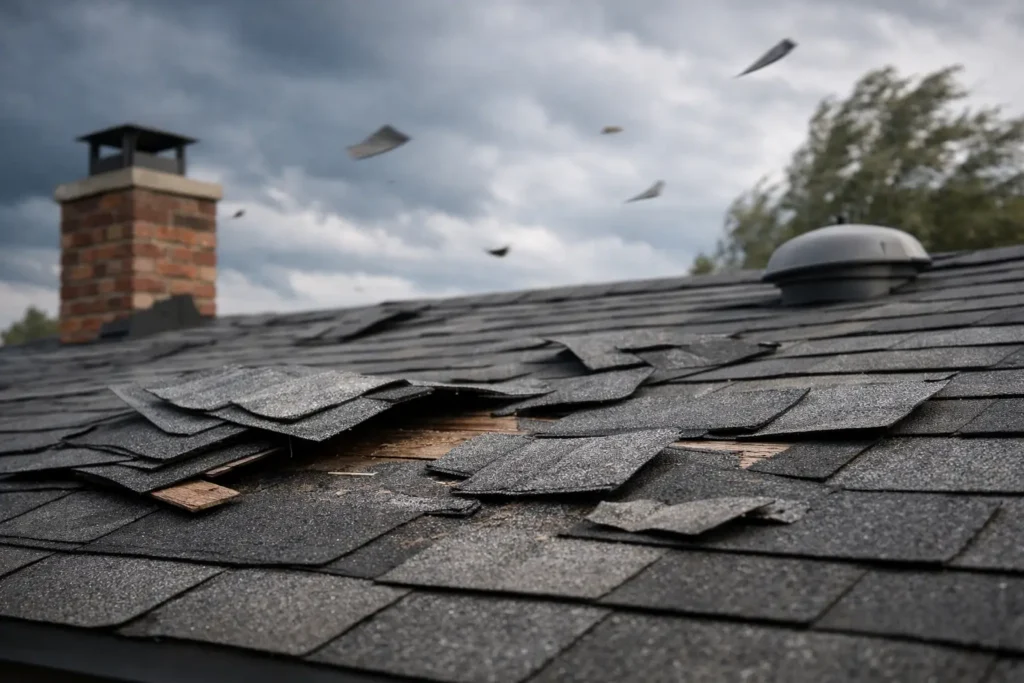
A roof does not have to lose half its shingles to have storm damage. In Central New York, strong gusts can loosen materials, break seals, and create small openings that turn into leaks days or weeks later. Knowing the signs of wind damage on roof areas can help you act before a minor problem becomes interior water damage, mold, or a much larger repair bill.
Wind damage is easy to miss from the ground, especially if the roof still looks mostly intact. That is why homeowners often assume everything is fine until they notice a ceiling stain, draft, or shingle pieces in the yard. After a heavy wind event, it helps to know what to look for and when it is time to bring in a professional.
The most common signs of wind damage on roof systems
The clearest sign is missing shingles, but that is far from the only one. Wind can lift shingles without tearing them off completely. Once that seal breaks, the shingle may settle back down and look normal from a distance while still leaving the roof vulnerable to water intrusion.
Curling, creasing, or flapping shingles are another warning sign. When wind catches the edge of an asphalt shingle, it can bend the material and weaken the bond line. That usually means the shingle will not perform the way it should in the next storm. Even if there is no active leak yet, the roof may already be compromised.
You may also notice shingle granules collecting in gutters or near downspouts. Some granule loss is expected as a roof ages, but a sudden increase after a windstorm can point to damaged shingle surfaces. Granules protect against sun exposure and weathering, so once they come off, the roof tends to deteriorate faster.
Another common issue is lifted ridge caps or damaged roof edges. The perimeter of the roof often takes the hardest hit because wind pressure is stronger there. If the edges have started to peel back, the rest of the system can be more exposed than it appears.
What wind damage looks like from the ground
Most homeowners are not climbing onto their roof, and they should not. A safe visual check from the ground can still tell you a lot.
Look for uneven roof lines, dark patches where shingles seem to be missing, and debris scattered around the property. Pieces of shingles, flashing, or metal trim in the yard are obvious signs that something came loose. Check the gutters too. If they are bent, detached, or pulling away from the fascia, wind may have affected more than just the shingles.
Inside the home, pay attention to new water spots on ceilings or walls, peeling paint near the top of exterior walls, or attic dampness. Sometimes the first clue is not outside at all. A roof can be damaged at the ridge, flashing, or underlayment level without showing dramatic exterior loss.
Wind damage does not always mean visible leaks right away
This is where many homeowners get caught off guard. A roof can be damaged today and leak later.
Wind often creates hidden vulnerabilities by loosening flashing around chimneys, roof vents, skylights, and valleys. It can also break the adhesive seal on shingles, allowing future rain to work underneath them. If the next storm brings heavy rain or ice, that earlier wind damage becomes a much bigger problem.
That delay is one reason fast inspections matter. Waiting until water shows up inside the house usually means the damage has spread beyond the roofing material itself.
Areas of the roof that fail first in high winds
Some sections are naturally more vulnerable than others. Roof edges, ridges, corners, and areas around penetrations tend to take the most wind stress. Older shingles are also more likely to crack or lift because they have become brittle over time.
If your roof is already aging, has previous repairs, or was installed with lower-grade materials, the threshold for damage is lower. That does not mean every older roof needs replacement. It does mean a professional inspection becomes more important after a major storm.
In the Syracuse area, winter weather adds another layer to the problem. Wind damage followed by freezing temperatures, snow load, or ice backup can turn a repair issue into a structural moisture issue. The original damage may be small, but the timing makes it more serious.
When the problem is shingles and when it is more than shingles
A few missing shingles may sound like a simple fix, and sometimes it is. But roof systems work as layers, not as isolated parts. If wind has pulled shingles loose, there may also be underlayment damage, exposed decking, bent flashing, or compromised ventilation components.
This is especially true if the storm was strong enough to scatter debris or damage siding, gutters, or fencing at the same property. When multiple exterior components are affected, it is smart to assume the roof needs a closer look too.
There is also the issue of matching materials. On a newer roof, a targeted repair may be the right move. On an older roof with widespread lifting or brittle shingles, patching one section may not give you a lasting result. It depends on the age of the roof, the extent of the damage, and whether surrounding materials are still in reliable condition.
What to do after you notice possible wind damage
Start with safety. Stay off the roof and avoid trying to secure loose materials yourself, especially if conditions are wet, icy, or unstable. Take photos from the ground if you can do so safely. Document any debris, visible roof changes, and interior signs like water stains.
Then arrange a professional inspection as soon as possible. A qualified roofing contractor can tell the difference between cosmetic wear and storm-related damage that affects performance. That matters for your home, and it can matter for insurance documentation as well.
If there is active leaking, time matters even more. Temporary protection may be needed to prevent additional water intrusion while a repair plan is put together. Fast response can be the difference between replacing a section of roofing and repairing insulation, drywall, trim, and framing too.
Why professional inspection matters after high winds
Roof damage is not always obvious, and not every contractor looks at it the same way. A thorough inspection should check shingles, flashing, ridges, roof penetrations, ventilation points, gutters, and attic indicators of moisture. The goal is not just to spot what blew off. It is to identify what has been weakened.
That kind of inspection gives homeowners clear next steps. Maybe the roof needs a straightforward repair. Maybe the damage is widespread enough to justify larger restoration work. Maybe there is no serious storm damage, which is also useful to know. What matters is getting an honest assessment before the problem grows.
For homeowners dealing with storm damage concerns in Syracuse and surrounding communities, that local experience matters. Roofs in this region take a beating from wind, snow, freeze-thaw cycles, and seasonal storms. A contractor who understands those conditions is better equipped to recommend repairs that hold up.
Signs you should call right away
Some situations should not wait. Call for immediate help if you see exposed decking, missing sections of roofing, active leaks, sagging ceiling areas, bent or detached flashing, or debris impact from tree limbs. The same goes for any storm event that leaves visible material in your yard or causes sudden interior water staining.
If the roof looks intact but you heard loud flapping during the storm, it is still worth getting checked. That noise often points to lifted shingles or loosened edge materials. Waiting for the next storm to confirm the damage usually costs more.
A reputable contractor should explain what they found in plain language, show you the affected areas, and outline practical options. That is the approach at Alpha Omega Roofing LLC – straightforward guidance, quality workmanship, and help when homeowners need answers fast.
Wind damage is one of those problems that gets more expensive when it is ignored and much more manageable when it is caught early. If something looks off after a storm, trust that instinct and get it inspected before the next round of weather puts your home to a harder test.